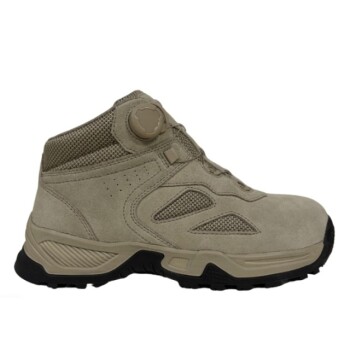
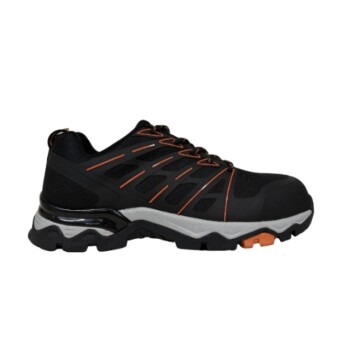
Precise biomechanical synchronization is the cornerstone of modern gait analysis. Built-in high-precision pressure sensors improve accuracy by monitoring real-time changes in plantar force, allowing researchers to trigger testing variables—such as mechanical perturbations—at the exact millisecond a user reaches a specific gait phase. This automated feedback loop ensures that every test subject, regardless of individual walking style, experiences identical conditions, resulting in scientifically rigorous and highly comparable data.
By integrating high-frequency sensors directly into the shoe's architecture, manufacturers can move beyond observational data to achieve millisecond-level precision in gait experiments. This technology transforms safety shoe testing from subjective trial-and-error into a data-driven process that validates the protective capabilities of industrial footwear under extreme conditions.
Precision Timing Through Automated Feedback
Automated Perturbation Logic
The core advantage of built-in sensors is the ability to trigger perturbation logic at exact gait moments, such as the mid-stance phase. This ensures that the shoe's response to a slip or trip is tested at the highest point of physical load.
By automating this trigger based on physical load feedback, researchers eliminate human error and variability. This creates a standardized testing environment that is essential for large-scale OEM/ODM production where consistency is paramount.
Real-Time Plantar Force Monitoring
High-precision sensors track the vertical Ground Reaction Force (vGRF) and the Center of Pressure (CoP) in real-time. This allows classification algorithms to accurately detect event nodes like heel-strike and toe-off.
With sampling rates often reaching 120Hz, the system captures subtle variations in movement control. This level of detail is critical for evaluating how a shoe performs on complex terrains like mines or construction sites.
Ensuring Data Integrity in Industrial Environments
Non-Invasive Sensor Integration
Unlike traditional measurement units that must be attached to the skin, built-in sensors are embedded within the insoles or midsoles. This non-invasive design prevents interference with the worker’s natural movement.
By maintaining a natural gait, the data collected reflects real-world usage rather than a lab-skewed performance. This is vital for brand owners who require authentic performance metrics for international certifications.
Protection Against Harsh Hazards
The robust structure of an industrial safety shoe protects precision electronics from dust, moisture, and physical impact. This ensures stable and continuous data collection even in the harshest working conditions.
Since 1951, the evolution of footwear housing has allowed these delicate sensors to survive the rigors of industrial use. This durability ensures that the supply chain stability is backed by long-term, reliable field data.
Validating Advanced Internal Structures
Verifying Pressure Dispersion
Built-in sensors allow manufacturers to verify if internal components, such as segmented fiber plates, successfully disperse localized high pressure. This prevents the midsole material from undergoing plastic deformation over time.
Monitoring force distribution across the forefoot helps in refining the shoe's internal geometry. This technical rigor ensures that mass-produced footwear remains comfortable and protective throughout its lifecycle.
Correcting Weight-Bearing Imbalances
By analyzing CoP fluctuations, manufacturers can identify instability in the shoe’s design. This data provides a feedback mechanism to adjust the outsole for better static and dynamic balance.
For B2B resellers, this data serves as a proof of quality. It demonstrates that the footwear is engineered to prevent fatigue and long-term foot health issues for the end-user.
Understanding the Trade-offs
Technical Complexity and Calibration
While built-in sensors provide superior data, they increase the complexity of the manufacturing process. These sensors require precise calibration to remain accurate across thousands of cycles in a high-volume production environment.
Environmental Limitations
Extensive exposure to extreme heat or chemical saturation can eventually degrade sensor sensitivity. Manufacturers must balance the level of electronic integration with the specific industrial hazards the shoe is intended to face.
How to Apply This to Your Project
Choosing the Right Strategy for Your Inventory
Selecting the right level of sensor integration depends on your specific market needs and the technical requirements of your clients.
- If your primary focus is Mass-Market Distribution: Prioritize shoes that use sensor-validated designs to guarantee consistent quality and compliance with international safety standards across large volumes.
- If your primary focus is Specialized Industrial R&D: Invest in premium OEM/ODM solutions that utilize high-frequency (120Hz) sensors to provide detailed biomechanical reports for specific high-risk work environments.
Advanced sensor integration ensures that industrial safety shoes are not just protective equipment, but precision-engineered tools validated by rigorous scientific data.
Summary Table:
| Key Feature | Technical Benefit | Impact on Safety Footwear |
|---|---|---|
| High-Frequency (120Hz) Sensors | Real-time plantar force & CoP tracking | Precise detection of heel-strike and toe-off nodes. |
| Automated Feedback Loop | Millisecond-level perturbation logic | Standardized testing conditions for OEM/ODM consistency. |
| Non-Invasive Integration | Embedded insole/midsole design | Ensures data reflects natural movement, not lab bias. |
| Industrial-Grade Housing | Protection from dust, moisture & impact | Reliable data collection in extreme work environments. |
Scale Your Brand with Data-Validated Footwear Excellence
Elevate your product lineup with precision-engineered solutions from a partner you can trust. As a leading large-scale manufacturer serving global distributors and brand owners, 3515 offers comprehensive production capabilities anchored by our flagship Safety Shoes series.
Since 1951, we have specialized in high-volume, high-quality manufacturing, providing:
- Robust OEM/ODM Capabilities: Tailored designs validated by advanced biomechanical data.
- Unmatched Production Scale: Reliable large-volume delivery for tactical boots, outdoor shoes, and formal footwear.
- Certified Quality: Rigorous adherence to international safety standards to protect your market reputation.
- Supply Chain Stability: Decades of heritage ensuring consistent performance and technical support.
Ready to enhance your inventory with science-backed safety shoes?
Contact Our Engineering Team Today
References
- Leon Brüll, Adamantios Arampatzis. Spatiotemporal modulation of a common set of muscle synergies during unpredictable and predictable gait perturbations in older adults. DOI: 10.1242/jeb.247271
This article is also based on technical information from 3515 Knowledge Base .
Related Products
- Wholesale Anti-Smash & Puncture-Proof Safety Shoes Custom Manufacturing for Brands
- Premium KPU Athletic Safety Shoes for Wholesale
- Puncture-Resistant Velcro Safety Boots for Wholesale & Custom Manufacturing
- Durable Steel Toe Safety Boots Wholesale & Custom Manufacturing
- Premium Wholesale Tactical Style Safety Shoes Boots with Quick Lacing
People Also Ask
- Why do operations involving heavy fruit bunches and 'gancu' require anti-smash and anti-puncture safety boots?
- What makes a safety shoe a safety shoe? Essential Protection for Hazardous Work
- What are the advantages of water-based polyurethane spray coatings for safety shoe slip resistance? Enhanced Traction
- What additional features can a good safety shoe offer? Maximize Protection and Comfort
- How do safety shoes and tactical boots support physiological maintenance? Protect Your Health in Toxic Environments