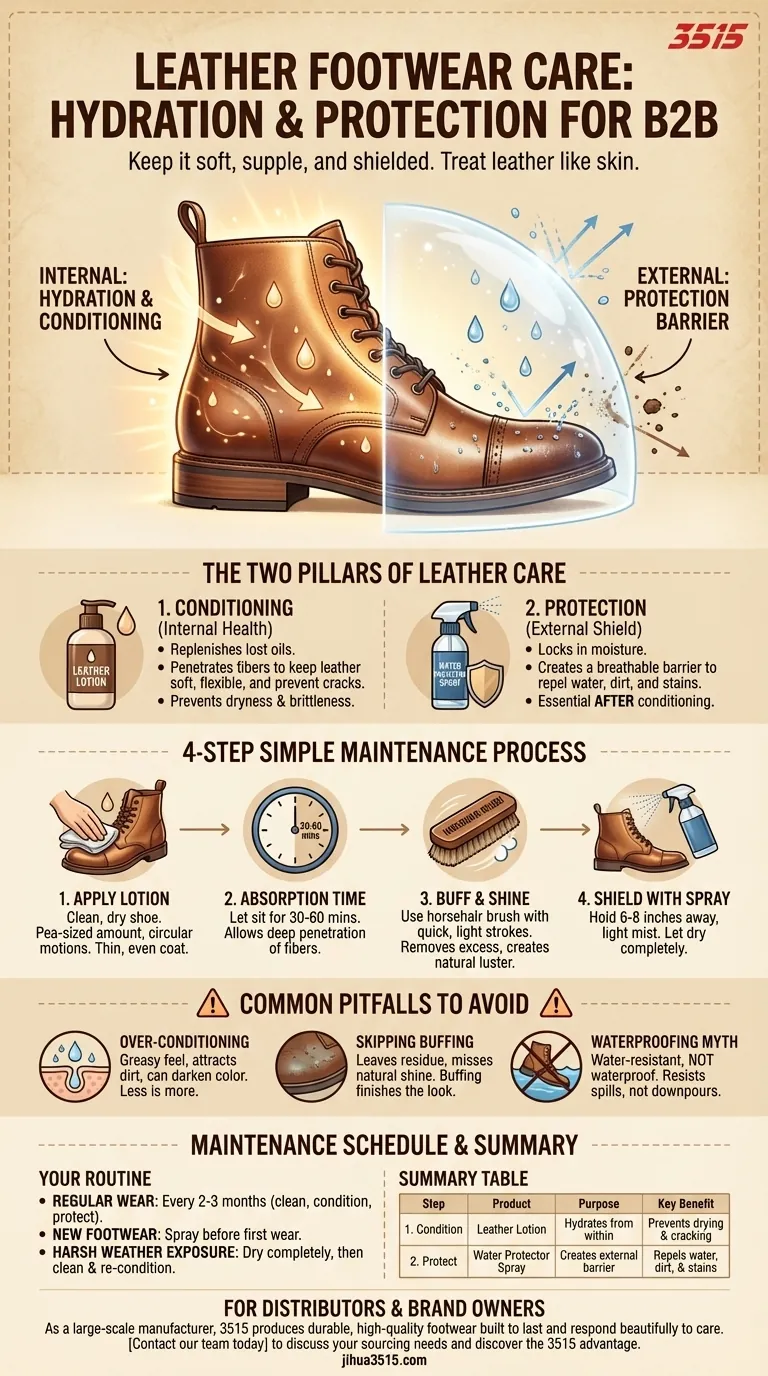
To protect leather footwear, you must focus on two distinct goals: hydration and protection. The key is to first apply a quality leather lotion to keep the material soft and supple from within, and then use a water protector spray to create an external barrier against moisture and spills.
The core principle of leather care is treating it like skin. It must be regularly moisturized with a conditioner to prevent it from drying out and cracking, and then shielded from the elements with a protective spray to maintain that hydration.
The Two Pillars of Leather Care
Proper leather maintenance isn't a single action but a two-step process. You must first address the internal health of the leather (conditioning) before you can effectively guard it against external threats (protecting).
Why Conditioning is Non-Negotiable
Leather is a natural material that contains oils. Over time, exposure to air, heat, and dirt causes these essential oils to evaporate, leading the leather to become dry, brittle, and eventually crack.
Conditioning is the process of replenishing these lost oils.
The Role of Leather Lotion
A leather lotion is a dedicated moisturizer for your footwear. It penetrates the pores of the leather to hydrate its internal fibers, keeping the material flexible, soft, and resistant to forming creases and cracks.
Why Protection is the Second Step
Once the leather is properly hydrated, the next step is to lock that moisture in and keep damaging elements out. This is where a protective barrier becomes essential.
Applying a protector to dry, unconditioned leather is far less effective, as the material itself is already vulnerable from within.
The Function of a Water Protector Spray
A water protector spray creates an invisible, breathable barrier on the surface of the leather. It is designed to repel water, dirt, and stains without sealing the leather’s pores, allowing the material to continue breathing naturally.
A Simple and Effective Maintenance Process
Executing this strategy requires the right tools and a straightforward process. Think of it not as a chore, but as a quick routine that vastly extends the life of your investment.
The Essential Toolkit
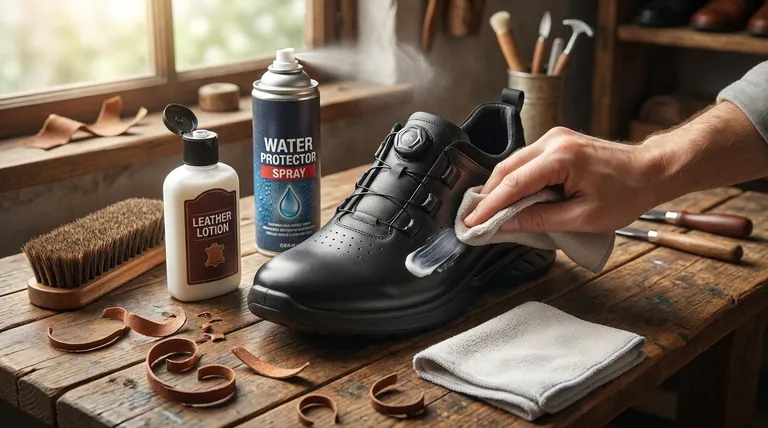
You only need three key items: a leather lotion, a horsehair brush, and a water protector spray. A soft cloth for application is also necessary.
Step 1: Apply the Leather Lotion
Ensure the footwear is clean and dry. Using a soft cloth, apply a small, pea-sized amount of leather lotion in gentle, circular motions across the entire upper. The goal is a thin, even coat.
Step 2: Allow for Absorption
Let the footwear sit for at least 30-60 minutes. This gives the lotion time to penetrate deeply into the leather’s fibers.
Step 3: Buff with a Horsehair Brush
Use a horsehair shine brush to buff the entire shoe with quick, light strokes. This step is crucial; it removes any excess lotion from the surface and warms the leather's waxes, creating a soft, natural luster.
Step 4: Shield with Protector Spray
Hold the water protector spray about 6-8 inches from the shoe and apply a light, even mist across the entire surface. Allow it to dry completely before wearing.
Common Pitfalls to Avoid
While the process is simple, a few common mistakes can undermine your efforts. Understanding them is key to achieving the best results.
Over-Conditioning the Leather
More is not better. Applying too much lotion can clog the leather's pores, making it feel greasy and potentially attracting more dirt. It can also oversaturate the fibers and darken the color permanently. Stick to a thin, even layer.
Skipping the Buffing Step
Simply applying lotion can leave a dull or sticky residue on the surface. Buffing is what works the product into the leather and brings out the material's natural shine, creating a clean, finished look.
Confusing "Protection" with "Waterproofing"
A protector spray makes your leather footwear water-resistant, not waterproof. It will repel spills and light rain, but it will not make your dress shoes function like rubber boots in a downpour.
How to Apply This to Your Footwear
Your maintenance schedule should adapt to how you use your footwear. A consistent routine is the single most important factor in preserving your leather goods for years to come.
- For regular wear in mild conditions: Condition and protect your footwear once every 2-3 months to keep it hydrated and shielded from daily dust and grime.
- For new footwear: Always apply a water protector spray before the first wear to establish an initial barrier against unexpected spills or rain.
- After exposure to harsh weather: Once the leather is completely dry, clean and re-condition it to replenish oils that may have been stripped by water.
Following this simple routine ensures your leather footwear will remain soft, hydrated, and ready for whatever your day holds.
Summary Table:
| Step | Product | Purpose | Key Benefit |
|---|---|---|---|
| 1. Condition | Leather Lotion | Hydrates from within | Prevents drying and cracking |
| 2. Protect | Water Protector Spray | Creates external barrier | Repels water, dirt, and stains |
Need durable, high-quality leather footwear that's easy to maintain? As a large-scale manufacturer, 3515 produces a comprehensive range of boots and shoes for distributors, brand owners, and bulk clients. Our expertise ensures your footwear is built to last and responds beautifully to proper care. Contact our team today to discuss your sourcing needs and discover the 3515 advantage.
Visual Guide
Related Products
- Durable Leather High-Ankle Tactical Boots for Wholesale & Custom Manufacturing
- Dial Closure Leather Business Casual Shoes for Wholesale & Private Label
- Durable Leather Work Boots for Wholesale & Custom Manufacturing
- Durable Leather Tactical Boots Wholesale & Custom Manufacturing for Brands
- Wholesale Classic Leather Lace-Up Ankle Boots for Brand Manufacturing
People Also Ask
- How do military uniforms and tactical boots impact the prediction of thermal risk? Essential Safety Insights
- How does the material of tactical boots affect their performance? Choose the Right Material for Your Mission
- Why is sequential analysis utilized to evaluate tactical boots? Master Dynamic Boot Development and Ergonomic Performance
- How do tactical boots differ from regular boots? Performance, Durability & Design Explained
- What are the primary differences between tactical boots and combat boots? Choose the Right Boot for Your Mission