To protect dress shoes from wet weather, the most effective method is to create a barrier against moisture using a high-quality waterproofing spray and to address any water exposure immediately after it occurs. This involves treating the leather or suede before you wear them and having a clear plan for drying them correctly if they do get soaked.
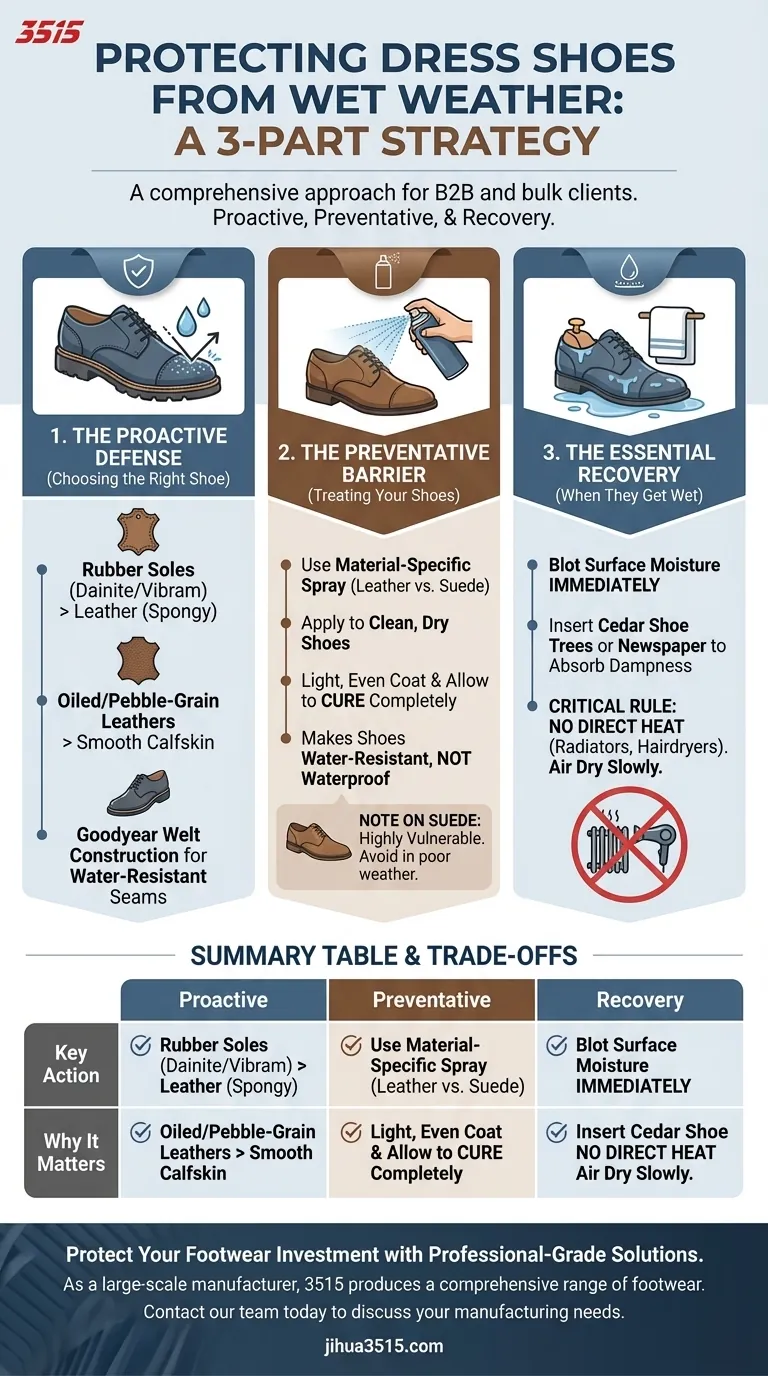
True protection for your dress shoes isn't about a single product, but a three-part strategy: proactively choosing the right shoe for the weather, preventatively treating the material, and reactively drying them correctly if they get wet.
The Proactive Defense: Starting with the Right Shoe
Your first line of defense is selecting footwear built to handle moisture. While no dress shoe is a rain boot, certain features make a significant difference.
The Critical Role of the Sole
The sole is the part of the shoe in direct contact with wet ground. Leather soles act like a sponge, absorbing water quickly, which can damage the material and the shoe's construction.
For wet weather, rubber soles (such as Dainite or Vibram) are vastly superior. They are inherently waterproof and provide better traction on slick surfaces.
Upper Materials and Construction
Some leathers handle moisture better than others. Smooth, polished calfskin is delicate, while oiled or pebble-grain leathers have more natural resistance to water.
Goodyear welting, a method of stitching the sole to the upper, also creates a more water-resistant seam than other construction methods.
The Preventative Barrier: Treating Your Shoes
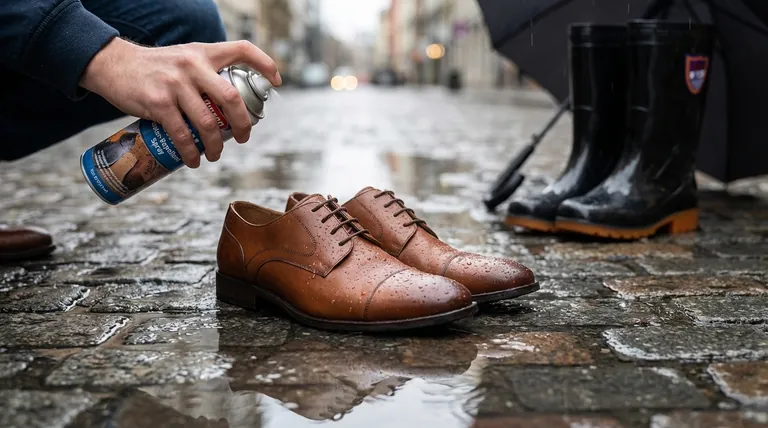
Treating the shoe's upper creates a shield that repels water, preventing it from soaking into the material and causing stains or damage.
Selecting the Correct Waterproofing Spray
Choose a spray specifically designed for the material of your shoes, whether it's smooth leather or suede. Modern nano-protector or polymer-based sprays are often preferable as they create a barrier without sealing the leather's pores, maintaining breathability.
Always test a new product on a small, inconspicuous area of the shoe first to ensure it doesn't cause discoloration.
Proper Application Technique
Effective treatment requires proper application. First, ensure the shoes are clean and completely dry.
Following the product's instructions, apply a light, even coat from the recommended distance. Allow the shoes to dry and cure completely—often for several hours—before wearing them.
The Essential Recovery: When They Inevitably Get Wet
Even with preventative measures, heavy rain can saturate your shoes. How you act next is critical to preventing permanent damage.
Remove Surface Moisture Immediately
As soon as you are indoors, use a soft, dry cloth to blot away any water sitting on the surface of the shoes.
Absorb Internal Dampness
Remove the laces and any removable insoles. Stuff the shoes loosely with newspaper or, ideally, insert unfinished cedar shoe trees.
Both newspaper and cedar draw moisture out of the leather slowly and naturally. Cedar has the added benefit of helping the shoe retain its proper shape as it dries.
The Critical Rule: Avoid Direct Heat
Never place wet leather shoes near a radiator, fireplace, or use a hairdryer on them. Rapid, direct heat will cause the leather to dry out too quickly, leading to shrinking, brittleness, and cracking.
Slow, patient air-drying at room temperature is the only safe method.
Understanding the Trade-offs
Protecting your shoes involves balancing water resistance with the natural properties of the material.
Water-Resistant, Not Waterproof
Treatments make your dress shoes water-resistant, not truly waterproof. They are designed to protect against unexpected showers or walking through puddles, not for submersion or torrential downpours.
A Note on Suede
While you absolutely should treat suede shoes with a dedicated protector spray, they remain the most vulnerable to water damage and staining. It is always best to avoid wearing them if you know the weather will be poor.
Making the Right Choice for Your Situation
Your approach should depend on your climate and your footwear collection.
- If your primary focus is navigating a consistently wet climate: Invest in dress shoes or boots that feature rubber soles and a Goodyear welt from the start.
- If your primary focus is protecting your existing collection from occasional rain: Make regular application of a quality waterproofing spray a core part of your shoe care routine.
- If your primary focus is saving a pair of shoes that just got soaked: Immediately prioritize the proper drying technique using shoe trees or newspaper, keeping them far away from any direct heat source.
By combining proactive selection with preventative care and proper recovery techniques, you can confidently protect your investment and keep your dress shoes in impeccable condition, regardless of the weather.
Summary Table:
| Step | Key Action | Why It Matters |
|---|---|---|
| Proactive | Choose rubber soles & oiled leathers | Creates a natural first line of defense against water. |
| Preventative | Apply a material-specific waterproofing spray | Forms a barrier to repel moisture and prevent stains. |
| Recovery | Dry slowly with cedar shoe trees, away from heat | Prevents leather from cracking and losing its shape. |
Protect Your Footwear Investment with Professional-Grade Solutions
As a large-scale manufacturer, 3515 produces a comprehensive range of footwear for distributors, brand owners, and bulk clients. Our production capabilities encompass all types of shoes and boots, including styles designed with weather-resistant features from the outset.
Let us help you build a collection that combines style with durability. Contact our team today to discuss your manufacturing needs and discover how we can add value to your business.
Visual Guide
Related Products
- Wholesale Leather Derby Dress Shoes Custom Manufacturer for Brands
- Wholesale Comfort Dress Shoes with Dial Closure for Custom Manufacturing
- Classic Leather Derby Dress Shoes Wholesale & Custom Manufacturing
- Wholesale Patent Oxford Dress Shoes | Custom & Bulk Manufacturing
- Wholesale Perforated Comfort Dress Shoes | Custom Derby Shoe Manufacturer
People Also Ask
- What is the main difference between Derby Shoes and Oxford Shoes? It's All in the Lacing.
- What are the features and appropriate occasions for wearing derby shoes? A Guide to Versatile Style
- How do Derby shoes fit into business casual attire? Master the Perfect Balance of Professional Style
- What historical figure is associated with the Derby shoe? The Earl of Derby's Comfort Revolution
- What is the difference between Derby and Oxford shoes? A Guide to Choosing the Right Shoe