The key to adjusting warmth without heavy insulation is to use a layering system, with a particular focus on high-performance socks and appropriate footwear. By combining a moisture-wicking base layer, an adjustable mid-layer, and a protective outer shell, you can regulate your temperature far more effectively than with a single, bulky garment.
The fundamental challenge for a hunter isn't just staying warm, but managing the cycle of sweat and cold that comes from moving and then sitting still. The solution lies not in a single piece of thick insulation, but in a modular system that allows you to control both heat and moisture.
The Principle: Why a Layering System Works
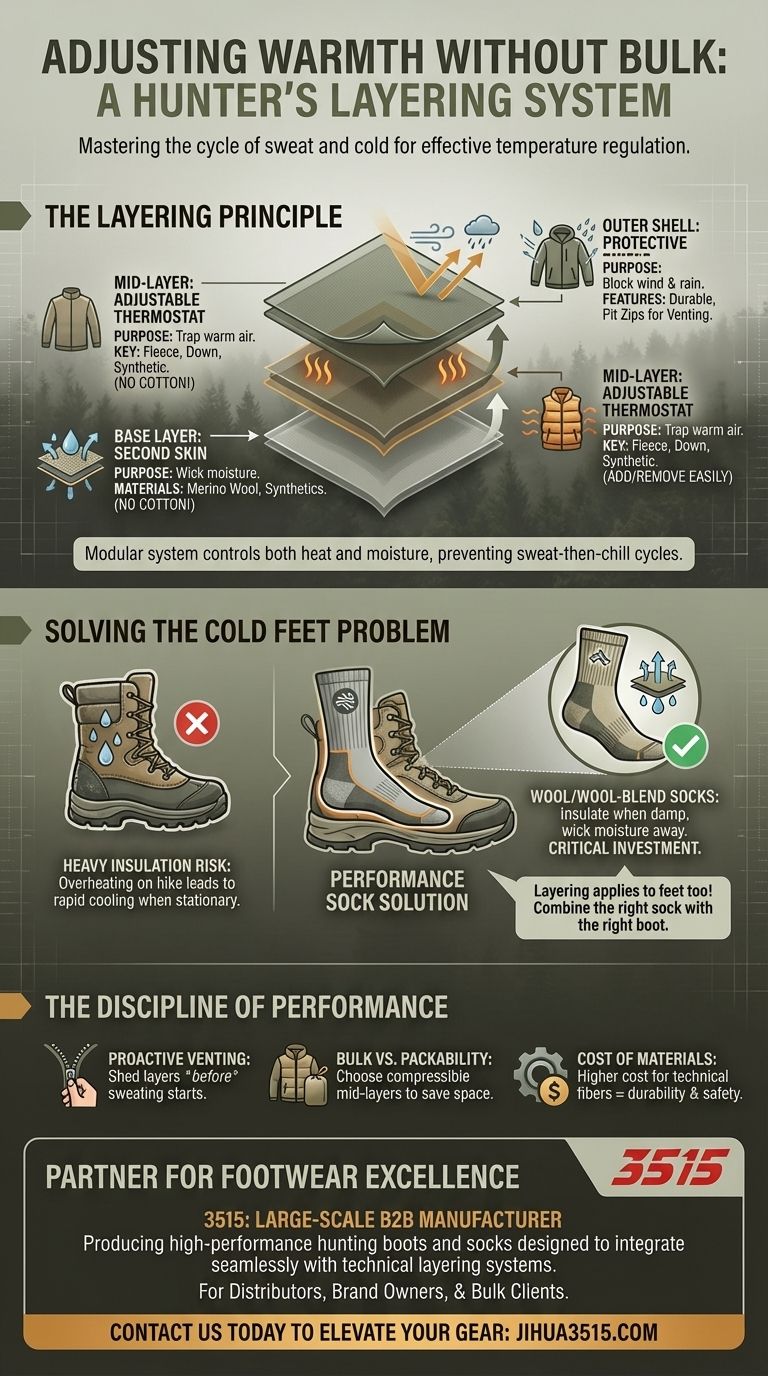
A single, heavily insulated jacket is a common mistake. It may keep you warm while you're sitting, but it will cause you to overheat and sweat the moment you start hiking. That trapped moisture will then chill you to the bone once you stop moving.
The Base Layer: Your Second Skin
The base layer's only job is to move moisture away from your skin. This is the foundation of staying warm and dry.
Look for materials like merino wool or high-quality synthetics. Avoid cotton at all costs, as it absorbs sweat and loses all insulating properties.
The Mid-Layer: Your Adjustable Thermostat
This is where you truly control your warmth. The mid-layer is designed to trap the warm air your body generates.
Effective mid-layers include fleece jackets, down vests, or synthetic "puffy" jackets. You can easily add or remove this layer from your pack as your activity level changes, giving you precise temperature control.
The Outer Shell: Your Shield from Wind and Rain
The final piece is a thin, durable outer layer, often called a shell. Its primary purpose is to block wind and repel rain or snow, protecting the insulating layers beneath it.
An ideal shell has minimal insulation of its own, ensuring it doesn't cause you to overheat. Look for features like zippered vents ("pit zips") to release excess heat and moisture quickly.
Solving the Cold Feet Problem
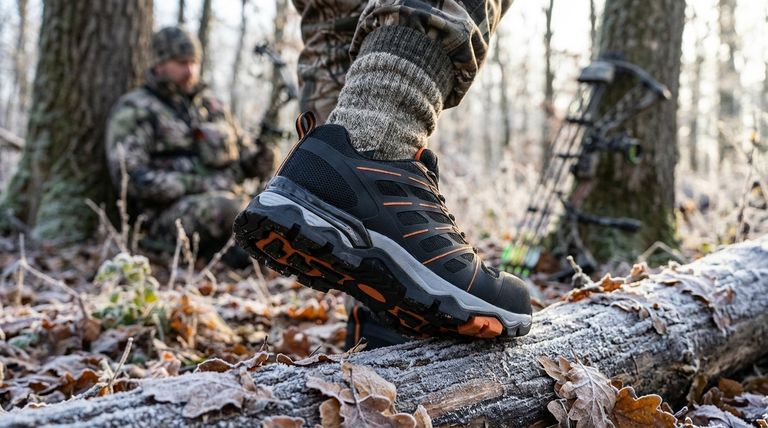
Your feet are often the first thing to get cold, and managing them is a perfect example of the layering principle in action. Combining the right sock with the right boot is critical.
The Problem with Heavily Insulated Boots
Overly insulated boots can make your feet sweat profusely on the hike to your stand. Once you become stationary, that sweat rapidly cools, leaving your feet colder than if you had started with less insulation.
The Power of High-Performance Socks
This is where you should focus your investment. High-quality wool or wool-blend socks provide excellent insulation and have a unique advantage: they continue to insulate even when damp.
Wool is also exceptional at wicking moisture, pulling sweat away from your skin to help your feet stay dry and, therefore, warm.
Understanding the Trade-offs
Adopting a layering system requires more discipline than simply throwing on one big coat. You must be proactive to make it work.
The Discipline of Venting
The goal is to prevent sweat before it starts. As you begin to hike or exert yourself, you need to shed your mid-layer or open your vents before you feel yourself getting hot.
Bulk vs. Packability
A layering system involves carrying extra items in your pack. Focus on mid-layers (like down or synthetic puff jackets) that are highly compressible to save space and weight.
The Cost of Performance Materials
High-performance materials like merino wool and technical shells can be more expensive. However, their durability and effectiveness in preventing dangerous chilling make them a worthwhile investment in safety and comfort.
Making the Right Choice for Your Hunt
Your specific layering system should be tailored to your style of hunting and the expected conditions.
- If your primary focus is active hunting (stalking, spot-and-stalk): Prioritize a lightweight, breathable system with a highly packable mid-layer you can add during long periods of glassing.
- If your primary focus is stationary hunting (tree stand, blind): Wear lighter layers for the walk in and carry a heavier insulated mid-layer or bibs to put on only after you've arrived and cooled down.
Ultimately, mastering a layering system gives you the control to stay comfortable and focused in any condition.
Summary Table:
| Layer | Purpose | Key Features |
|---|---|---|
| Base Layer | Wicks moisture from skin | Merino wool, synthetics (avoid cotton) |
| Mid-Layer | Traps body heat for insulation | Fleece, down vest, synthetic puffy jacket |
| Outer Shell | Blocks wind and repels rain | Durable, waterproof, with zippered vents |
| Socks & Boots | Manages foot temperature and moisture | Wool/wool-blend socks, boots with appropriate insulation |
Ready to gear up with the right footwear for your layering system?
As a large-scale manufacturer, 3515 produces a comprehensive range of high-performance hunting boots and socks for distributors, brand owners, and bulk clients. Our production capabilities ensure durable, comfortable footwear designed to work seamlessly with your technical layering system, keeping you dry and warm from the hike in to the long sit.
Contact us today to discuss your footwear needs and elevate your hunting gear!
Visual Guide
Related Products
- Wholesale Lightweight Tactical Boots Custom Manufacturer for Desert & Combat Use
- High-Traction Suede Tactical Boots Wholesale & Custom Manufacturing
- Durable Leather Tactical Boots Wholesale & Custom Manufacturing for Brands
- Durable Military Combat Boots with Water Drainage for Wholesale & OEM
- Durable Spiked Camouflage Boots Wholesale & Factory Production
People Also Ask
- What are the common types of combat boots? Find the Right Boot for Your Mission
- What specialized protections do tactical boots offer? Maximize Endurance with High-Performance Footwear
- What are the main construction similarities between tactical boots and tactical sneakers? Built for Performance & Durability
- How does additive manufacturing equipment reduce environmental risks? Sustainable Tactics for Modern Footwear Production
- How is the compatibility of polymer materials demonstrated in smart footwear? Enhancing Tactical & Training Performance