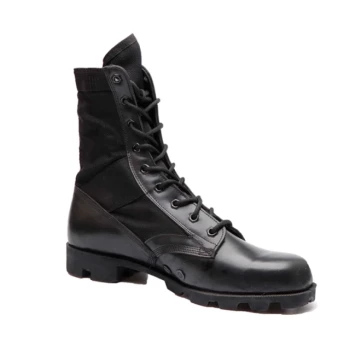
Industrial-grade infrared thermal imagers function as precise diagnostic instruments that capture and map the temperature distribution across the outer surfaces of mountaineering boots. By detecting heat escaping from the boot's interior, these devices allow engineers to instantly identify specific zones of thermal inefficiency on both the uppers and the soles.
By transforming invisible heat radiation into visual data, thermal imagers provide a quantitative way to evaluate insulation. This enables the transition from subjective "wear testing" to objective, data-driven design optimization.
Visualizing Heat Dissipation
To improve the thermal performance of a boot, designers must first understand exactly where heat is escaping.
Mapping Temperature Distribution
Thermal imagers scan the entire exterior of the boot to create a comprehensive thermal map.
This map reveals temperature gradients, showing exactly where the boot remains cold (good insulation) and where it becomes warm (heat loss).
Identifying Thermal Bridges
The primary goal of this visualization is to spot thermal bridges.
These are specific conductive pathways—often found at seams, joints, or areas of material compression—where heat bypasses insulation and escapes significantly faster than surrounding areas.
Monitoring Critical Zones
The analysis focuses heavily on the distinct behaviors of the soles and uppers.
Because these areas utilize different materials and face different environmental stressors, the imager monitors their heat dissipation rates independently to ensure balanced protection.
Optimizing Design Through Data
Once heat loss is identified, the focus shifts to quantitative evaluation and structural improvement.
Evaluating Material Effectiveness
Manufacturers use thermal imaging to compare different insulation combinations side-by-side.
By observing how much heat reaches the surface, designers can quantitatively evaluate the insulation effectiveness of new high-tech fibers or foams versus traditional materials.
Refining Internal Structure
The data informs the optimization of the boot's internal warmth-retaining structure.
If the imager reveals heat leaking through the toe box or heel, engineers can redesign the internal layering in those specific spots to better trap body heat.
Understanding the Limitations
While powerful, thermal analysis requires careful interpretation to ensure valid results.
Surface vs. Core Temperature
It is critical to remember that these imagers measure surface radiation, not the internal temperature directly.
A hot surface on the boot indicates that internal heat has successfully traveled through the insulation and is being lost to the environment.
The Need for Controlled Environments
For the "quantitative evaluation" to be accurate, testing conditions must be strictly controlled.
External factors like wind, ambient humidity, or background radiation can skew the thermal map, making a poor insulator look effective or vice versa.
Making the Right Choice for Your Goal
When applying thermal imaging data to mountaineering boot development, your approach depends on the specific design phase.
- If your primary focus is Material Selection: Use thermal mapping to conduct A/B testing on different insulation compounds to determine which offers the highest resistance to heat transfer.
- If your primary focus is Structural Integrity: Use the imagers to inspect seams and connection points between the sole and upper to ensure no thermal bridges are compromising the design.
Objective thermal analysis is the bridge between a boot that looks warm and one that actually performs in extreme conditions.
Summary Table:
| Analysis Feature | Role in Heat Loss Evaluation | Design Impact |
|---|---|---|
| Thermal Mapping | Visualizes temperature gradients across surfaces | Identifies cold spots and heat leakage |
| Thermal Bridges | Detects heat escape at seams and joints | Prompts structural reinforcement |
| Material A/B Testing | Quantifies insulation effectiveness | Informs selection of high-tech fibers/foams |
| Zone Monitoring | Compares sole vs. upper heat dissipation | Ensures balanced thermal protection |
Elevate Your Footwear Performance with 3515
As a premier large-scale manufacturer serving global distributors and brand owners, 3515 leverages advanced technical insights to deliver high-performance footwear. Whether you are developing specialized mountaineering boots or expanding your brand's technical range, our comprehensive production capabilities ensure your products stand up to the most extreme environments.
Our expertise extends across our flagship Safety Shoes series, as well as tactical boots, outdoor shoes, training shoes, and sneakers. We provide the manufacturing precision and bulk scale required to bring data-driven designs to market.
Ready to optimize your product line? Contact us today to discuss how our manufacturing excellence can add value to your brand and meet your diverse footwear requirements.
References
- Eleonora Bianca, Ada Ferri. Definition of a thermal comfort rating scale for mountaneering boots. DOI: 10.25367/cdatp.2023.4.p110-119
This article is also based on technical information from 3515 Knowledge Base .
Related Products
- Wholesale High-Traction Camo Boots - Custom Manufacturer for Brands
- Wholesale Lightweight Tactical Boots Custom Manufacturer for Desert & Combat Use
- Durable Rubber Sole Outdoor Shoes Wholesale & Custom Manufacturing
- Durable High-Ankle Tactical Boots Wholesale Manufacturer for Custom & Bulk Orders
- Durable High-Ankle Tactical Boots for Wholesale & Custom Manufacturing
People Also Ask
- What are the key features of the new line of camo boots? Built for Extreme Cold & Rugged Terrain
- Are camo boots necessary for hunting success? Prioritize Performance Over Pattern
- How does the Rank Score Test identify the primary causes of premature failure in tactical and work boots? Key Insights
- What is the technical logic behind using closed-eye testing for tactical boots? Unlocking Peak Footwear Stability
- What shoes to wear for a security job? Durable, Protective Footwear for Long Shifts