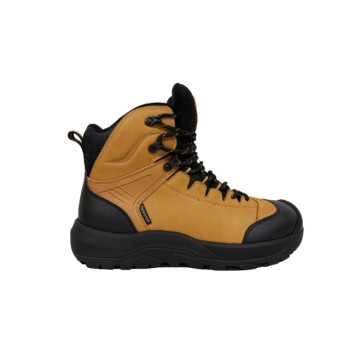
For light snow and brief exposure, you may not, but it's a critical distinction. While a sturdy pair of waterproof hiking boots can handle a dusting of snow on a cleared sidewalk, they are not a substitute for true snow boots in significant winter conditions. For deep snow, slush, or prolonged cold, a dedicated snow boot is essential for warmth, dryness, and safety.
The decision to wear snow boots isn't about the presence of snow, but rather its condition and your duration in it. The right boot is a technical tool designed to specifically counter the challenges of wetness, deep cold, and slippery surfaces that other footwear cannot handle.

When Your Regular Boots Might Suffice
Not every snowy day requires specialized gear. Understanding the limits of your existing footwear is the first step in making a smart decision.
Light Snow and Short Commutes
For quick trips on mostly cleared or treated sidewalks, your primary concerns are keeping your feet dry and having reasonable grip.
A good pair of waterproof hiking boots or general-purpose winter boots can often manage these conditions adequately. Their water resistance and tread are typically enough for minimal exposure.
The Limits of Other Footwear
Hiking boots are designed for grip on dirt and rock, not ice. Their rubber compounds can harden and lose traction in freezing temperatures.
While many boots are "water-resistant," they often lack the seam-sealed construction and height of snow boots, making them vulnerable to slush and deeper snow.
The Critical Features of a True Snow Boot
Snow boots are engineered as a system to solve specific environmental problems. Their key features work together to provide a level of protection that other boots can't match.
Superior Waterproofing
Snow boots are built to handle prolonged exposure to moisture, from slushy puddles to deep, wet snow.
They achieve this with features like Gore-Tex membranes, fully seam-sealed construction, and rubber lowers that create an impenetrable barrier against water.
Purpose-Built Insulation
Keeping feet warm in the cold isn't just about thickness; it's about trapping air effectively. Snow boots use specific insulation materials and are often given a temperature rating (e.g., rated to -20°F).
This ensures your feet stay warm without excessive sweating, which can lead to feeling even colder as the moisture cools.
Unmatched Grip on Ice and Snow
The outsole of a snow boot is its most critical safety feature. They are designed with deep treads (lugs) that bite into snow for better traction.
The rubber compounds are also softer and engineered to remain flexible in extreme cold, allowing the sole to grip icy surfaces far more effectively than the harder rubber found on a typical hiking boot.
Essential Height and Support
A taller boot shaft is crucial for walking in anything more than a few inches of snow. It physically prevents snow from getting inside your boot.
This added height also provides valuable ankle support when walking on uneven, hidden surfaces beneath the snow.
Understanding the Trade-offs
Choosing the right footwear also means acknowledging the downsides of specialized gear.
Cost and Bulk
Proper snow boots are an investment and are often heavier and more cumbersome than everyday shoes or boots. Their size can make them feel clumsy for activities like driving.
The Risk of Overheating
The same high-level insulation that protects you in extreme cold can cause your feet to overheat and sweat in milder conditions or when you're indoors for extended periods.
"Winter Boot" vs. "Snow Boot"
It's important to distinguish between a "winter boot" and a true "snow boot." Winter boots are often designed with style in mind, offering warmth and grip for cold, clear days, but they may lack the robust waterproofing and deep tread needed for actual snow.
A snow boot, by contrast, prioritizes function and performance in harsh, snowy, and icy conditions above all else.
Making the Right Choice for Your Goal
Ultimately, your boot should match your activity and environment.
- If your primary focus is short city commutes on cleared paths: A pair of waterproof hiking or general winter boots will likely be sufficient.
- If your primary focus is walking, working, or playing in deep or wet snow: You absolutely need a dedicated snow boot with excellent waterproofing and a tall shaft.
- If your primary focus is safety on potentially icy surfaces: Prioritize a boot with a specialized outsole made of soft rubber compounds and aggressive tread patterns.
- If your primary focus is staying warm in extremely cold, dry conditions: Look for a boot with a high insulation rating and features like gaiter attachments to seal out powder.
Choosing the right boot is about preparing for the conditions you'll actually face, ensuring every step is safe, warm, and confident.
Summary Table:
| Footwear Type | Best For | Key Limitation |
|---|---|---|
| Snow Boots | Deep snow, slush, ice, prolonged cold | Bulky, can overheat indoors |
| Waterproof Hiking Boots | Light snow, short commutes on cleared paths | Poor grip on ice, limited waterproofing |
| Winter Boots (Fashion) | Cold, dry days, light snow | Often lack robust waterproofing and deep tread |
As a large-scale manufacturer, 3515 produces a comprehensive range of snow boots, winter boots, and all types of footwear for distributors, brand owners, and bulk clients.
We understand the critical balance of waterproofing, insulation, and safety features needed for harsh conditions. Our production capabilities ensure you get high-quality, technically sound footwear designed for real-world performance.
Let us help you equip your customers with the right boots for every winter scenario. Contact our team today to discuss your specific needs and explore our full product catalog.
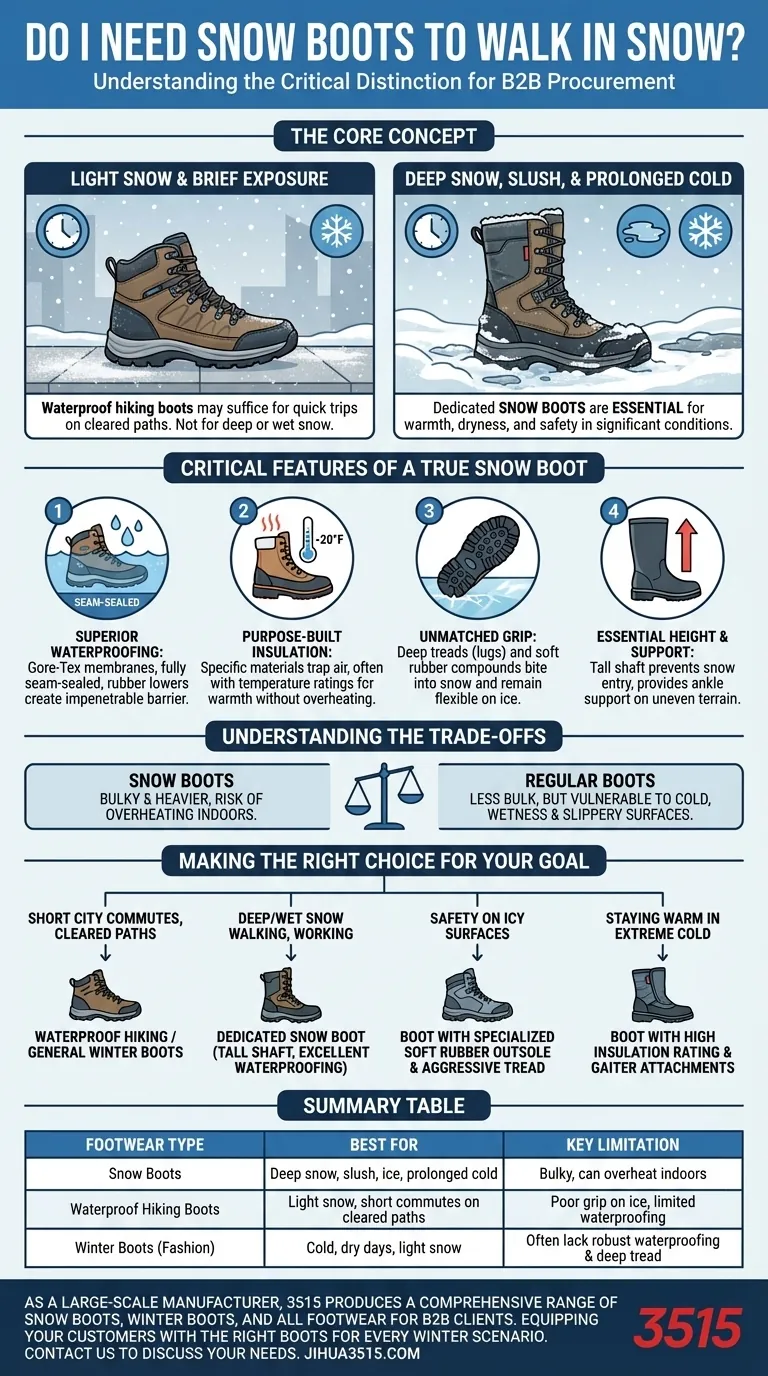
Visual Guide
Related Products
- Premium Insulated Safety Boots and Shoes for Wholesale & Bulk Orders
- Durable Waterproof Rain Boots | Custom Manufacturer for Wholesale & Brands
- Factory Direct Wholesale Rain Boots Durable Waterproof & Fully Customizable
- Wholesale Waterproof Tactical Boots Custom Suede & High-Traction Soles
- Wholesale Lightweight Tactical Boots Custom Manufacturer for Desert & Combat Use
People Also Ask
- What are the recommended insulation ratings for mild winter conditions? A Guide for Active & Stationary Workers
- How does insulation thickness correlate with temperature ranges? A Guide to Choosing the Right Warmth
- What insulation level is needed for severe cold and stationary work? 1200g or Higher is Essential
- What safety advantages do insulated boots offer beyond warmth? Dielectric Protection & Superior Grip
- How does fleece lining contribute to the warmth of insulated boots? Trapping Air for Superior Cold Protection