In short, yes, but only in specific contexts and only with certain designs. While the vast majority of sandals are inherently casual, a select category can function as dress shoes. The distinction is determined by the sandal's material, heel, and overall structure, not its name alone.
The core issue isn't whether a sandal can be a dress shoe, but rather understanding which specific design elements elevate it to a formal standard. The context of the event and the rest of your attire are just as critical as the shoe itself.
What Separates a Dress Sandal from a Casual One?
The transition from a casual beach shoe to an elegant dress sandal depends entirely on deliberate design choices. These three factors are the most reliable indicators of formality.
Material and Finish
The materials are the first and most obvious clue. Dress sandals are crafted from luxurious materials like patent leather, satin, silk, or metallic finishes.
In contrast, casual sandals use materials built for comfort and durability, such as rubber, cork, canvas, or unfinished leather. A shiny or refined finish almost always signals a more formal purpose.
Structure and Silhouette
A dress sandal has a delicate and intentional structure. Look for thin, elegant straps, a well-defined shape, and a minimalist design that complements the foot.
Casual sandals prioritize function and comfort, often resulting in thicker straps, molded footbeds, and a bulkier silhouette. Think of a flip-flop versus a strappy stiletto sandal; their fundamental structures serve entirely different purposes.
The Role of the Heel
A heel is the most powerful signal of formality. A stiletto, block heel, or an elegant wedge instantly elevates the shoe from casual to dressy.
Flat sandals, even those made from nice leather, almost always read as casual or "dressy-casual" at best. The addition of height is a clear indication that the shoe is designed for a formal occasion.
Context Is Everything: When to Wear Dress Sandals
Choosing the right shoe is less about a universal rule and more about interpreting the environment and dress code correctly.
Appropriate Venues and Events
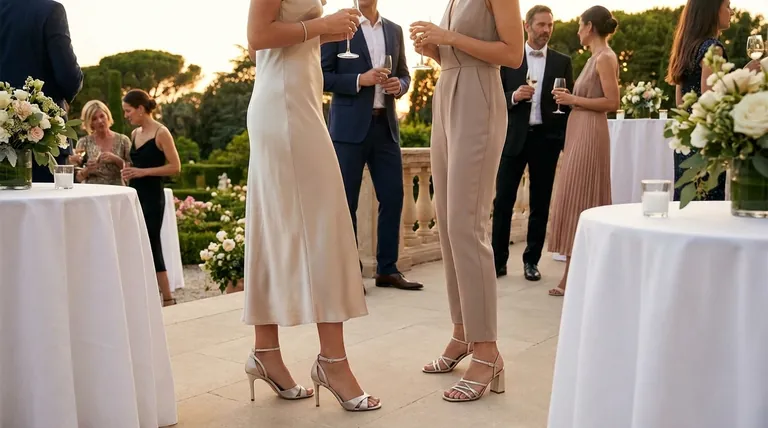
Dress sandals are perfectly suited for cocktail parties, summer weddings, formal dinners, or upscale evening events, especially in warmer climates or outdoor settings.
They provide a sophisticated yet comfortable alternative to a fully enclosed pump or heel.
Reading the Dress Code
Dress sandals excel within "Cocktail," "Semi-Formal," or "Dressy Casual" dress codes. These codes allow for more personal expression than their stricter counterparts.
Here, a well-chosen dress sandal paired with a cocktail dress or a tailored pantsuit is both appropriate and stylish.
Understanding the Pitfalls and Boundaries
While versatile, dress sandals are not a universal solution. Knowing when not to wear them is the key to a polished appearance.
The "Black Tie" Line
Sandals of any kind are never appropriate for "Black Tie" or "White Tie" events. These most formal of dress codes have strict standards that traditionally require a closed-toe shoe, such as an evening pump.
Conservative and Corporate Environments
In most traditional corporate offices or conservative professional settings, open-toed shoes are considered too informal. The unspoken rule is that closed-toe shoes project a higher degree of professionalism.
The Grooming Prerequisite
An often-overlooked factor is that open-toed shoes of any kind require well-groomed feet. A polished look is holistic; your choice of a dress sandal must be supported by a neat pedicure.
Making the Right Choice for Your Goal
- If your primary focus is a 'Black Tie' or highly traditional 'Formal' event: You must opt for a classic closed-toe pump or formal dress shoe.
- If your primary focus is a 'Cocktail' or 'Semi-Formal' event (like a wedding): A heeled dress sandal made from metallic or satin materials is an elegant and appropriate choice.
- If your primary focus is a professional or corporate setting: Always default to a closed-toe shoe to maintain the highest standard of business etiquette.
Ultimately, making the right decision hinges on your ability to read the context and choose a shoe with the clear design cues of formalwear.
Summary Table:
| Feature | Dress Sandal | Casual Sandal |
|---|---|---|
| Material | Patent leather, satin, silk, metallic | Rubber, cork, canvas, unfinished leather |
| Structure | Thin, elegant straps; minimalist design | Thick straps; bulky, molded footbed |
| Heel | Stiletto, block heel, wedge | Typically flat |
| Best For | Cocktail parties, summer weddings, dressy casual events | Beach, casual outings, everyday wear |
Ready to Elevate Your Footwear Collection?
As a large-scale manufacturer, 3515 produces a comprehensive range of footwear for distributors, brand owners, and bulk clients. Whether you're looking to source sophisticated dress sandals or any other type of shoe or boot, our extensive production capabilities ensure high quality and style for every occasion.
Let's discuss how we can bring your vision to life. Contact our team today to explore partnership opportunities!
Visual Guide

Related Products
- Wholesale Leather Business Casual Shoes with Dial Closure - Manufacturer of Comfort Dress Sneakers
- Wholesale Comfort Dress Shoes with Dial Closure for Custom Manufacturing
- Classic Leather Derby Dress Shoes Wholesale & Custom Manufacturing
- Wholesale Breathable Perforated Leather Derby Dress Shoes for Custom Brands
- Custom Manufactured Air Cushion Leather Business Shoes for Wholesale
People Also Ask
- What factors should be considered to ensure the right business casual shoe choice? A Guide to Professional Footwear
- What are the key characteristics of the best business casual shoes? Find Versatile, Professional Footwear
- How important is comfort in business casual shoes? The Key to All-Day Professional Performance
- What are some ways to style business casual shoes with skirts? Elevate Your Professional Wardrobe
- What materials are recommended for business casual shoes? Choose the Right Material for a Polished Look