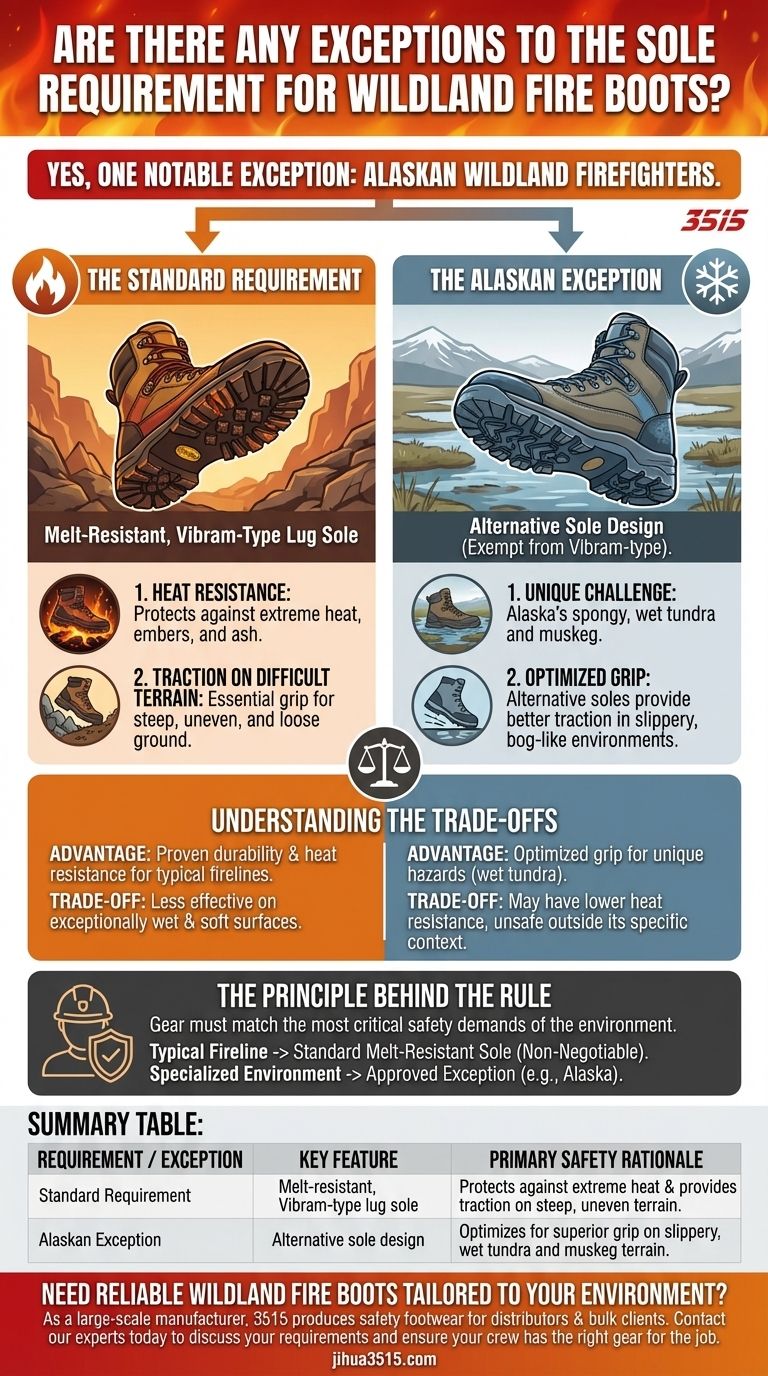
Yes, there is one notable exception to the sole requirement for wildland fire boots. While nearly all wildland fire boots must have a melt-resistant, Vibram-type lug sole, Alaskan wildland firefighters are specifically exempt from this rule. This single exception underscores a more important principle about safety gear.
The strict requirement for a melt-resistant, Vibram-type sole is a critical safety standard driven by the extreme heat of the fireline. The Alaskan exemption illustrates that gear standards can be adapted when a different environmental hazard becomes the primary concern.
The Standard: Why Melt-Resistant Lug Soles are Required
The sole of a fire boot is a foundational piece of personal protective equipment (PPE). The standard exists to mitigate two primary, life-threatening risks on the fireline.
Heat Resistance is Non-Negotiable
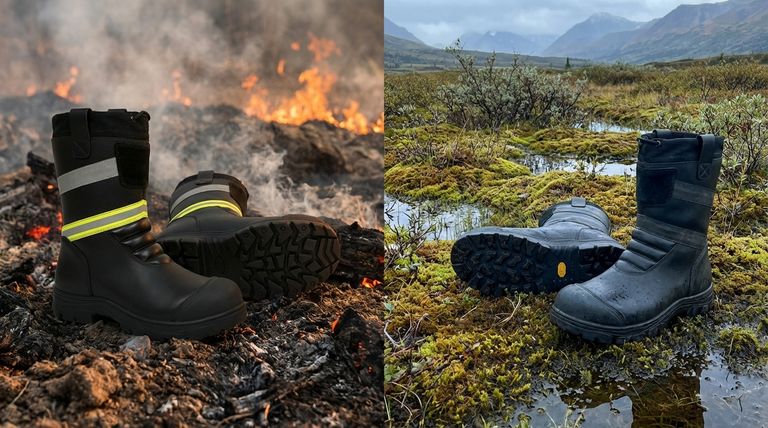
Wildland firefighters constantly walk on hot ground, embers, and ash. A standard boot sole would soften, melt, or even ignite under these conditions, leading to severe burns and boot failure.
The requirement for a melt-resistant material ensures the sole maintains its structural integrity and protective qualities in high-heat environments.
Traction on Difficult Terrain
The term "Vibram-type" refers to a specific design: a thick, rubber sole with a deep, aggressive lug pattern.
This lugged design provides the essential traction needed to maintain footing on steep, uneven, and often loose terrain like rock, soil, and ash.
The Alaskan Exception Explained
While the heat-resistance rule is nearly universal, the specific sole type has one key exception.
What is the Exception?
Official standards exempt wildland firefighters in Alaska from the requirement to have a Vibram-type sole.
Why This Exception Likely Exists
While the specific reason is not officially cited in the standards, it is almost certainly a response to Alaska's unique and challenging terrain.
Much of the Alaskan landscape is dominated by tundra and muskeg—spongy, wet, and often slippery ground. In these conditions, a traditional, hard-lugged fire sole may not provide the best traction. The exemption allows for alternative sole designs that offer superior grip and stability in these specific bog-like environments.
Understanding the Trade-offs
Choosing a boot sole is about prioritizing safety against the most probable hazard.
Standard Vibram-Type Sole
The primary advantage is its proven durability and resistance to heat, making it the essential choice for typical fireline conditions found in the lower 48 states.
The trade-off is that its hard compound and deep lugs can be less effective on exceptionally wet and soft surfaces.
Alternative Soles (Under the Exemption)
The advantage of an alternative sole is the ability to optimize for a unique hazard, such as the slippery, boggy ground common in Alaska.
The critical trade-off is that these soles may not offer the same level of heat resistance, making them unsuitable and unsafe for fireline work outside of their specific, approved context.
The Principle Behind the Rule
The existence of an exception doesn't weaken the rule; it reinforces the underlying goal. Your gear must always be matched to the most critical safety demands of your specific operational environment.
- If your work involves typical fireline conditions: The melt-resistant, Vibram-type lug sole is a non-negotiable safety requirement.
- If you work in a specialized environment like Alaska: A specific, approved exception may exist to optimize gear for different primary hazards like terrain.
Ultimately, understanding the "why" behind your equipment standards is the most important tool for ensuring your safety.
Summary Table:
| Requirement / Exception | Key Feature | Primary Safety Rationale |
|---|---|---|
| Standard Requirement | Melt-resistant, Vibram-type lug sole | Protects against extreme heat and provides traction on steep, uneven terrain. |
| Alaskan Exception | Alternative sole design (exempt from Vibram-type) | Optimizes for superior grip on slippery, wet tundra and muskeg terrain. |
Need Reliable Wildland Fire Boots Tailored to Your Specific Environment?
As a large-scale manufacturer, 3515 produces a comprehensive range of safety footwear for distributors, brand owners, and bulk clients. Whether your team operates in standard fireline conditions or specialized environments requiring unique specifications, our production capabilities encompass all types of safety boots and shoes designed for maximum protection and performance.
Contact our experts today to discuss your requirements and ensure your crew has the right gear for the job.
Visual Guide
Related Products
- High Performance Fire-Retardant Waterproof Safety Boots
- Premium Flame-Retardant Waterproof Safety Boots and Shoes
- Wholesale Lightweight Tactical Boots Custom Manufacturer for Desert & Combat Use
- Durable Military Combat Boots with Water Drainage for Wholesale & OEM
- Durable Leather Tactical Boots Wholesale & Custom Manufacturing for Brands
People Also Ask
- Why are waterproof safety boots recommended for certain work environments? Essential Protection for Wet & Hazardous Jobs
- What roles do 3D vision systems and industrial robots play in the manufacturing of fire safety boots? Smart Automation
- What is the difference between waterproof, water-resistant, and water-repellent boots? Choose the Right Protection for Your Feet
- What should you look for to ensure boots are fully waterproof? The Essential 2-Part System
- How should you maintain waterproof boots? A Simple 3-Step Guide to Long-Lasting Performance