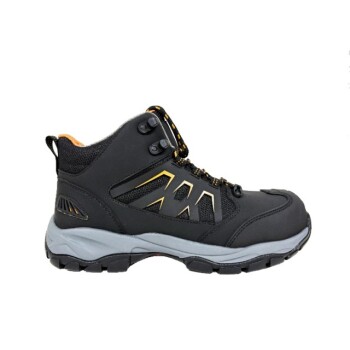
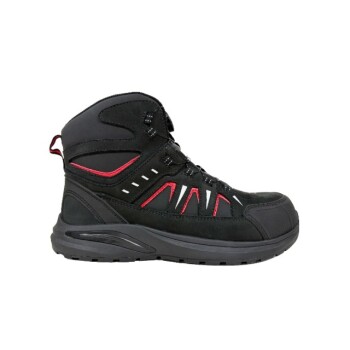
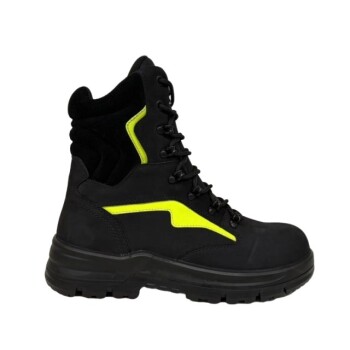
Yes, steel toe boots are unequivocally worth the investment for anyone working in environments with a risk of impact or compression injuries. They represent the industry standard for foot protection, offering the highest level of resistance against crushing and falling objects at a cost-effective price point.
The decision to invest in steel toe boots hinges on a simple principle: they provide the maximum level of physical protection for your feet. While they have specific limitations, their core benefits of safety, durability, and affordability make them an indispensable tool in hazardous workplaces.
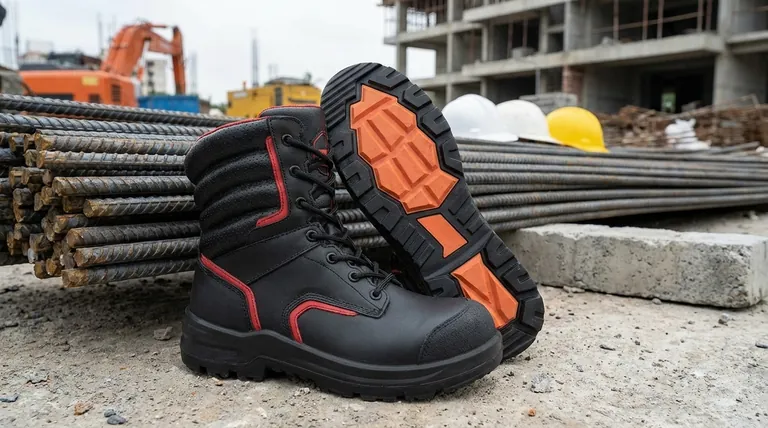
The Core Benefits of Steel Toe Protection
The primary value of a steel toe boot is its ability to prevent severe injury. This is achieved through a combination of material strength, rigorous safety compliance, and cost-effective manufacturing.
Unmatched Impact and Compression Resistance
A steel toe cap offers the strongest protection available against impact and compression. It is engineered to withstand significant force from heavy equipment, falling materials, and other workplace hazards.
This superior strength gives workers critical peace of mind when navigating unpredictable or dangerous job sites.
Durability and Cost-Effectiveness
Steel is an incredibly durable material that ensures the protective qualities of the boot will last.
Furthermore, steel toe boots are generally less expensive to manufacture than their composite or alloy counterparts, making top-tier safety more accessible and affordable.
Meeting Critical Safety Standards
Reputable steel toe boots are tested to meet or exceed strict safety standards, such as the ASTM F2413-18 standard.
This compliance guarantees a verified level of protection and is often a mandatory requirement for workers in construction, manufacturing, and logistics.
A Surprisingly Less Bulky Profile
Because steel is so strong, the protective toe cap can be made thinner than those using composite materials.
This results in a boot that is often less bulky around the toe area, providing a more comfortable and natural fit for many wearers.
Understanding the Trade-offs
While steel toe boots offer premier protection, they are not the right choice for every situation. Understanding their limitations is crucial for making an informed decision.
The Issue of Weight
Steel is heavier than composite materials. This added weight can contribute to fatigue over long shifts, a factor that is important to consider for roles requiring constant walking or movement.
Significant Electrical Conductivity Risk
This is the most critical safety limitation. Steel conducts electricity, making these boots completely unsuitable for electricians or anyone working in environments with a risk of live electrical hazards.
Potential for Discomfort
The rigidity of steel means it does not flex. In very cold environments, the steel can also transfer cold to the foot, though insulated boot designs can mitigate this.
Practical Inconveniences
Steel toe boots will consistently set off metal detectors. This can be a significant inconvenience for workers who must pass through security checkpoints regularly.
How to Apply This to Your Role
Choosing the right boot means matching its features to the specific hazards and requirements of your job.
- If your primary focus is maximum impact protection on a budget: Steel toe boots are the clear and superior choice for construction, manufacturing, or any role with heavy materials.
- If your primary focus is working with or around electricity: You must choose a composite toe boot, as steel toe boots present a serious safety risk.
- If your primary focus is reducing fatigue from all-day walking: A lighter composite or alloy toe boot may be a more comfortable option, provided it meets your site's impact rating requirements.
- If your primary focus is convenience through security checkpoints: An alloy or composite toe boot will prevent the hassle of setting off metal detectors.
Ultimately, the right safety footwear is the one that best protects you from the specific risks you face every day.
Summary Table:
| Feature | Steel Toe Boots | Composite Toe Boots |
|---|---|---|
| Impact Protection | Highest (ASTM F2413-18) | High (ASTM F2413-18) |
| Weight | Heavier | Lighter |
| Electrical Hazard | Conducts Electricity (Not EH Rated) | Non-Conductive (EH Rated) |
| Cost | More Affordable | Typically More Expensive |
| Metal Detectors | Will Set Off | Will Not Set Off |
As a leading manufacturer, 3515 produces high-quality steel toe boots designed for maximum durability and protection. We offer a comprehensive range of safety footwear for distributors, brand owners, and bulk clients. Let us help you equip your workforce with the right safety solution.
Contact 3515 today for a consultation and discover how our manufacturing expertise can meet your specific needs.
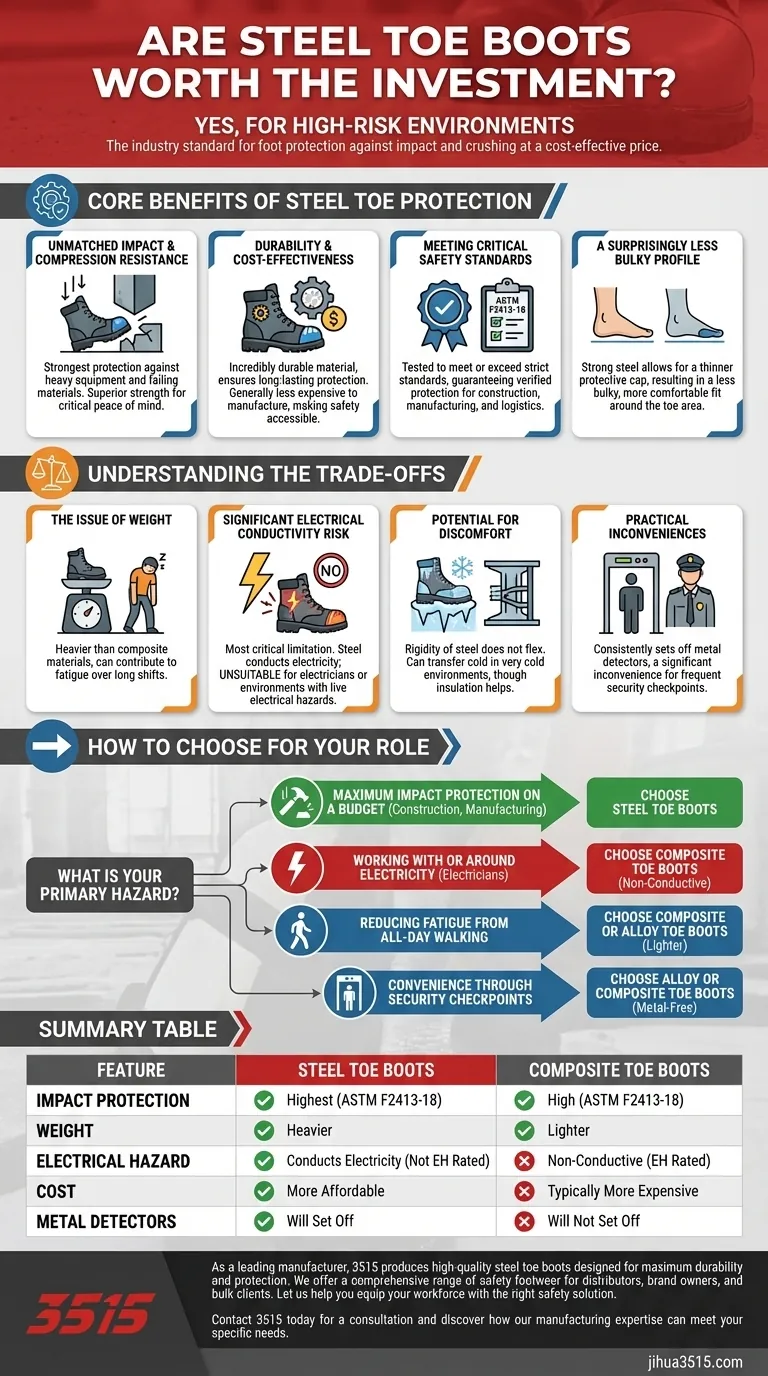
Visual Guide
Related Products
- Durable Steel Toe Safety Boots Wholesale & Custom Manufacturing
- Wholesale Durable Breathable Safety Boots Custom OEM Manufacturer
- Wholesale Durable 6-Inch Work Boots | Custom & Private Label Manufacturer
- Puncture-Resistant Velcro Safety Boots for Wholesale & Custom Manufacturing
- Premium Sport Style Safety Boots for Bulk Orders
People Also Ask
- Why are industrial safety boots with steel toes necessary for machine operators? Essential Foot Protection for Safety
- Why is it mandatory to wear safety shoes with steel toe protection during metal loading? Prevent Crushing Injuries
- What are the main materials used in steel toe safety shoes? A Guide to Protective Footwear Construction
- What are the characteristics of steel toe safety boots? Maximum Protection, Key Trade-offs
- Is it true that steel toes can cause toes to get cut off? Debunking the Dangerous Myth