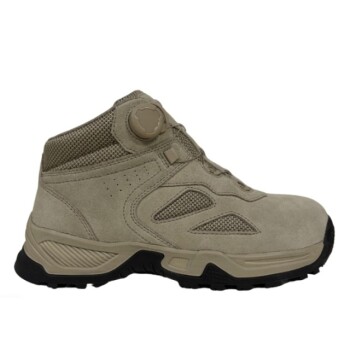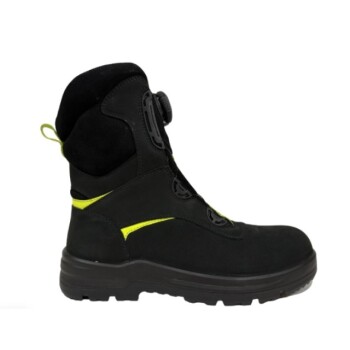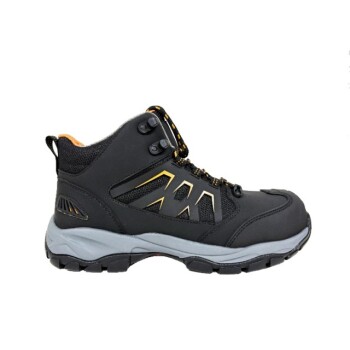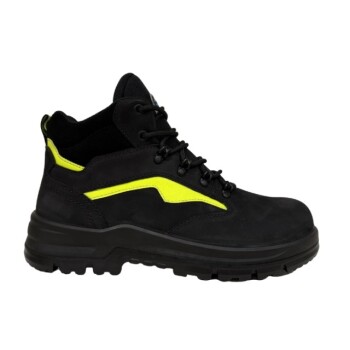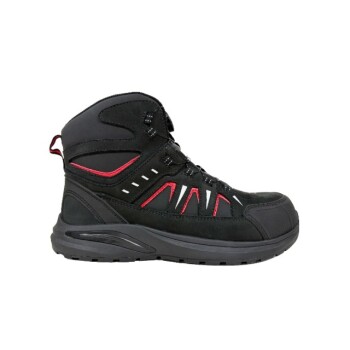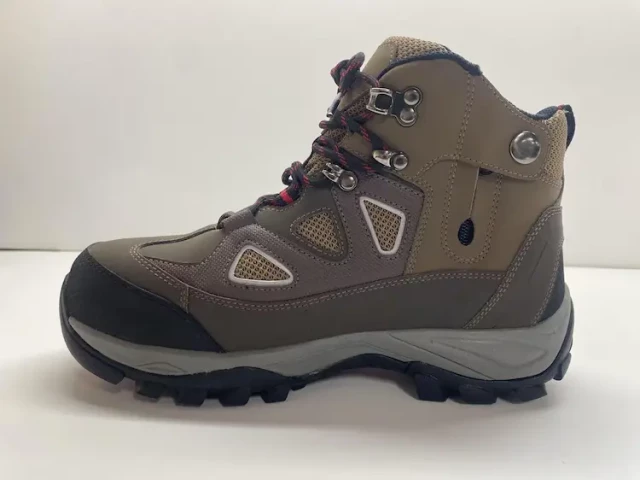
Security personnel face unique workplace hazards—from electrical risks to slip-and-fall accidents. Understanding BS EN345 compliance ensures your footwear meets critical safety benchmarks. This guide breaks down technical standards, testing protocols, and selection strategies tailored for security roles.
Understanding BS EN345 Safety Boot Standards
BS EN345 sets the benchmark for protective footwear in high-risk environments. Unlike general work boots, EN345-certified designs prioritize:
- Toe Protection: Steel, aluminum, or composite toe caps must withstand compression forces exceeding 2,500 lbf (per ASTM standards). Look for the "C" marking.
- Slip Resistance: Outsoles are tested for traction on wet/oily surfaces.
- Electrical Hazard Protection: Non-conductive materials prevent current flow (tested at 18,000 volts).
Key Insight: EN345 aligns with EN ISO 20345, which mandates toe protection—unlike EN ISO 20347 for low-risk settings.
Key Safety Requirements for Security Guard Boots
Security roles demand boots that address:
-
Impact Resistance
- Toe caps must absorb energy from falling objects.
- Midsole penetration resistance (marked "P") prevents sharp objects from piercing the foot.
-
Environmental Adaptability
- Waterproof designs (S2/S3 ratings) for outdoor patrols.
- Insulation for cold climates.
-
Ergonomics
- Arch support and cushioning reduce fatigue during long shifts.
Common Pitfall: Prioritizing price over certification can leave workers vulnerable. Always verify EN345 labeling.
How BS EN345 Testing Ensures Workplace Protection
Testing protocols validate real-world performance:
- Compression Tests: Toe areas endure static loads equivalent to a 250kg weight.
- Electrical Tests: Boots must block current for 1 minute under high voltage.
- Slip Tests: Outsoles are evaluated on inclined surfaces with contaminants.
Case Example: Boots failing electrical hazard tests often use conductive stitching or metal shanks—details easily overlooked during procurement.
Selecting and Maintaining Compliant Footwear
5-Step Selection Checklist:
-
Match Hazards to Features:
- Electrical risks? Ensure EH-rated materials.
- Wet floors? Opt for SRC-rated slip resistance.
- Verify Certifications: Look for EN345 or EN ISO 20345 markings.
- Prioritize Fit: Poorly fitted boots compromise safety and comfort.
- Assess Durability: Check stitching and sole bonding.
- Review Maintenance Needs: Waterproofing treatments may require reapplication.
Pro Tip: Rotate two pairs to extend lifespan and maintain cushioning.
Common Pitfalls to Avoid
-
Assuming All "Safety Boots" Are Equal
- EN ISO 20347 boots lack toe protection—unsuitable for security work.
-
Ignoring Environmental Needs
- Non-waterproof boots fail in rainy climates.
-
Overlooking Comfort
- Poor ergonomics lead to chronic pain and reduced alertness.
Upgrade Your Safety Standards with 3515
For distributors and bulk buyers, 3515 delivers EN345-compliant boots engineered for security professionals. Our designs combine rigorous protection with all-day comfort—because safety shouldn’t compromise mobility.
Ready to equip your team? Explore 3515’s certified range today.
Related Products
- Customizable Anti-Smash Safety Boots for Wholesale & Private Label Manufacturing
- Premium Wholesale Tactical Style Safety Shoes Boots with Quick Lacing
- Premium Grain Leather Safety Boots for Bulk Supply
- Premium Wholesale Wheat Nubuck Safety Boot with Rapid Lacing System
- Heavy-Duty Waterproof Nubuck Safety Boots Safety Shoes for Bulk Supply
Related Articles
- The Unseen Engineering: Why Steel Toes Succeed or Fail in Oily Environments
- How to Choose Job-Specific Safety Toe Boots That Meet Compliance Needs
- How to Choose Safety Toe Boots That Match Your Workplace Hazards
- How to Choose Between Safety Toe Boots: Military vs Workplace Needs
- How to Choose Safety Toe Boots: Matching Protection to Workplace Hazards