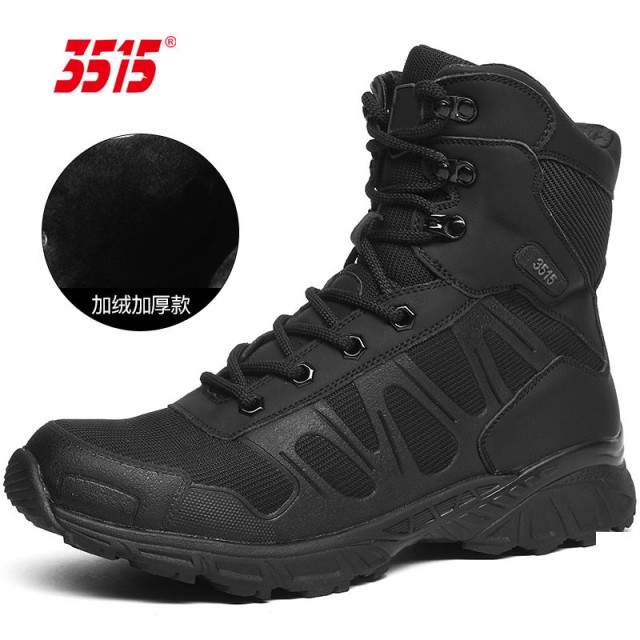
When every step counts, your boots' traction system becomes your most critical piece of equipment. This guide breaks down the biomechanics of grip across surfaces—from urban concrete to mountain scree—helping you select footwear engineered for your environment.
The Science of Traction in Tactical Boots
Traction isn’t just about sticky rubber. It’s an engineered interplay between material compounds, tread geometry, and surface friction. Research shows that optimal grip requires balancing three factors:
- Surface Adhesion: Rubber formulations with silica blends maintain flexibility in cold weather while resisting abrasion.
- Tread Penetration: Deeper lugs displace soft substrates like mud or snow, preventing hydroplaning.
- Shear Resistance: Multi-directional patterns counteract lateral slips during rapid direction changes.
How Sole Materials Define Grip and Durability
Military-grade outsoles often use carbon-infused rubber, which offers 20-30% better wet surface adhesion than standard compounds. For rocky terrain, vulcanized rubber resists cuts from sharp edges—a key feature in 3515’s tactical line for mountain operations.
Decoding Tread Patterns: From Multi-Directional to Terrain-Specific
- Chevron Lugs: Angled teeth shed mud efficiently, ideal for wetland environments.
- Circular Pods: Distributed pressure points enhance stability on loose gravel.
- Hybrid Designs: Urban tactical boots use shallow, tightly spaced lugs for pavement grip without collecting debris.
Choosing the Right Boot for Your Mission
Mud and Snow: The Role of Aggressive Lug Depth
Field tests with special forces units revealed that 5-8mm lug depth optimizes snow traction. Too shallow, and boots lose penetration; too deep, and they become unstable on hardpack. 3515’s winter tactical boots incorporate staggered lug heights to compact snow for better weight distribution.
Urban vs. Wilderness: Adapting Tread Geometry to Surfaces
- Concrete/Asphalt: Micro-textured treads (like those in 3515’s law enforcement series) provide silent movement without sacrificing slip resistance on polished floors.
- Rocky Trails: Self-cleaning channels prevent pebble accumulation, a common failure point in desert operations.
Case Studies in Traction Performance
Military Field Tests in Extreme Conditions
During Arctic warfare drills, boots with directional heel brakes reduced downhill slide by approximately 40% compared to flat soles. This technology is now standard in 3515’s cold-weather tactical line.
Law Enforcement Footwear for Rapid Response
SWAT teams prioritize boots that transition seamlessly between car pedals, stairwells, and grassy perimeters. A study of pursuit-related injuries found that boots with heel-centric tread patterns reduced ankle rolls by over 25%.
Ready to Equip Your Team?
3515 designs mission-specific traction systems for distributors and agencies needing bulk footwear solutions. From jungle lugs to urban stealth soles, our manufacturing expertise ensures every pair meets the demands of your terrain. [Contact our specialists] to discuss custom configurations.
Related Products
- Durable Leather Tactical Boots Wholesale & Custom Manufacturing for Brands
- High-Traction Suede Tactical Boots Wholesale & Custom Manufacturing
- Durable Leather High-Ankle Tactical Boots for Wholesale & Custom Manufacturing
- Durable Mid-Cut Tactical Boots for Wholesale & Private Label
- Wholesale Waterproof Tactical Boots Custom Suede & High-Traction Soles
Related Articles
- Why Your Tactical Boots Wear Out So Fast—And the Procurement Mistake Behind It
- The Agility-Protection Paradox: Deconstructing Safety in Modern Tactical Footwear
- Why Your Tactical Boots Keep Failing—And Why 'Tougher' Isn't the Answer
- How Tactical Boots Deliver Long-Term Value: A Cost & Performance Breakdown
- The Procurement Officer's Gamble: Why 'Tough Enough' Isn't Good Enough for Tactical Boots













