
In short, traditional hiking boots fail in the jungle because their core design principles are fundamentally opposed to the jungle's persistent, extreme wetness. They are built to keep water out, which paradoxically means they also keep water in, and their construction is often vulnerable to the unique chemical and physical stresses of a jungle environment.
The central problem is water management. A jungle guarantees your feet will get wet. The right boot accepts this, draining water quickly to help your feet dry, while the wrong boot (a typical hiker) traps water, creating a swamp that leads to skin breakdown and boot failure.
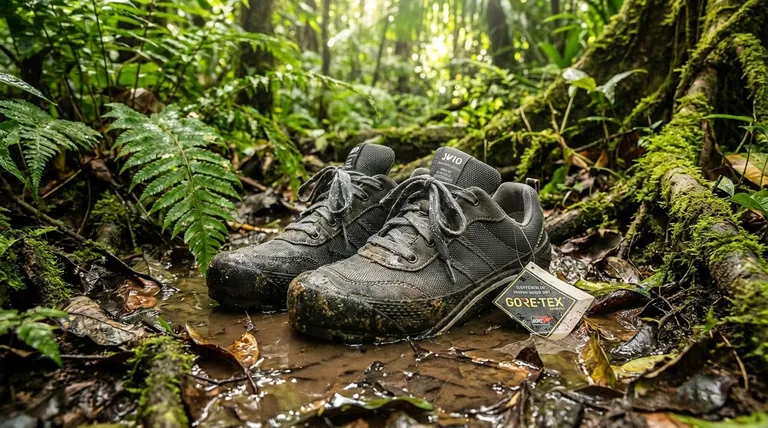
Why Hiking Boots Underperform in the Jungle
The features that make a hiking boot excellent for mountains or temperate forests become significant liabilities in a tropical jungle.
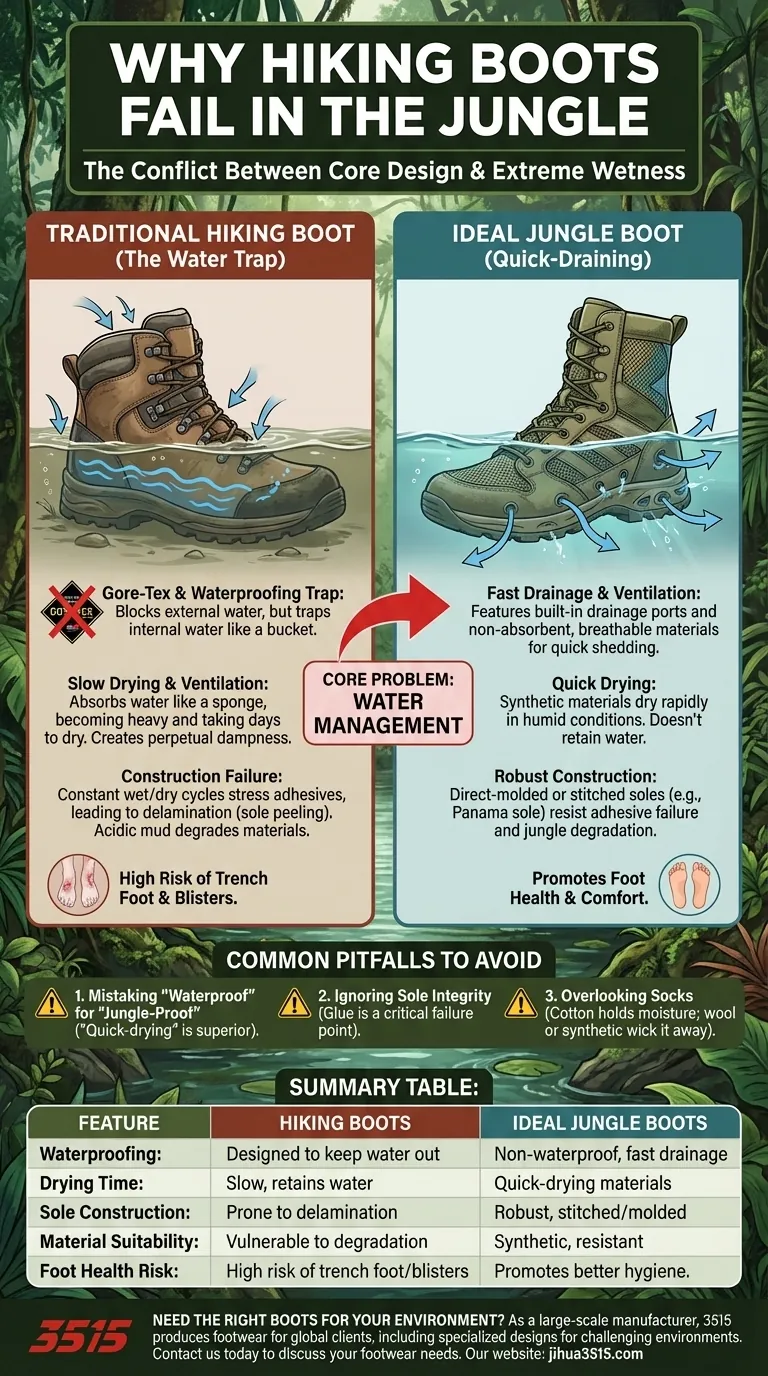
The Gore-Tex and Waterproofing Trap
Most hiking boots are prized for their waterproof membranes, like Gore-Tex.
This design is meant to block external water from sources like rain or shallow streams. However, in a jungle, you will inevitably be submerged in water above the boot's collar.
Once water gets inside—and it will—the waterproof liner prevents it from escaping. Your boot becomes a bucket, holding water against your skin and dramatically increasing the risk of trench foot, blisters, and fungal infections like athlete's foot.
The Problem of Drainage and Ventilation
A jungle boot is designed with the opposite philosophy: let water in and let it out just as fast.
They often feature built-in drainage ports or use non-absorbent, highly breathable materials. This allows the boot to shed water quickly after being submerged.
Traditional leather or heavily padded hiking boots absorb and retain water like a sponge. They become incredibly heavy and can take days to dry in the humid jungle air, creating a perpetually damp environment for your feet.
Construction and Material Failure
Jungle environments are chemically and physically aggressive.
The constant cycle of getting soaked and then partially drying puts immense stress on the adhesives used in many modern hiking boots. This leads to delamination, where the sole literally peels away from the upper part of the boot.
Furthermore, the acidic mud and decaying organic matter found in jungles can degrade the materials and glues used in standard hiking footwear, accelerating their breakdown.
Common Pitfalls to Avoid
Choosing the wrong footwear for the jungle isn't just uncomfortable; it can be a serious risk to your health and the success of your trip.
Mistaking "Waterproof" for "Jungle-Proof"
This is the most common and dangerous misconception. In a jungle, "quick-drying" is far superior to "waterproof." A boot that traps water is a direct threat to your foot health.
Ignoring Sole Integrity
The glue holding your boot together is a critical failure point. A detached sole in a remote jungle is a trip-ending emergency. Boots designed for the jungle often use more robust construction methods, like a direct-molded sole or stitching (like a Panama sole), that are less susceptible to adhesive failure from wet/dry cycles.
Overlooking the Importance of Socks
Even with the right boots, your sock system is crucial. Cotton socks are a terrible choice as they hold moisture. Thin wool or synthetic socks that wick moisture and dry quickly are essential to complement a fast-draining jungle boot.
Making the Right Choice for the Environment
Your boot choice must match the specific challenges of your environment. While this guide focuses on the jungle, the principle applies universally.
- If your primary environment is the Jungle: Prioritize non-waterproof, fast-draining boots made with durable, synthetic materials and robust sole construction.
- If your primary environment is a Mountain or Temperate Forest: A waterproof hiking boot with good ankle support is an excellent choice to keep feet dry from rain and small puddles.
- If your primary environment involves hazardous chemicals: You need specialized, chemical-resistant boots made from materials that resist degradation.
- If your primary environment is a hard-surface worksite: A Moc toe boot with thick, impact-absorbing soles provides the necessary durability and comfort for long hours on your feet.
Ultimately, selecting the right footwear begins with an honest assessment of the environment's core challenges, not just a brand name or feature list.
Summary Table:
| Feature | Hiking Boots | Ideal Jungle Boots |
|---|---|---|
| Waterproofing | Designed to keep water out | Non-waterproof, designed for fast drainage |
| Drying Time | Slow, retains water | Quick-drying materials |
| Sole Construction | Prone to delamination in wet/dry cycles | Robust, often stitched or molded for durability |
| Material Suitability | Vulnerable to jungle chemicals and moisture | Synthetic, resistant to degradation |
| Foot Health Risk | High risk of trench foot and blisters | Promotes better foot hygiene and comfort |
Need the Right Boots for Your Environment?
As a large-scale manufacturer, 3515 produces a comprehensive range of footwear for distributors, brand owners, and bulk clients. Our production capabilities encompass all types of shoes and boots, including specialized designs for challenging environments like the jungle. We can help you select or customize footwear that meets the specific demands of your market, ensuring durability, comfort, and performance.
Contact us today to discuss your footwear needs and let us provide a solution tailored to your requirements!
Visual Guide
Related Products
- Wholesale Durable Camouflage Canvas Shoes with High-Traction Cleated Rubber Sole
- Lightweight Breathable Training Shoes for Wholesale & Custom OEM Manufacturing
- Wholesale Breathable Training Shoes Custom Athletic Footwear Manufacturer
- Wholesale Lightweight Tactical Boots Custom Manufacturer for Desert & Combat Use
- Durable Rubber Sole Outdoor Shoes Wholesale & Custom Manufacturing
People Also Ask
- Why is the selection of high-strength fabric materials necessary in the production of canvas shoes and training shoes?
- What are the properties of canvas as a shoe material? A Guide to Lightweight Comfort & Style
- Can canvas shoes be worn in rainy conditions? The Truth About Water Resistance
- What are some examples of vulcanized shoes? Discover the Flexibility and Board Feel of Classic Sneakers
- What are the characteristics of canvas as a shoe material? A Guide to Lightweight, Breathable Footwear



















