
To correctly fit short riding boots and gaiters, you need four key measurements. For the boots, you require your standard foot size and width. For the gaiters, which function as the "upper" of a tall boot, you must measure your calf width and calf height.
The goal is to create a "second-skin" fit that provides stability and support without restricting movement. An improper fit not only causes discomfort but can also compromise your safety and precise communication with your horse.
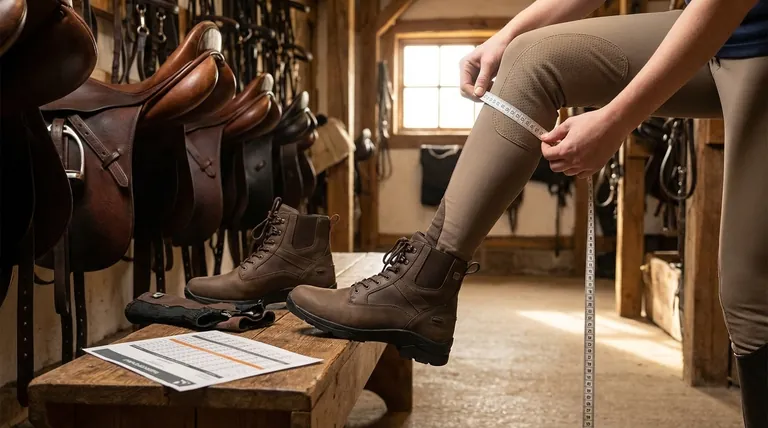
The Foundation: Fitting Your Short Boots
A correctly fitted short boot, or paddock boot, is the anchor for your entire system. It provides essential support for your foot and ankle both in and out of the saddle.
Beyond Your Standard Shoe Size
While you will start with your regular street shoe size, be aware that sizing can vary significantly between equestrian brands. The boot should feel snug across the instep and secure at the heel to prevent your foot from sliding forward.
The Critical Role of Width
The correct width is non-negotiable. A boot that is too narrow will pinch and cause pressure points, while a boot that is too wide will allow your foot to shift, leading to instability and blisters.
What a Correct Fit Feels Like
Your heel should lock into place with minimal slippage. You should have enough room to wiggle your toes, but the boot should feel secure and supportive through the arch and ankle.
Completing the System: Measuring for Gaiters
Gaiters (or half chaps) are designed to wrap snugly around your lower leg, protecting you from rubs and providing the grip and appearance of a tall boot.
Measuring Calf Width
To find your calf width, sit in a chair with your feet flat on the floor and your knees at a 90-degree angle. Use a flexible measuring tape to measure around the widest part of your calf. It is crucial to take this measurement over the breeches you typically ride in.
Measuring Calf Height
While still seated, measure from the floor up to the prominent bend directly behind your knee. This measurement ensures the gaiter is tall enough to provide support without uncomfortably digging into the back of your knee when you bend your leg.
The Ideal Gaiter Fit
A new gaiter should feel very snug, almost like a compression sock. Leather will stretch and mold to your leg over time. It should not slip down your calf or bunch up around your ankle as you walk or ride.
Understanding the Common Pitfalls
Achieving the perfect fit requires avoiding a few common mistakes that can lead to a poor and potentially unsafe experience.
The Risk of a Loose Fit
A loose boot or gaiter is a significant problem. A boot that is too large will cause your foot to slide, while a gaiter that is too wide will twist and drop down your leg, failing to provide the necessary grip and support.
The Danger of a Tight Fit
Equipment that is excessively tight is equally problematic. It can restrict circulation, cause painful chafing, and be extremely difficult to put on and take off, especially with zippers. While a snug start is expected, true pain is a sign of an incorrect size.
Forgetting Your Riding Attire
Always measure for your gaiters while wearing your typical riding pants and socks. Measuring on a bare leg is the most common reason for purchasing gaiters that are too small.
Making the Right Choice for Your Goal
Your specific needs will influence how you prioritize fit. Use these guidelines to make a final decision.
- If your primary focus is daily training: Prioritize comfort and durability, allowing for a slightly more generous fit that accommodates long hours in the saddle.
- If your primary focus is competition: Aim for the tightest, most secure fit possible to create a seamless, elegant profile that mimics a custom tall boot.
- If you fall between sizes: It is generally better to choose the snugger gaiter, as quality leather will stretch up to a half-inch with wear.
A precise fit is the foundation of a confident and effective ride.
Summary Table:
| Measurement | What to Measure | Why It's Important |
|---|---|---|
| Foot Size | Standard shoe size | Starting point for boot fit, but varies by brand. |
| Foot Width | Width of the foot | Prevents instability and blisters; ensures a secure fit. |
| Calf Width | Widest part of the calf (over breeches) | Creates the grip and support of a tall boot; prevents slipping. |
| Calf Height | Floor to the back of the knee | Ensures proper height without digging in when the leg is bent. |
Achieve the Perfect Fit with 3515, Your Trusted Equestrian Footwear Manufacturer
As a large-scale manufacturer, 3515 produces a comprehensive range of equestrian footwear for distributors, brand owners, and bulk clients. Our production capabilities encompass all types of riding boots and gaiters, ensuring quality, durability, and precise sizing for every rider.
Let us help you provide your customers with the secure, comfortable fit they need for a confident ride. Contact our expert team today to discuss your manufacturing needs.
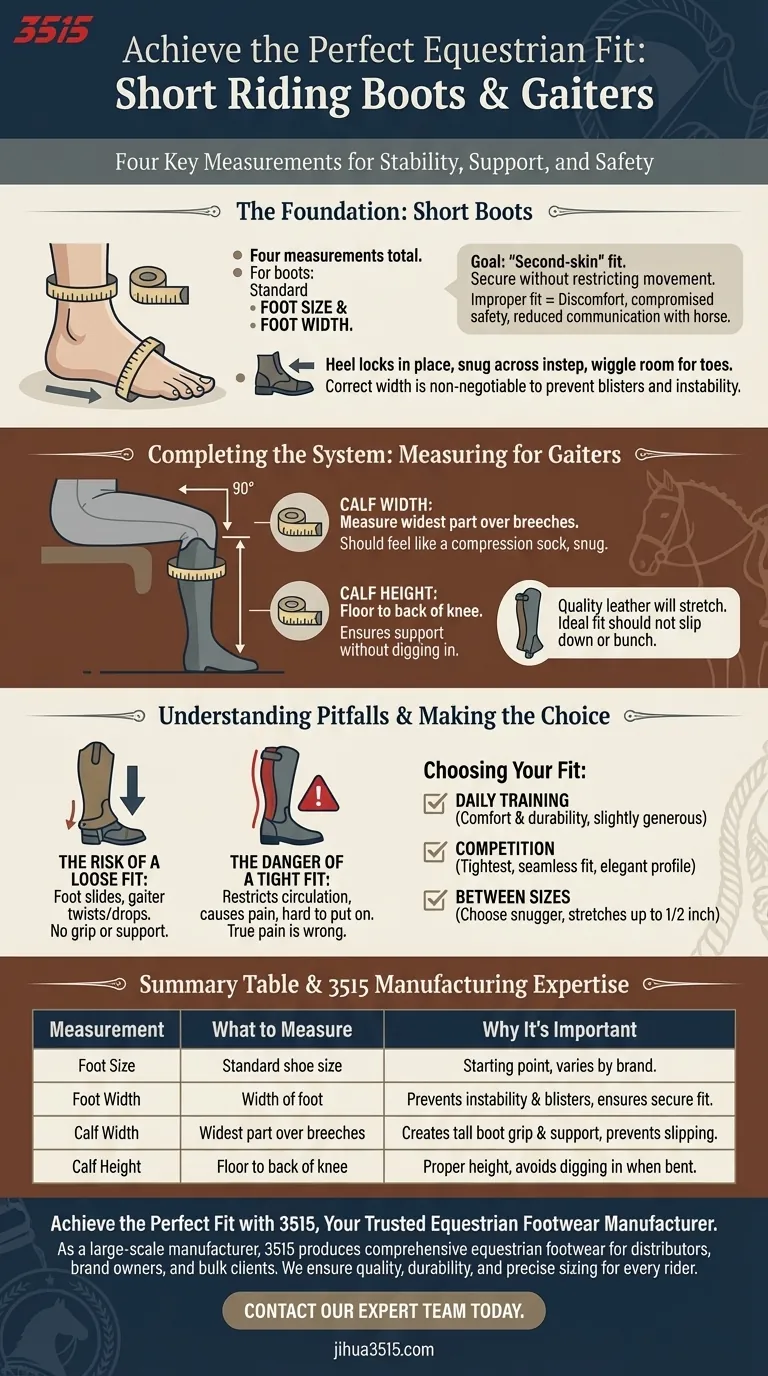
Visual Guide
Related Products
- Wholesale Durable Mid-Cut Tactical Boots for Custom & Private Label Brands
- Wholesale Lightweight Tactical Boots with Dial Closure OEM & Bulk Orders
- Premium Wholesale Tactical Style Safety Shoes Boots with Quick Lacing
- Wholesale Lightweight Tactical Boots Custom Manufacturer for Desert & Combat Use
- Durable Goodyear Welt Leather Work Boots for Wholesale & Private Label
People Also Ask
- How should tactical boots be stored to maintain their condition? Protect Your Gear Investment
- What are the main construction similarities between tactical boots and tactical sneakers? Built for Performance & Durability
- What are some key features of top-tier tactical boots for 2023? Find the Perfect Boot for Your Mission
- How does the extended self theory explain high-value footwear? Build Your Professional Identity and Status
- What are the general characteristics of tactical boots? Lightweight, Agile Footwear for Professionals



















