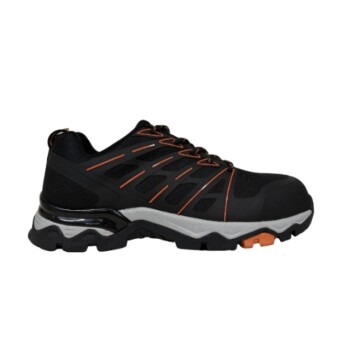
The technical significance of setting a friction coefficient of 0.4 lies in its ability to simulate a standardized, "typical" contact environment. In finite element simulations, this specific value acts as a control parameter between a moving outsole and a fixed ground surface, allowing engineers to accurately benchmark and quantify the slip-resistance capabilities of different shoe designs.
By establishing 0.4 as a constant baseline for frictional contact, designers can isolate geometric and material variables to make data-driven decisions regarding outsole formulations and tread patterns.
Defining the Simulation Environment
Establishing the Contact Pair
The core of the simulation involves defining the interaction between two distinct bodies: the fixed ground surface and the moving outsole.
The Role of the Coefficient
The friction coefficient of 0.4 is applied to this interaction to represent typical frictional behavior.
Creating a Standardized Benchmark
Using a specific, consistent value like 0.4 provides a stable baseline. This standardization ensures that any observed changes in performance are due to design alterations, not fluctuations in environmental variables.
Quantifying Outsole Performance
Analyzing Microscopic Performance
The simulation does not just look at global movement; it quantifies performance at a microscopic level. This allows for a detailed analysis of how specific areas of the tread interact with the ground.
Evaluating Slip Resistance
The primary metric derived from this setup is the outsole's ability to resist slips.
Isolating Design Variables
By holding the friction coefficient constant, engineers can determine exactly which tread geometries contribute most effectively to traction.
Driving Manufacturing Decisions
Informing Material Formulations
The quantitative data produced by these simulations directly influences the chemical composition of the outsole. If a design fails the benchmark, the material formulation may need adjustment to increase inherent grip.
Refining Mold Designs
Simulation results guide the physical geometry of the shoe. Engineers use this data to modify mold designs, ensuring the final tread pattern is optimized for the expected contact conditions.
Understanding the Trade-offs
The Limit of "Typical" Behavior
While 0.4 represents a "typical" scenario, it is fundamentally a standardized approximation. Real-world surfaces vary wildly, from ice (near 0) to dry concrete (near 1.0).
Benchmark vs. Reality
This simulation is excellent for comparative analysis between designs. However, relying solely on this single coefficient may not fully predict performance in extreme environments or specialized surface conditions.
How to Apply This to Your Project
Once you have run simulations using the 0.4 coefficient, use the data to categorize your next steps:
- If your primary focus is comparative design: Use the results to rank different tread patterns against each other, selecting the one with the highest resistance metrics under this standard load.
- If your primary focus is material selection: Use the data to validate whether your current rubber compound provides sufficient friction or if a softer, higher-friction formulation is required to meet the 0.4 benchmark.
Ultimately, this parameter transforms subjective design concepts into objective, quantifiable engineering data.
Summary Table:
| Metric Type | Value/Parameter | Technical Significance |
|---|---|---|
| Friction Coefficient | 0.4 | Establishes a standardized 'typical' benchmark for slip-resistance testing. |
| Simulation Focus | Microscopic Analysis | Evaluates tread interaction at a granular level to isolate design variables. |
| Primary Goal | Design Benchmarking | Allows for objective comparison between different outsole mold geometries. |
| Impact Area | Material Formulation | Directs chemical composition adjustments and rubber compound selection. |
Partner with 3515 for Precision-Engineered Footwear Solutions
At 3515, we leverage advanced technical insights to deliver high-performance footwear for global markets. As a large-scale manufacturer serving distributors and brand owners, we offer comprehensive production capabilities for all footwear types, anchored by our flagship Safety Shoes series.
Our extensive portfolio covers work and tactical boots, outdoor shoes, training shoes, sneakers, and Dress & Formal shoes designed to meet diverse bulk requirements. By integrating scientific benchmarks like FEA simulation data into our manufacturing process, we ensure every outsole provides optimal traction and durability.
Ready to elevate your product line with a trusted manufacturing partner?
Contact Us Today to Discuss Your Bulk Requirements
References
- Farihur Raiyan, Md Samsul Arefin. Numerical Simulation of Slip Resistance of Shoe Sole Tread Patterns Using Finite Element Method. DOI: 10.38032/scse.2025.3.127
This article is also based on technical information from 3515 Knowledge Base .
Related Products
- Premium Suede Sport Safety Shoes for Wholesale & Bulk Orders
- Premium Lightweight Safety Shoes for Wholesale & Bulk Orders
- Premium KPU Injection Athletic Style Safety Shoes
- Wholesale Anti-Smash & Puncture-Proof Safety Shoes Custom Manufacturing for Brands
- Advanced KPU Athletic Safety Shoe with Steel Toe Cap Anti-Slip Rotary Lacing System
People Also Ask
- What industries have specific OSHA footwear requirements? Ensure Compliance & Protect Your Workforce
- What are the primary functions of professional safety shoes? Maximize Safety in Water Supply Confined Spaces
- What role do specialized safety shoes play in preventing falls? Engineering Stability in Industrial Environments
- What happens during the cutting stage of safety shoes manufacturing? Precision, Process & Quality
- How do gait analysis algorithms ensure accuracy in footwear? Master Step Length Precision for Boots & Sneakers