
The defining features of a riding boot sole are a pronounced heel for safety and a carefully designed tread for specific types of grip and control. Unlike a walking or work boot, a riding sole is a specialized tool engineered to interact precisely with either a stirrup or a motorcycle footpeg, where a failure in performance can have serious consequences.
The core purpose of a riding boot sole is not walking comfort but functional safety. Its design prioritizes preventing your foot from slipping through a stirrup or off a peg while providing the exact level of grip needed for control, without becoming a dangerous trap.
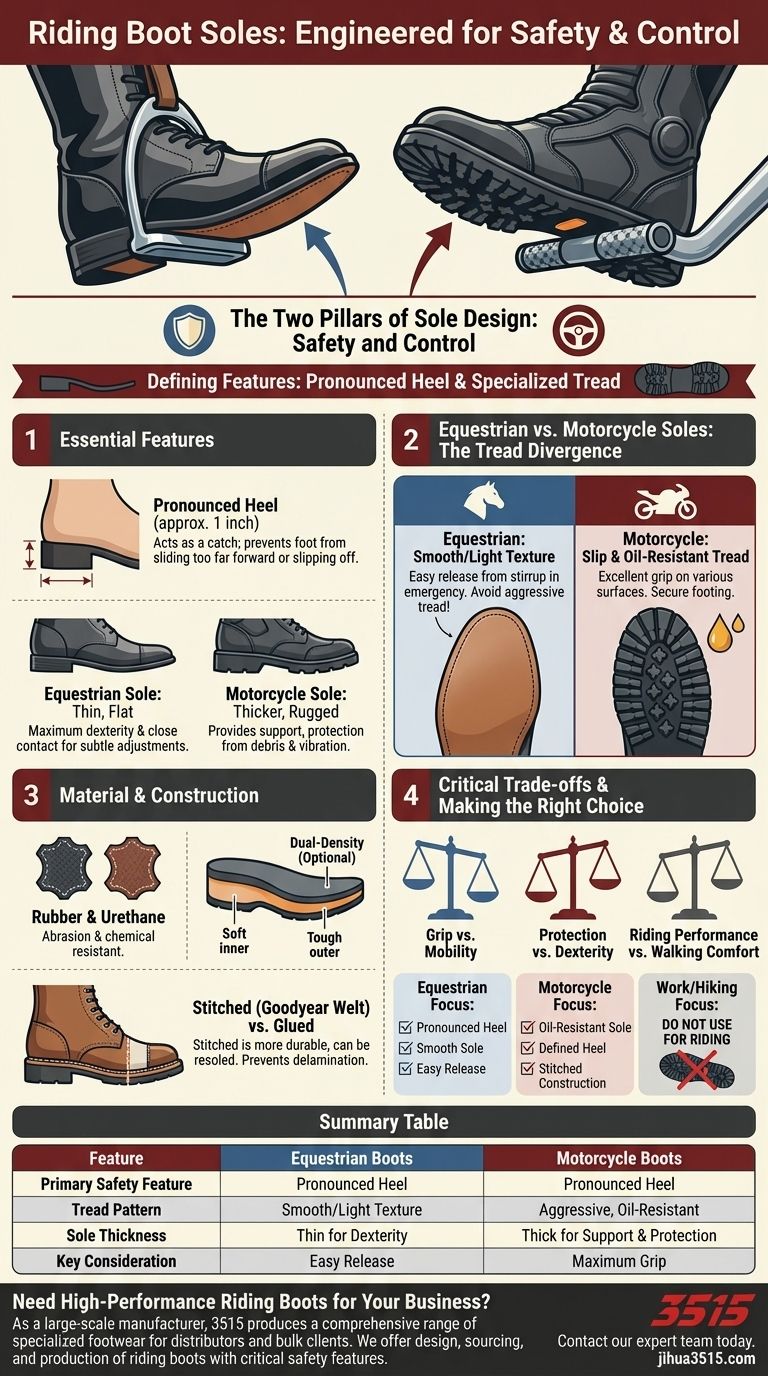
The Two Pillars of Sole Design: Safety and Control
Every feature of a proper riding sole can be traced back to one of two fundamental needs: ensuring the rider's foot stays where it should and allowing for precise control and quick release when necessary.
The Essential Heel
The most critical safety feature is a pronounced heel, typically around one inch high. Its sole purpose is to act as a catch, preventing the rider's foot from sliding too far forward and getting trapped in an equestrian stirrup or slipping off a motorcycle footpeg.
This feature is non-negotiable for safe riding in either discipline.
Sole Thickness and Feel
The thickness of the sole dictates how well the rider can feel and interact with the stirrup or controls.
Equestrian boots favor a thin, relatively flat sole. This provides maximum dexterity and close contact, allowing the rider to make subtle adjustments to foot position in the stirrup.
Motorcycle boots require a slightly thicker, more rugged sole to provide support when holding up the weight of the bike and to offer protection from road debris and vibration.
Tread Pattern and Grip
The tread is where the needs of equestrian and motorcycle riders diverge most significantly.
For equestrian riding, the sole is smooth or has a very light texture. This allows the foot to slide out of the stirrup easily in an emergency, preventing the rider from being dragged. An aggressive tread, like on a hiking boot, is extremely dangerous as it can get caught.
For motorcycle riding, the sole needs excellent grip on various surfaces, including oily or wet pavement. The tread pattern is designed to be slip-resistant and oil-resistant to ensure solid footing when stopping or maneuvering the bike.
Material and Construction
Modern materials and construction methods enhance the safety and durability of riding soles.
The Role of Rubber and Urethane
Most modern riding soles are made from durable rubber or urethane compounds. These materials are chosen for their ability to resist abrasion, cuts, and degradation from oil and chemicals.
Some advanced boots feature dual-density soles, with a softer inner layer for cushioning and a tougher outer layer for durability and traction.
Stitched vs. Glued Construction
High-quality motorcycle boots often feature a stitched sole (like a Goodyear welt). This method is far more durable than simply gluing the sole to the boot upper.
A stitched sole is less likely to delaminate under the stresses of riding and often allows the boot to be resoled, extending its lifespan significantly.
Understanding the Critical Trade-offs
Choosing the right boot means understanding the compromises inherent in its design. A boot that excels in one area often sacrifices performance in another.
Grip vs. Mobility
The central trade-off is grip. A motorcycle boot needs high grip for stationary footing, while an equestrian boot needs low grip for easy release. Using a boot with the wrong kind of tread for your discipline is a major safety risk.
Protection vs. Dexterity
A thick, puncture-resistant sole, like that of a work boot, offers maximum foot protection but severely limits the feel and fine control needed for riding. Riding boots are designed to find the right balance for their specific purpose.
Riding Performance vs. Walking Comfort
Riding boots are optimized for performance and safety while on a horse or a motorcycle. They are often stiff and have a sole not intended for long-distance walking, which is a necessary compromise for providing proper support and protection.
Making the Right Choice for Your Goal
Your selection must be guided by your specific activity.
- If your primary focus is equestrian riding: Your non-negotiable features are a pronounced heel and a smooth or lightly-textured sole to ensure safety in the stirrup.
- If your primary focus is motorcycle riding: Prioritize an oil-resistant, non-slip sole with a defined heel, good abrasion resistance, and durable, stitched construction for longevity.
- If you are using a boot for work or hiking: Do not use it for riding. The aggressive lug soles create a significant and well-known safety hazard with stirrups.
Ultimately, choosing the right sole is an investment in your safety and control as a rider.
Summary Table:
| Feature | Equestrian Boots | Motorcycle Boots |
|---|---|---|
| Primary Safety Feature | Pronounced Heel | Pronounced Heel |
| Tread Pattern | Smooth/Light Texture | Aggressive, Oil-Resistant |
| Sole Thickness | Thin for Dexterity | Thick for Support & Protection |
| Key Consideration | Easy Release from Stirrup | Maximum Grip on Surfaces |
Need High-Performance Riding Boots for Your Business?
As a large-scale manufacturer, 3515 produces a comprehensive range of specialized footwear for distributors, brand owners, and bulk clients. Our production capabilities encompass all types of riding boots, designed with the critical safety and performance features detailed above. We can help you source or create the perfect boots for your market.
Contact our expert team today to discuss your specific needs and get a quote.
Visual Guide
Related Products
- Wholesale Leather Ankle Boots with Lug Soles for Custom Brand Manufacturing
- Wholesale Waterproof Tactical Boots Custom Suede & High-Traction Soles
- Wholesale Leather Work Boots with Customizable Wedge Sole for Brands
- Durable Rubber Sole Outdoor Shoes Wholesale & Custom Manufacturing
- Durable Leather Moc Toe Work Boots for Wholesale & Custom Manufacturing
People Also Ask
- What is the difference between full-grain and top-grain leather? Premium Material Guide for Boot Manufacturers
- What are the key qualities of leather for work boots? Superior Durability, Breathability & Custom Fit
- What is the complete process for deep cleaning leather work boots? A Step-by-Step Guide to Preserve Your Investment
- What are the advantages of leather uppers in work boots? Unmatched Durability & Protection
- How should new leather work boots be broken in? A Guide to Comfort and Durability
















