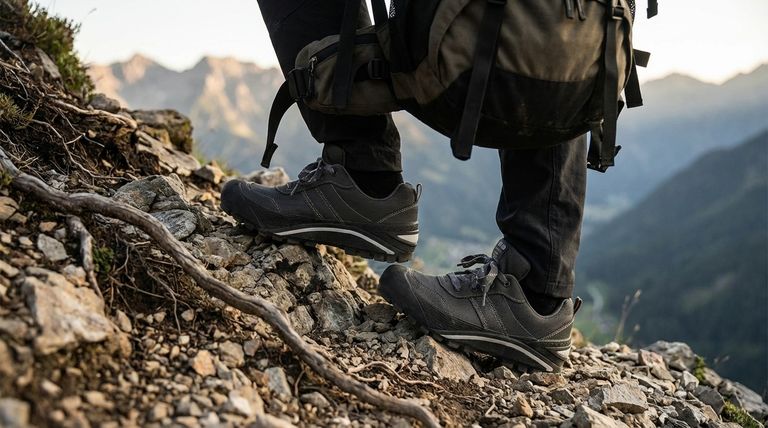
At its core, a hiking boot's ankle support is a structural defense system for one of your body's most vulnerable joints on the trail. By using a higher cuff and rigid materials, boots physically limit excessive side-to-side ankle motion, which is the primary cause of painful rolls, twists, and sprains on uneven or rocky terrain. This stability is especially critical when carrying the extra weight of a backpack.
The primary benefit of ankle support is not just about preventing a single, catastrophic injury. It's about creating a stable platform that reduces constant, small-scale muscle fatigue, compensates for unstable ground, and helps you bear heavy loads safely over long distances.
How Hiking Boots Engineer Ankle Stability
True ankle support comes from a combination of features working together. It’s a system designed to create a secure foundation, from the ground up.
The High Cuff and Mechanical Restriction
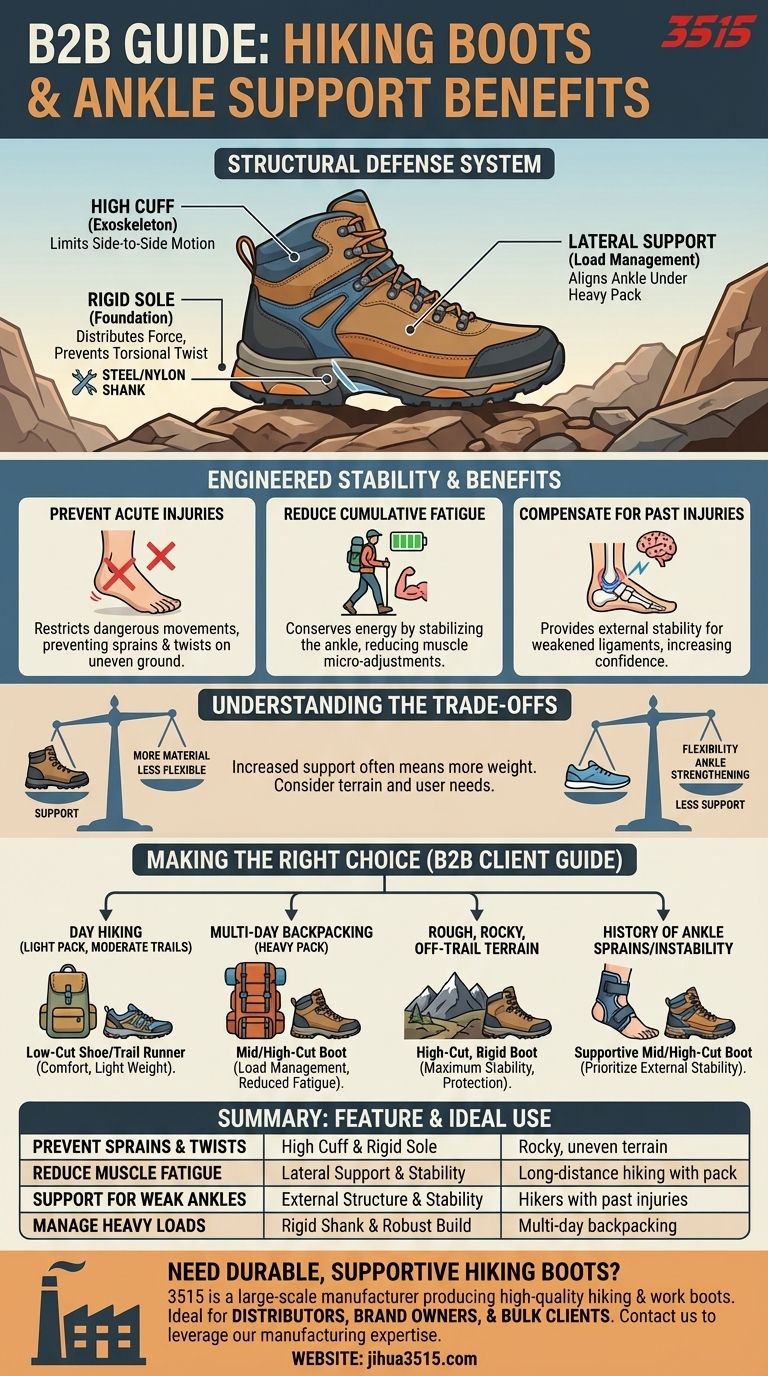
The most visible feature is the mid or high-cut cuff that wraps around the ankle. This structure acts as an external skeleton, or exoskeleton.
Its main job is to physically block the ankle from rolling past its normal range of motion. This is your first line of defense against the sudden twists that lead to sprains.
A Rigid Sole as the Foundation
Ankle support begins at the bottom of the boot. A stiff, structured sole with features like a steel or nylon shank prevents the boot from twisting torsionally.
This rigidity ensures that when you step on an angled rock or root, the force is distributed across the entire sole instead of being transferred directly to your ankle. A flimsy sole would simply twist, allowing your ankle to roll with it.
Managing the Force of a Heavy Pack
Carrying a heavy backpack significantly raises your center of gravity and increases the downward force on your joints with every step.
The robust structure of a hiking boot provides lateral support to keep your leg and ankle aligned under this increased load. It prevents your ankle from buckling under the combined weight of your body and your gear.
The Impact on Your Performance and Health
This engineered stability translates into tangible benefits that go beyond just preventing a single fall. It affects your endurance, confidence, and long-term joint health.
Preventing Acute Injuries
The most obvious benefit is the prevention of sprains and twists. By restricting dangerous movements, a supportive boot is critical for navigating rocky trails, loose scree, or unpredictable terrain where one misstep can end a hike.
Reducing Cumulative Fatigue
On a long hike, your ankle muscles are constantly making micro-adjustments to keep you balanced. A supportive boot takes on much of this stabilization work.
By reducing the muscular effort required for balance, the boot helps conserve energy and delay the onset of fatigue. This allows you to hike longer and feel stronger toward the end of the day.
Compensating for Past Injuries
If you have a history of ankle injuries, your ligaments may be weakened. This can damage proprioceptors—the sensors that tell your brain the position of your ankle.
A supportive boot provides the external stability that your own ligaments can no longer guarantee. It gives your brain a reliable platform to work from, increasing your confidence on challenging terrain.
Understanding the Trade-offs
While ankle support is a significant benefit, it is not without its costs. The most supportive boots are often heavier and less flexible, which is a critical consideration.
The Cost: Weight and Flexibility
More support almost always means more material, more weight, and less flexibility. A heavy, rigid boot requires more energy to lift with every step and can feel cumbersome compared to lighter footwear like trail running shoes.
The Alternative: Ankle Strengthening
For some hikers on well-maintained trails, the best defense is not a rigid boot but strong, well-conditioned ankles. Lighter, more flexible footwear can promote natural foot movement and help build this strength over time.
When Less Support Is Appropriate
On smooth, predictable trails or for fast-and-light objectives, a less supportive trail shoe or low-cut hiker is often a better choice. They offer more agility and significantly reduce fatigue related to footwear weight.
Making the Right Choice for Your Hike
The level of ankle support you need is a direct function of the terrain, the weight on your back, and your personal injury history.
- If your primary focus is day hiking on moderate trails with a light pack: A low-cut hiking shoe or trail runner often provides sufficient support while maximizing comfort and minimizing weight.
- If your primary focus is multi-day backpacking with a heavy pack: A mid or high-cut boot is essential for managing the extra load and reducing the risk of fatigue-related injury.
- If your primary focus is navigating rough, rocky, or off-trail terrain: The maximum stability of a high-cut, rigid hiking boot is your best defense against unpredictable footing and potential ankle rolls.
- If you have a history of ankle sprains or instability: Prioritize a supportive mid or high-cut boot, even on moderate trails, to provide the external stability your joints need.
Ultimately, choosing the right footwear is about matching the tool to the task to keep you moving safely and efficiently on the trail.
Summary Table:
| Benefit | Key Feature | Ideal For |
|---|---|---|
| Prevent Sprains & Twists | High Cuff & Rigid Sole | Rocky, uneven terrain |
| Reduce Muscle Fatigue | Lateral Support & Stability | Long-distance hiking with a pack |
| Support for Weak Ankles | External Structure & Stability | Hikers with past injuries |
| Manage Heavy Loads | Rigid Shank & Robust Build | Multi-day backpacking |
Need durable, supportive hiking boots for your customers?
As a large-scale manufacturer, 3515 produces a comprehensive range of high-quality hiking and work boots designed for maximum ankle support, durability, and performance. Our production capabilities encompass all types of footwear, perfect for distributors, brand owners, and bulk clients looking to equip hikers and outdoor enthusiasts.
Contact us today to discuss your footwear needs and leverage our manufacturing expertise!
Visual Guide
Related Products
- Wholesale High-Traction Camo Boots - Custom Manufacturer for Brands
- Durable Rubber Sole Outdoor Shoes Wholesale & Custom Manufacturing
- Durable Spiked Camouflage Boots Wholesale & Factory Production
- Wholesale Lightweight Tactical Boots Custom Manufacturer for Desert & Combat Use
- Durable Goodyear Welt Leather Work Boots for Wholesale & Private Label
People Also Ask
- What are the key features of the new line of camo boots? Built for Extreme Cold & Rugged Terrain
- Are camo boots necessary for hunting success? Prioritize Performance Over Pattern
- How does the Rank Score Test identify the primary causes of premature failure in tactical and work boots? Key Insights
- What is the technical logic behind using closed-eye testing for tactical boots? Unlocking Peak Footwear Stability
- What shoes to wear for a security job? Durable, Protective Footwear for Long Shifts