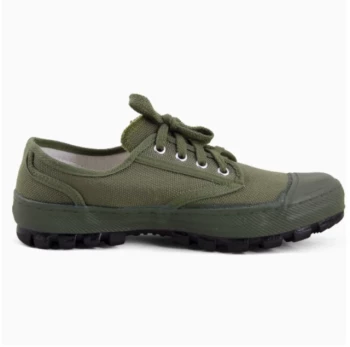
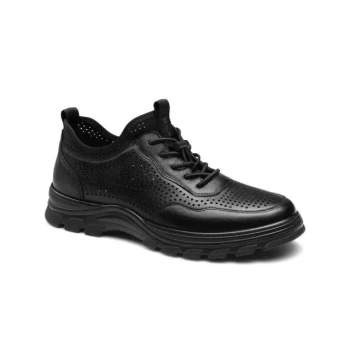
At its core, a combination sole is a shoe sole constructed from two or more different materials. This design approach is used to leverage the unique strengths of each material while simultaneously compensating for their inherent weaknesses, creating a more balanced and functional final product.
The central idea behind a combination sole is to achieve a "best of both worlds" outcome. By strategically blending materials like leather with rubber or foam with rubber, shoemakers can overcome the limitations of a single-material design, enhancing durability, comfort, or traction.
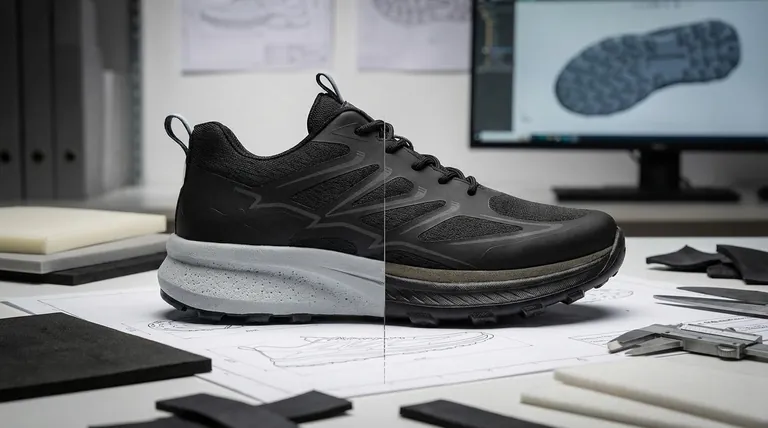
The Problem: Why Single-Material Soles Fall Short
To understand the value of a combination sole, you must first understand the compromises inherent in using just one material. Each traditional sole material excels in some areas but fails in others.
The Limits of Traditional Leather
Leather soles are a hallmark of classic, high-end footwear. They are breathable, mold to your foot over time, and offer a sleek, elegant profile.
However, they wear down relatively quickly on abrasive surfaces like pavement and offer very poor traction, especially in wet conditions.
The Weakness of Pure Foam
Foam soles, common in athletic and comfort-oriented shoes, are exceptionally lightweight and provide excellent cushioning.
Their primary drawback is a lack of durability and grip. Foam abrades easily and can be dangerously slippery on smooth, wet surfaces.
The Downside of Full Rubber
A sole made entirely of rubber offers fantastic traction and is extremely durable. It can withstand significant wear and tear.
The trade-off is weight and flexibility. A full rubber sole can be heavy, stiff, and less comfortable for all-day wear compared to lighter, more cushioned options.
How Combination Soles Provide the Solution
By blending these materials, designers create a sole that is superior to the sum of its parts. They place specific materials exactly where their properties are most needed.
The Leather and Rubber Hybrid
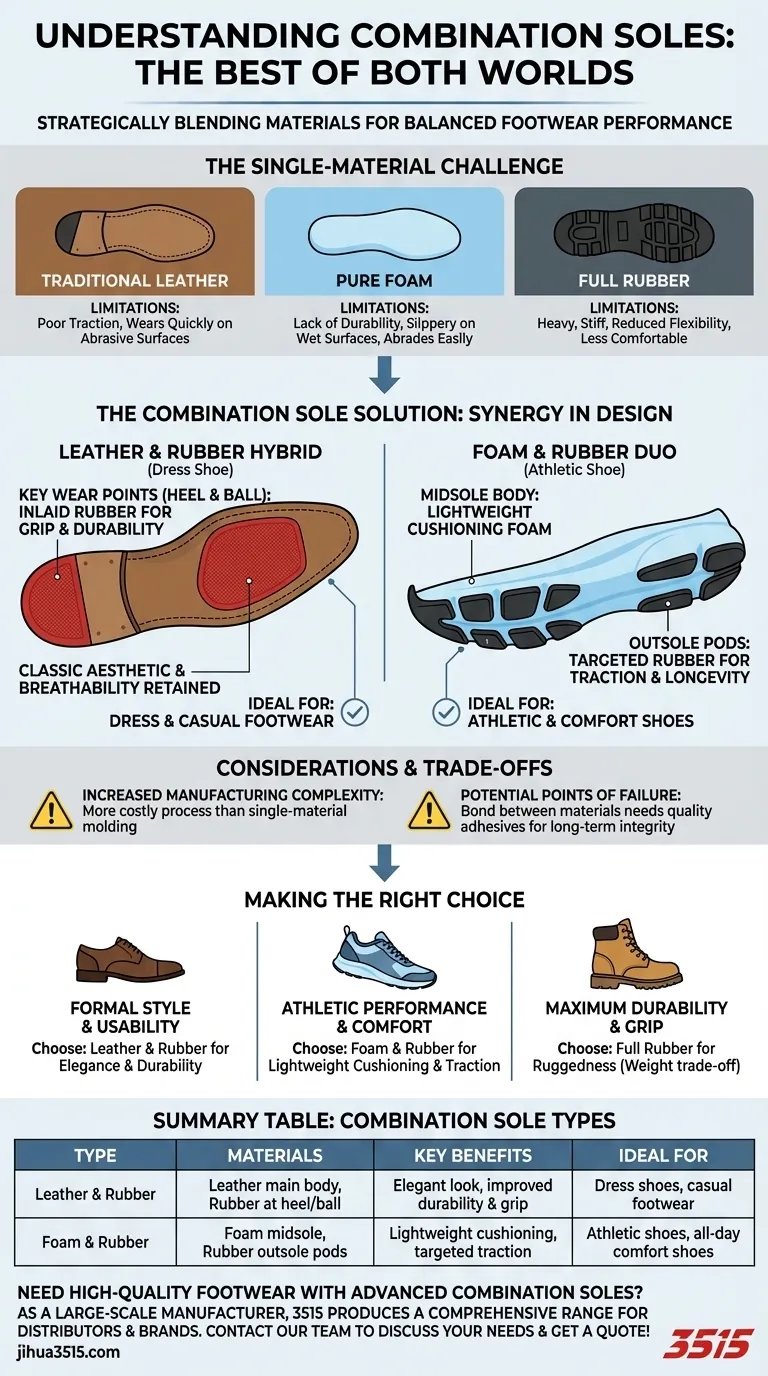
This is a common sight on high-quality dress and casual shoes. A leather sole will have rubber sections strategically inlaid at the key wear points: the heel and the ball of the foot.
This design retains the classic aesthetic and breathability of leather while adding the crucial grip and durability of rubber right where the sole makes the most contact with the ground.
The Foam and Rubber Duo
This is the standard for modern athletic and walking shoes. The main body of the midsole is made of lightweight cushioning foam to absorb impact and reduce weight.
High-wear areas on the outsole, such as the heel-strike zone and the toe-off point, are then covered with durable rubber "pods" to provide superior traction and longevity without adding excessive weight.
Understanding the Trade-offs
While often superior, combination soles are not without their own set of considerations. Understanding these helps you evaluate shoe quality and construction.
Increased Manufacturing Complexity
Fusing different materials together is a more complex and costly process than molding a sole from a single material. This can sometimes be reflected in the shoe's final price.
Potential Points of Failure
The bond between the two different materials can, over time and with heavy use, become a potential point of separation or failure. Quality construction and adhesives are critical to ensuring the sole's long-term integrity.
Making the Right Choice for Your Goal
Your choice in footwear should always align with your primary need. Combination soles offer specialized solutions for different activities.
- If your primary focus is formal style with real-world usability: Look for dress shoes with a leather and rubber combination sole for a perfect blend of elegance and durability.
- If your primary focus is athletic performance or all-day comfort: Choose shoes with a foam and rubber combination to get lightweight cushioning and targeted, high-wear traction.
- If your primary focus is maximum durability and grip for work or hiking: A full rubber sole might still be the superior choice, as the trade-off in weight is justified by the need for ruggedness.
Ultimately, understanding the purpose of a combination sole empowers you to look beyond simple aesthetics and choose a shoe built to perform for its intended function.
Summary Table:
| Combination Sole Type | Materials Used | Key Benefits | Ideal For |
|---|---|---|---|
| Leather & Rubber | Leather main body, rubber at heel/ball | Elegant look, improved durability & grip | Dress shoes, casual footwear |
| Foam & Rubber | Foam midsole, rubber outsole pods | Lightweight cushioning, targeted traction | Athletic shoes, all-day comfort shoes |
Need high-quality footwear with durable, comfortable combination soles?
As a large-scale manufacturer, 3515 produces a comprehensive range of footwear for distributors, brand owners, and bulk clients. Our production capabilities encompass all types of shoes and boots, including those with advanced combination sole designs that deliver the perfect balance of performance and longevity.
Contact our team today to discuss your specific needs and get a quote!
Visual Guide
Related Products
- Wholesale Waterproof Tactical Boots Custom Suede & High-Traction Soles
- Wholesale Leather Ankle Boots with Lug Soles for Custom Brand Manufacturing
- Wholesale Durable Camouflage Canvas Shoes with High-Traction Cleated Rubber Sole
- Durable Rubber Sole Outdoor Shoes Wholesale & Custom Manufacturing
- Wholesale Breathable Training Shoes Custom Athletic Footwear Manufacturer
People Also Ask
- What waterproof technology is used in tactical boots? Unlock All-Weather Performance & Protection
- What are the advantages and disadvantages of waterproof tactical boots? A Guide to the Key Trade-Offs
- What is the significance of waterproof functionality in tactical boots? Essential for Health & Performance
- What is the role of professional 3D medical imaging software in optimizing tactical boot design and performance?
- What features enhance breathability and comfort in tactical boots? A Guide to Superior Footwear Performance