Beyond simply keeping your feet dry, waterproofing technology in riding boots provides critical secondary benefits that directly impact your health, safety, and the longevity of your gear. This technology safeguards the boot's structural materials from water damage while preventing dangerous health issues and distractions caused by wet, uncomfortable feet.
Waterproofing is not just a comfort feature; it's a strategic investment in your long-term health, the durability of your boots, and your safety on the road by eliminating distractions caused by physical discomfort.
The Impact on Rider Health and Safety
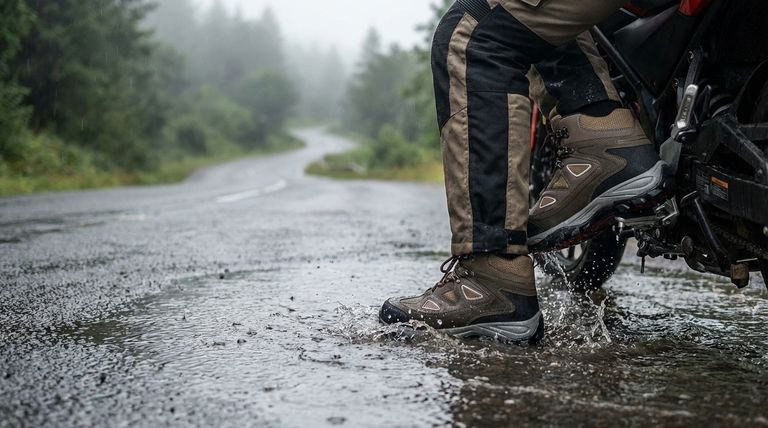
The most significant benefits of waterproofing extend beyond immediate comfort and into the realm of personal well-being and on-road focus.
Preventing Skin and Foot Ailments
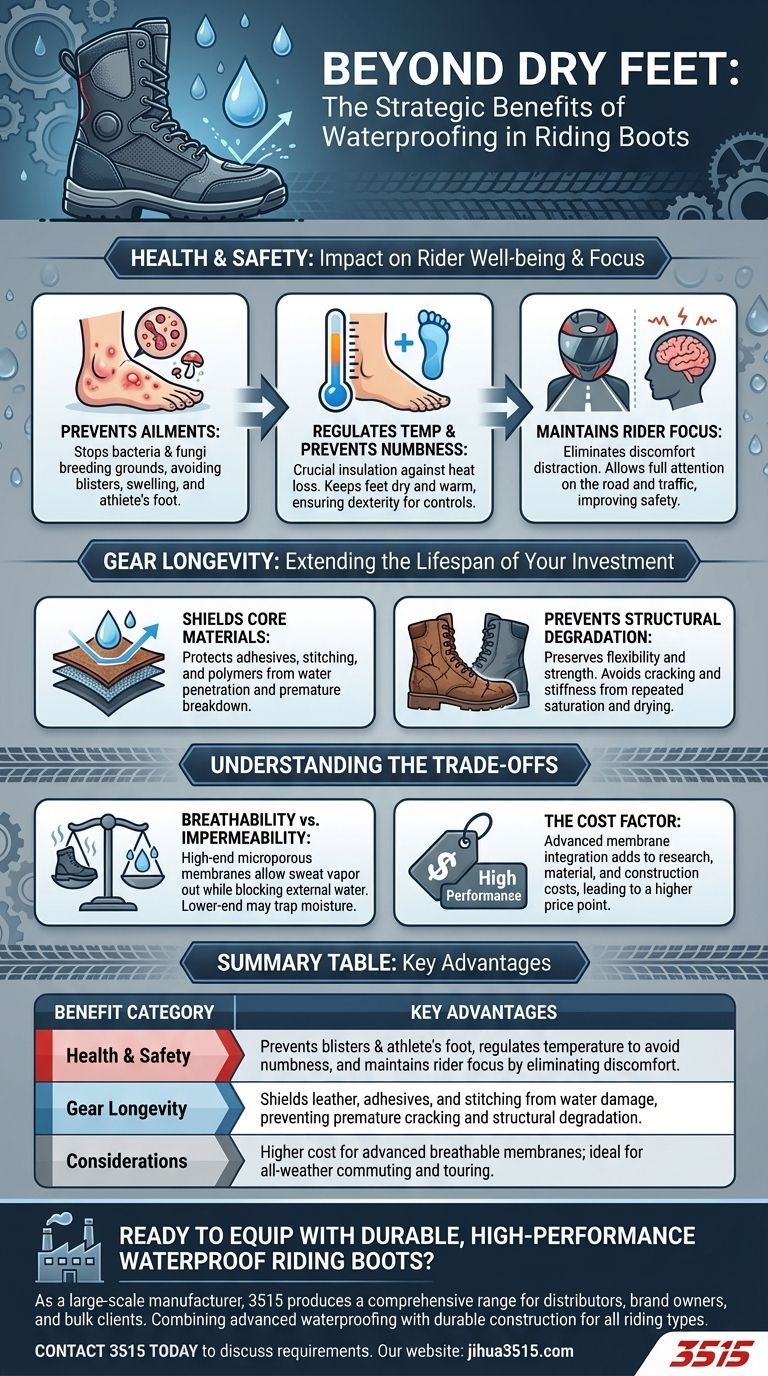
Consistently wet feet create a breeding ground for bacteria and fungi. This can lead to painful blisters, swelling, or chronic conditions like athlete's foot.
A waterproof barrier is the first line of defense against these issues, ensuring a healthier environment for your feet on long or multi-day rides.
Regulating Temperature and Preventing Numbness
Water pulls heat away from the body much faster than air. Wet feet quickly become cold feet, which can lead to numbness and a loss of feeling for your bike's controls.
Waterproof boots provide crucial insulation, keeping your feet dry and therefore warmer, ensuring you maintain the dexterity needed for safe operation.
Maintaining Rider Focus
Discomfort is a distraction. Wet, cold, or blistering feet can pull your mental focus away from the road and onto your own misery.
By eliminating this major source of discomfort, waterproofing technology allows you to dedicate your full attention to navigating traffic and enjoying the ride safely.
Extending the Lifespan of Your Gear
Water is a primary cause of material degradation in footwear. Waterproofing technology is a direct countermeasure that protects your investment.
Shielding Core Materials
Modern riding boots are complex constructions of leather, textiles, adhesives, and impact-resistant polymers. Prolonged exposure to rain or submersion can cause these materials to break down prematurely.
Waterproofing membranes and sealed seams prevent water from penetrating and compromising the adhesives and stitching that hold the boot together.
Preventing Structural Degradation
When materials like leather become saturated and then dry repeatedly, they can crack, stiffen, and lose their supportive qualities.
This process irreversibly damages the boot's structure, reducing its ability to protect you in an accident. Waterproofing preserves the material's intended flexibility and strength.
Understanding the Trade-offs
While highly beneficial, advanced waterproofing technology does come with considerations that are important for an informed decision.
Breathability vs. Impermeability
The core challenge of waterproofing is blocking water from getting in while letting sweat vapor out. Lower-end waterproof systems can sometimes trap moisture, making your feet feel damp from sweat.
Higher-end technologies, however, utilize microporous membranes that are highly effective at releasing internal moisture while remaining fully waterproof.
The Cost Factor
Integrating a high-performance waterproof and breathable membrane is a complex manufacturing process. This technology adds to the research, material, and construction costs.
As a result, boots featuring this technology are typically positioned at a higher price point than their non-waterproof counterparts.
Making the Right Choice for Your Riding Style
Your ideal boot depends on your typical riding conditions and priorities.
- If your primary focus is all-weather commuting or long-distance touring: A high-quality waterproof boot is a non-negotiable investment for your safety, health, and comfort.
- If your primary focus is fair-weather, short-distance riding: You may prioritize maximum breathability, but a waterproof option still offers valuable protection from unexpected showers and extends the life of your boots.
- If your primary focus is track days or aggressive canyon carving: Specialized, non-waterproof boots designed for maximum ventilation and tactile feedback are often the preferred choice, as weather is a more controlled variable.
Ultimately, choosing a waterproof boot is about ensuring your gear is as resilient and prepared for the elements as you are.
Summary Table:
| Benefit Category | Key Advantages |
|---|---|
| Health & Safety | Prevents blisters & athlete's foot, regulates temperature to avoid numbness, and maintains rider focus by eliminating discomfort. |
| Gear Longevity | Shields leather, adhesives, and stitching from water damage, preventing premature cracking and structural degradation. |
| Considerations | Higher cost for advanced breathable membranes; ideal for all-weather commuting and touring. |
Ready to equip yourself with durable, high-performance riding boots?
As a large-scale manufacturer, 3515 produces a comprehensive range of waterproof footwear for distributors, brand owners, and bulk clients. Our production capabilities ensure your riders are protected from the elements, combining advanced waterproofing technology with durable construction for all types of riding boots.
Contact 3515 today to discuss your requirements and enhance your product line with reliable, long-lasting footwear.
Visual Guide
Related Products
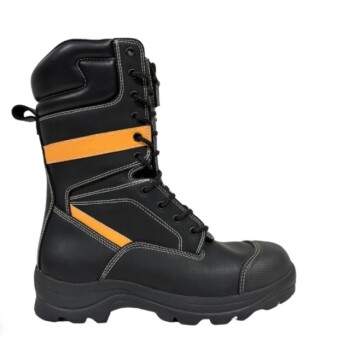
- High Performance Fire-Retardant Waterproof Safety Boots
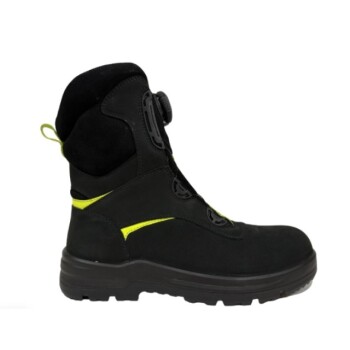
- Premium Flame-Retardant Waterproof Safety Boots and Shoes
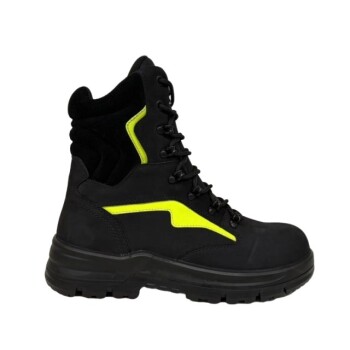
- Premium High-Cut Waterproof Safety Boots Manufacturing & Wholesale Solutions
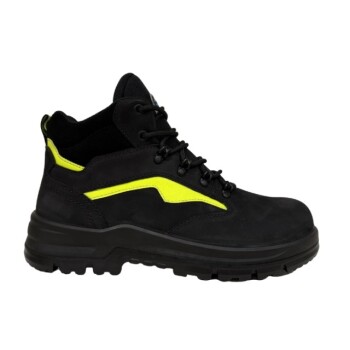
- Wholesale Premium Waterproof Nubuck Safety Shoes Boots
- Premium Wholesale Waterproof Safety Boots High Performance Protection for Industrial Markets
People Also Ask
- Why are waterproof safety boots recommended for certain work environments? Essential Protection for Wet & Hazardous Jobs
- What roles do 3D vision systems and industrial robots play in the manufacturing of fire safety boots? Smart Automation
- How can you ensure your feet stay dry during winter walks? A Two-Part Defense System for Total Comfort
- How should you maintain waterproof boots? A Simple 3-Step Guide to Long-Lasting Performance
- What is a drawback of waterproof boots? The Hidden Cost of Trapped Sweat and Heat