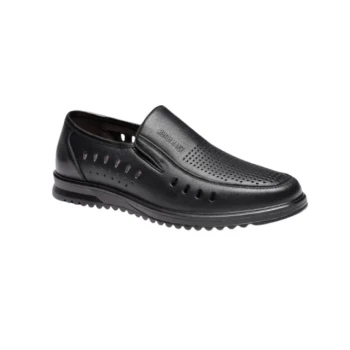
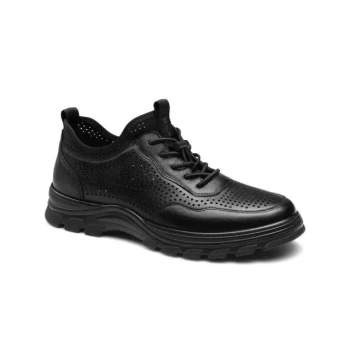
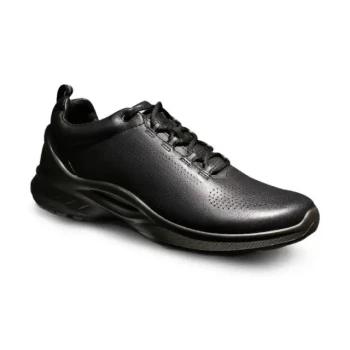
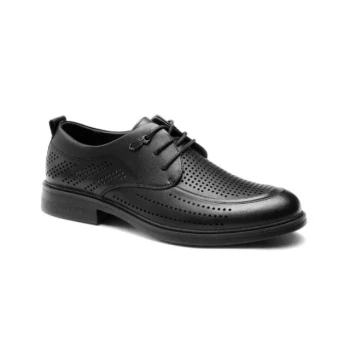
At its core, a sneaker is an athletic shoe designed for performance and comfort. While the term is used broadly, specific sneakers are engineered for distinct activities ranging from high-impact sports like running to casual, everyday wear. Their design is a direct response to the physical demands of the intended activity.
The most critical mistake is assuming one type of sneaker works for all activities. Specialized sneakers are not a marketing gimmick; they are purpose-built tools designed to enhance performance, provide targeted support, and prevent injury.
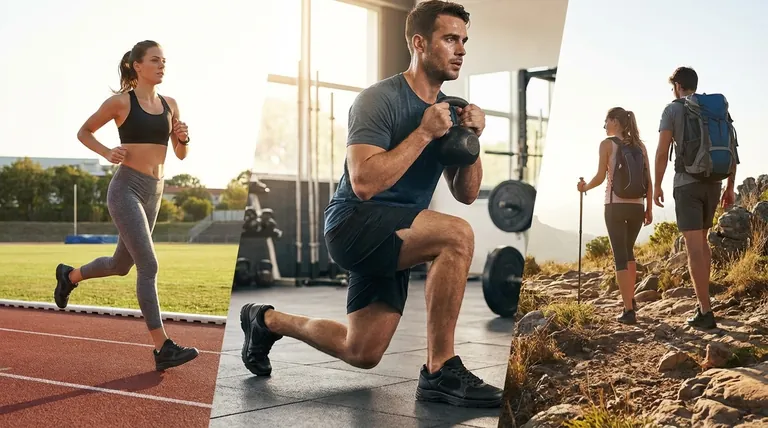
Why Shoe Specialization Matters
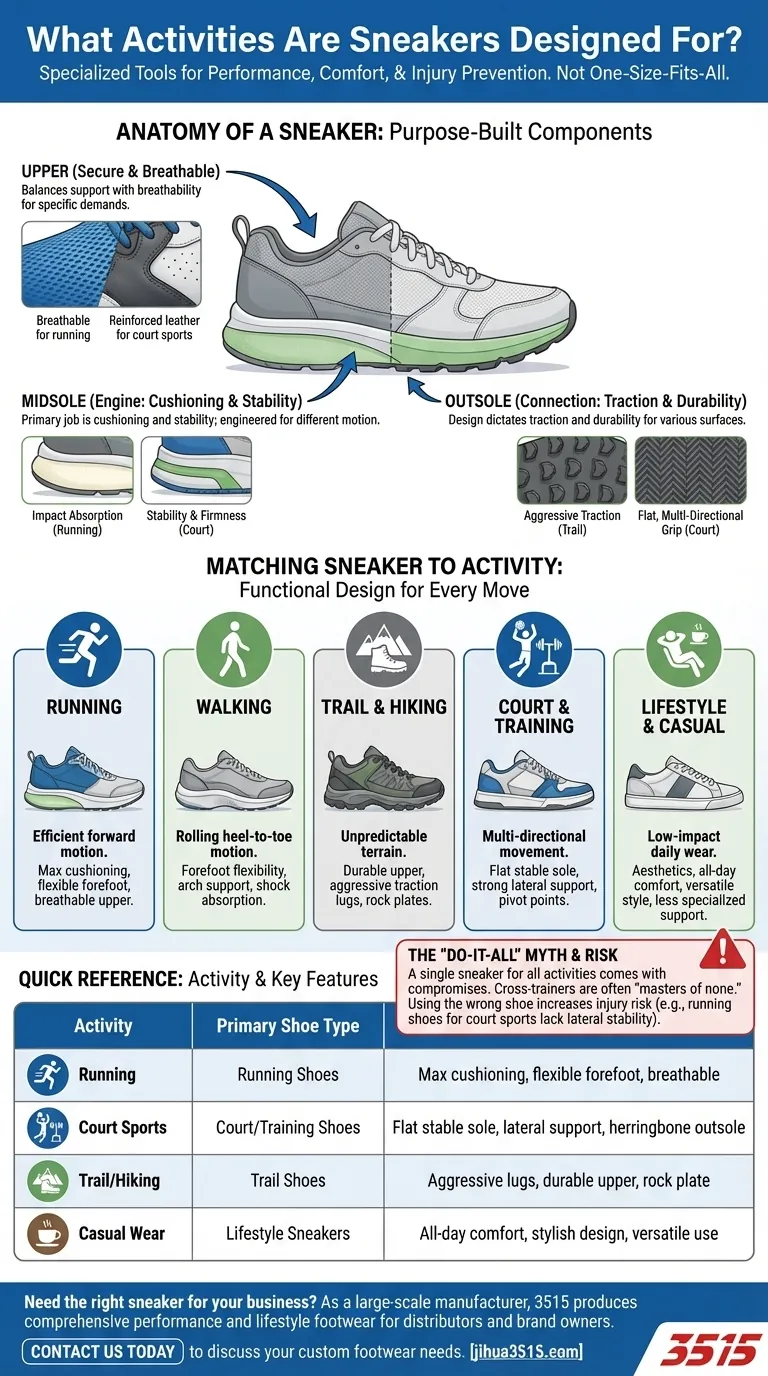
The function of a sneaker is dictated by its three main parts: the midsole, the outsole, and the upper. How these components are constructed determines what the shoe is truly designed for.
The Midsole: The Engine of the Shoe
The midsole is the layer of foam between your foot and the rubber outsole. Its primary job is cushioning and stability.
A running shoe's midsole is engineered to absorb the repetitive impact of forward motion. In contrast, a basketball or tennis shoe has a firmer, more stable midsole to prevent the foot from rolling during rapid side-to-side cuts.
The Outsole: Your Connection to the Ground
The outsole is the rubber part that makes contact with the surface. Its design is all about traction and durability.
Trail running shoes feature deep, aggressive lugs to grip dirt and rock. Court shoes have flatter outsoles with herringbone patterns and pivot points for optimal grip on hardwood or asphalt.
The Upper: Securing Your Foot
The upper is the fabric or leather portion that encloses your foot. It must balance support with breathability.
A shoe designed for training or court sports will have a more robust, supportive upper to lock the foot in place during lateral movements. A long-distance running shoe will prioritize lightweight, breathable mesh to keep the foot cool and comfortable.
Matching the Sneaker to the Activity
Understanding the anatomy of a sneaker makes it clear why different activities demand different designs.
Running Shoes
These are built for one thing: efficient forward motion. They feature significant cushioning in the heel and forefoot, a flexible design to promote a smooth stride, and a breathable upper.
Walking Shoes
While similar to running shoes, walking shoes require more flexibility in the forefoot and good arch support to accommodate the rolling heel-to-toe motion of a walking gait.
Trail & Hiking Shoes
These are built for unpredictable, uneven terrain. They prioritize durability, feature deep outsole lugs for maximum traction, and often include rock plates and waterproof materials.
Court & Training Shoes
Designed for multi-directional movement, these sneakers have flatter, wider, and more stable outsoles. They provide strong lateral support to protect your ankles during quick cuts, jumps, and pivots. This category includes shoes for basketball, tennis, and general gym training.
Lifestyle & Casual Sneakers
These sneakers prioritize aesthetics and all-day comfort for low-impact use. While they borrow design cues from performance shoes, they typically sacrifice specialized support features for style and versatility.
Understanding the Trade-offs: The "Do-It-All" Myth
It's tempting to find one sneaker for everything, but this approach comes with significant compromises.
The Cost of Versatility
A "cross-trainer" is often seen as a jack-of-all-trades. While suitable for a variety of low-impact gym activities, it provides neither the cushioning for a long run nor the specific lateral stability for a competitive court sport. It is a master of none.
The Risk of Injury
Using the wrong shoe for the activity is a direct path to injury. Wearing a running shoe for tennis invites ankle sprains due to its lack of lateral support. Using a stiff court shoe for a 5k run can lead to discomfort and potential stress injuries because it lacks the necessary cushioning and flexibility.
Making the Right Choice for Your Activity
Your choice should be guided by your primary activity to ensure you have the correct support where it counts.
- If your primary focus is running or walking: Choose a shoe with the right level of cushioning and a design that supports consistent forward motion.
- If your primary focus is gym training or court sports: Prioritize a shoe with a flat, stable sole and a reinforced upper for strong lateral support.
- If your primary focus is hiking or trail running: You need a durable shoe with an aggressive outsole for reliable traction on uneven ground.
- If your primary focus is everyday comfort and style: A lifestyle sneaker offers the best balance of comfort and aesthetics for low-impact daily wear.
Choosing the right sneaker is an investment in your performance, comfort, and long-term joint health.
Summary Table:
| Activity | Primary Shoe Type | Key Design Features |
|---|---|---|
| Running | Running Shoes | Maximum cushioning, flexible forefoot, breathable upper |
| Court Sports | Court/Training Shoes | Flat stable sole, lateral support, herringbone outsole |
| Trail/Hiking | Trail Shoes | Aggressive outsole lugs, durable upper, rock plate |
| Casual Wear | Lifestyle Sneakers | All-day comfort, stylish design, versatile use |
Need the right sneaker for your business?
As a large-scale manufacturer, 3515 produces a comprehensive range of performance and lifestyle footwear for distributors, brand owners, and bulk clients. Our production capabilities encompass all types of shoes and boots, ensuring you get the perfect fit for your market.
Contact us today to discuss your custom footwear needs and enhance your product line with purpose-built sneakers!
Visual Guide
Related Products
- Wholesale Breathable Athletic Sneakers - Custom Lightweight Cushioned Footwear Manufacturer
- Lightweight Breathable Sneakers with Wet-Traction Grip for Wholesale & Private Label
- Wholesale Durable Camouflage Canvas Shoes with High-Traction Cleated Rubber Sole
- Wholesale Lightweight Cushioned Athletic Sneakers for Custom Bulk Production
- Wholesale Smart Casual Sneakers with Dial Closure | Factory Direct Manufacturing
People Also Ask
- Why are breathable sneakers necessary for tropical commuting? Stay Cool and Dry in High Humidity
- What is the primary role of shoes in physical activities? Protection, Support & Performance
- In what ways do high-performance Athletic Shoes support stability and proprioception? Enhance Your Movement Precision
- How do specialized lightweight foam midsole materials contribute to the performance and safety of athletic shoes?
- Why are athletic shoes recommended for walking? The Key to Joint Protection and Injury Prevention