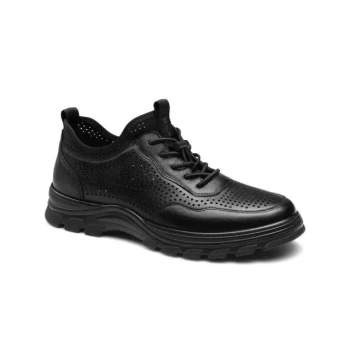
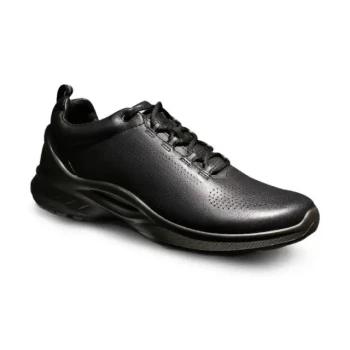
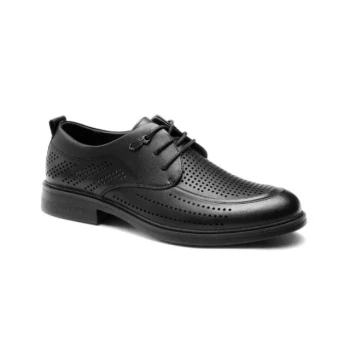
Yes, you can wear sneakers with business attire, but this modern flexibility comes with critical exceptions. The key is understanding that "business attire" is not a single category; the appropriateness of sneakers depends entirely on whether the dress code is business professional or business casual, and on the specific style of the sneaker itself.
The rule is simple: Minimalist, clean "fashion sneakers" are acceptable for a business casual environment. However, all sneakers, regardless of style, remain inappropriate for a traditional business professional setting.

The Critical Distinction: Business Professional vs. Business Casual
The most common point of confusion arises from not distinguishing between the two primary forms of workplace attire. They have fundamentally different expectations for footwear.
Business Professional: The Traditional Standard
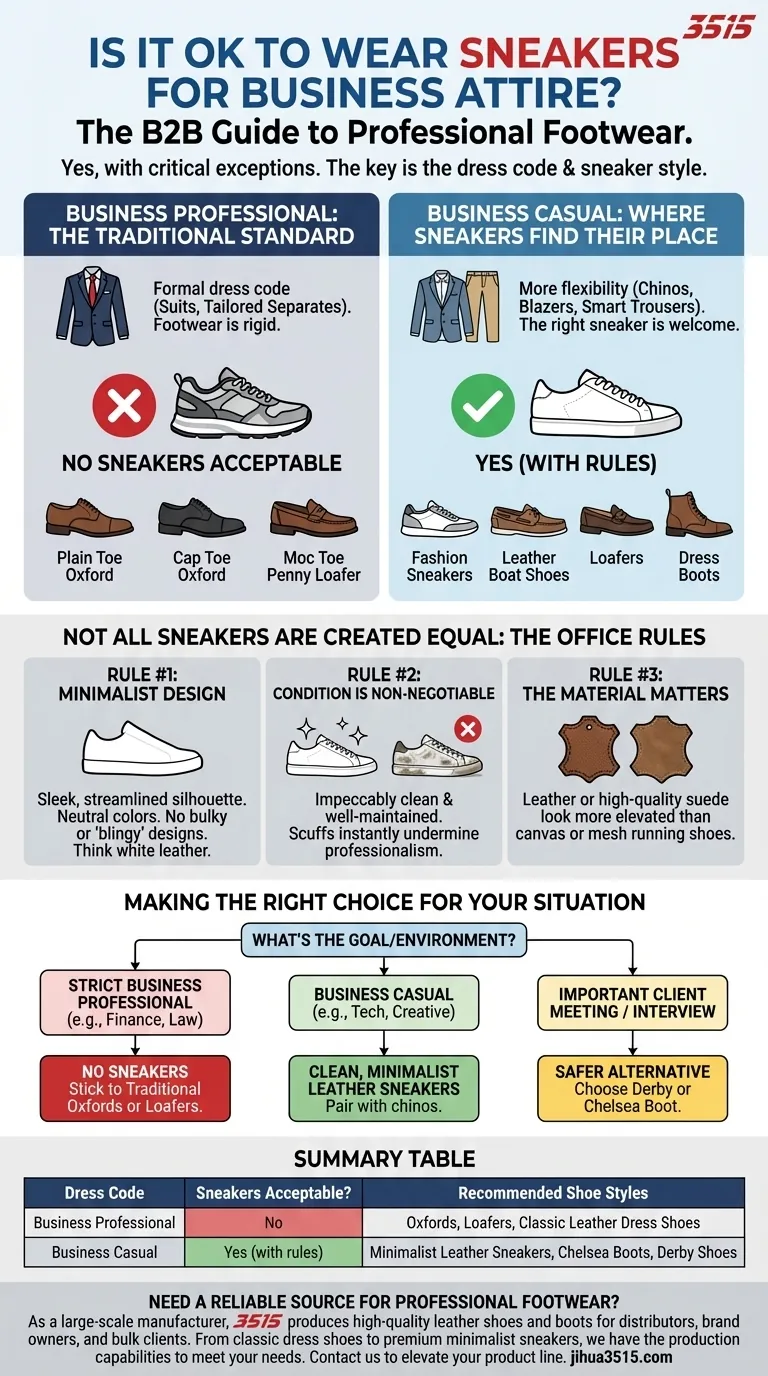
This is the most formal dress code, typically requiring suits and tailored separates. In this context, the footwear standard is equally traditional and rigid.
Appropriate shoes include classic leather dress shoes such as plain toe oxfords, cap toe oxfords, and moc toe penny loafers. Sneakers are not considered acceptable in a business professional environment.
Business Casual: Where Sneakers Find Their Place
Business casual offers more flexibility, pairing pieces like chinos, blazers, and smart trousers. This is the specific environment where the right kind of sneaker is welcome.
These dress codes permit a wider range of footwear, including fashion sneakers, leather boat shoes, loafers, and dress boots.
Not All Sneakers Are Created Equal: The Rules for the Office
Simply getting the green light for "sneakers" isn't enough. The specific shoe you choose sends a powerful message. You must select a pair that looks intentional and polished, not like you just left the gym.
Rule #1: Prioritize a Minimalist Design
The acceptable office sneaker has a sleek, streamlined silhouette and minimal detailing. Think of simple, elegant designs in neutral colors.
White leather sneakers are a classic example, valued for their versatility and clean look. Avoid bulky, athletic running shoes or eye-catching, "blingy" footwear.
Rule #2: Condition is Non-Negotiable
Your sneakers must be impeccably clean and well-maintained. Scuffed, dirty, or worn-out shoes will instantly undermine your professional appearance, regardless of the dress code.
This demonstrates attention to detail and respect for your workplace environment.
Rule #3: The Material Matters
While not a strict rule, the material of the sneaker greatly influences its formality. Leather or high-quality suede sneakers inherently look more elevated and sophisticated than standard canvas or mesh running shoes.
Understanding the Trade-offs and Safer Alternatives
Even when following the rules, choosing sneakers carries a small but important element of risk. It's crucial to read your specific office culture.
The Perception Risk
In some more conservative business casual offices or when meeting with senior leadership, sneakers might still be perceived as too informal. When the stakes are high, it's often better to err on the side of caution.
When in Doubt, Choose a Classic
If you are ever unsure, there are several versatile and stylish alternatives that bridge the gap between formal dress shoes and casual sneakers.
Chelsea boots offer a sleek, modern look, while versatile oxfords or Derby shoes pair well with almost any business casual outfit and always project a professional image.
Making the Right Choice for Your Situation
Use your goal for the day to guide your footwear decision.
- If your workplace is strictly Business Professional (e.g., corporate law, finance): Stick to traditional dress shoes like Oxfords or Loafers and avoid sneakers entirely.
- If your workplace is Business Casual (e.g., tech, marketing, creative fields): Clean, minimalist leather sneakers are an excellent choice to pair with chinos or smart trousers.
- If you have an important client meeting or interview: Choose a safer, more classic option like a Derby shoe or Chelsea boot to ensure the most professional impression.
Ultimately, wearing sneakers successfully in a business setting is about showing intention and respecting the context of your professional environment.
Summary Table:
| Dress Code | Sneakers Acceptable? | Recommended Shoe Styles |
|---|---|---|
| Business Professional | No | Oxfords, Loafers, Classic Leather Dress Shoes |
| Business Casual | Yes (with rules) | Minimalist Leather Sneakers, Chelsea Boots, Derby Shoes |
Need a reliable source for professional footwear? As a large-scale manufacturer, 3515 produces a comprehensive range of high-quality leather shoes and boots for distributors, brand owners, and bulk clients. Whether you need classic dress shoes for a business professional environment or premium minimalist sneakers for a business casual setting, we have the production capabilities to meet your needs. Contact us today to discuss your footwear requirements and elevate your product line.
Visual Guide
Related Products
- Wholesale Breathable Athletic Sneakers - Custom Lightweight Cushioned Footwear Manufacturer
- Lightweight Breathable Sneakers with Wet-Traction Grip for Wholesale & Private Label
- Wholesale Durable Camouflage Canvas Shoes with High-Traction Cleated Rubber Sole
- Wholesale Lightweight Cushioned Athletic Sneakers for Custom Bulk Production
- Wholesale Smart Casual Sneakers with Dial Closure | Factory Direct Manufacturing
People Also Ask
- Why are breathable sneakers necessary for tropical commuting? Stay Cool and Dry in High Humidity
- In what ways do high-performance Athletic Shoes support stability and proprioception? Enhance Your Movement Precision
- What is the primary role of shoes in physical activities? Protection, Support & Performance
- How do specialized lightweight foam midsole materials contribute to the performance and safety of athletic shoes?
- What materials are best for athletic activities in warm climates? Stay Cool with Moisture-Wicking Fabrics