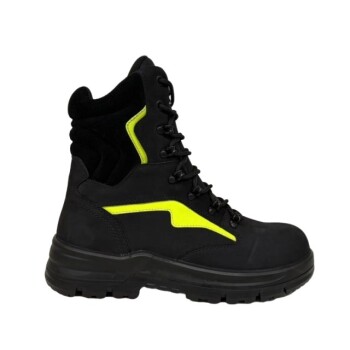
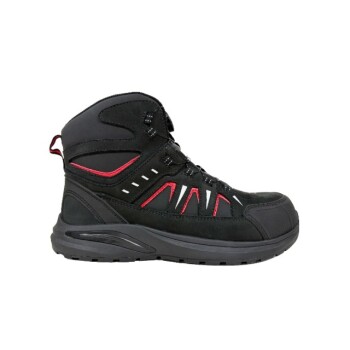
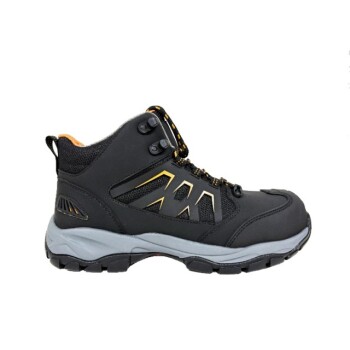
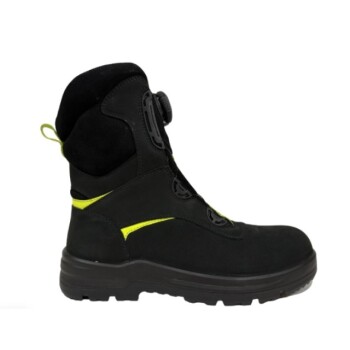
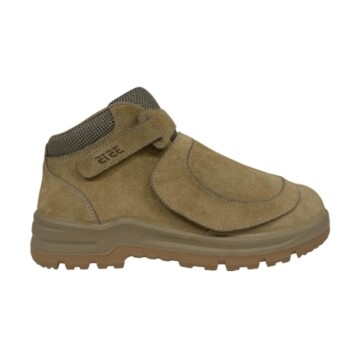
Professional safety protective boots act as a dual-layer mechanism in industrial safety performance: they serve as a visible, measurable indicator of behavioral compliance and function as the final physical barrier against injury. In high-risk sectors like the oil and petrochemical industry, these boots do not merely protect the foot; they mitigate the physical consequences of unsafe behaviors and stabilize workers against complex environmental hazards.
Core Takeaway Safety boots function as the "last line of defense" in the hierarchy of safety controls. While they cannot prevent the initial unsafe behavior or human error, they are critical for neutralizing the resulting physical trauma (such as impact or crushing) and serve as a primary metric for gauging a workforce's adherence to safety protocols.
The Role of Boots in Behavioral Safety Management
Measuring Compliance Through Wear Rates
In the context of safety management, protective boots are a key data point. During the observation phase of safety audits, the wear rate of safety boots serves as a direct, binary indicator of employee compliance.
High consistency in wearing proper footwear signals a disciplined safety culture. Conversely, lapses in this area often indicate broader behavioral safety issues within the workforce.
The Final Barrier Against Unsafe Actions
Unsafe behaviors—such as improper handling of heavy equipment or walking through prohibited zones—often result in accidents.
High-performance safety boots provide impact resistance and puncture protection. They act as the final physical barrier, preventing a behavioral error from escalating into a disabling physical injury.
Critical Functions in Oil and Petrochemical Environments
Stability on Hazardous Surfaces
The oil and petrochemical industries present specific environmental risks, primarily slippery, oily floors.
Professional safety shoes feature specialized anti-slip outsoles designed to maintain traction. This ensures walking stability, allowing workers to focus on their tasks rather than their footing, indirectly reducing behavior-induced accidents caused by distraction or loss of balance.
Protection Against Chemical Penetration
Beyond physical impact, these environments involve exposure to hazardous fluids.
Boots designed for this sector utilize chemical-resistant materials. This prevents oils and dangerous chemicals from penetrating the footwear, shielding the worker from chemical burns and long-term dermal exposure.
Understanding the Limitations
Mitigation vs. Prevention
It is vital to understand that safety boots mitigate consequences, not causes.
They protect the foot after an accident has been initiated by unsafe behavior or conditions. They do not remove the risk of the falling object or the spill itself; they only reduce the severity of the outcome.
The Risk of Complacency
Reliance on high-quality PPE should never replace safe behavioral practices.
There is a risk that workers may feel invulnerable due to their protective gear, leading to riskier behaviors. Safety managers must reinforce that PPE is the backup system, not the primary safety strategy.
Making the Right Choice for Your Safety Goals
To maximize the impact of protective footwear on your safety performance, align your selection with your specific management objectives:
- If your primary focus is Behavioral Compliance: Implement strict monitoring of boot wear rates as a "leading indicator" to identify teams that may need safety re-training.
- If your primary focus is Injury Reduction: Prioritize boots with high impact ratings and chemical resistance to ensure the "final barrier" holds when human error inevitably occurs.
- If your primary focus is Environmental Stability: Select footwear specifically engineered with anti-slip outsoles to counteract the specific lubricants or fluids present on your facility's floors.
By treating safety boots as both a physical shield and a behavioral metric, you convert a basic compliance requirement into a strategic asset for industrial safety.
Summary Table:
| Aspect | Role in Behavioral Safety | Industrial Benefit |
|---|---|---|
| Compliance Metric | Leading indicator of safety culture | High wear rates signal a disciplined, safety-first workforce. |
| Physical Barrier | Mitigates consequences of human error | Prevents impact and puncture injuries when unsafe actions occur. |
| Stability Control | Reduces distraction & slip hazards | Anti-slip outsoles maintain traction on oily, hazardous surfaces. |
| Chemical Shield | Prevents exposure to hazardous fluids | Protects against dermal chemical burns and long-term toxicity. |
Elevate Your Workforce Safety with 3515 Footwear Solutions
As a large-scale manufacturer serving distributors and brand owners, 3515 offers comprehensive production capabilities for all footwear types, anchored by our flagship Safety Shoes series. Our extensive portfolio covers work and tactical boots, outdoor shoes, training shoes, and sneakers, as well as Dress & Formal shoes to meet diverse bulk requirements.
We understand that in the oil and petrochemical sectors, the right boot is both a vital safety metric and the ultimate physical shield. Partner with us to provide your clients with footwear that combines superior impact resistance, chemical protection, and anti-slip technology.
Ready to strengthen your product lineup with world-class protective gear?
Contact Us Today to Discuss Bulk Orders & Custom Solutions
References
- Alfina Baharuddin, Widya Eka Putri. Behavior Based Safety Implementation Using the DO IT Method at Pertamina in Makassar City. DOI: 10.24252/diversity.v4i1.40918
This article is also based on technical information from 3515 Knowledge Base .
Related Products
- Wholesale Leather Safety Boots with Customizable Protective Toe
- Premium Wholesale Tactical Style Safety Shoes Boots with Quick Lacing
- Premium Grain Leather Safety Boots for Bulk Supply
- Wholesale Customizable Safety Boots Durable & Protective Footwear Manufacturing
- Customizable Anti-Smash Safety Boots for Wholesale & Private Label Manufacturing
People Also Ask
- How do safety boots provide toe protection? A Guide to Steel vs. Composite Caps
- What workplace hazards do safety toe boots protect against? Comprehensive Protection Guide
- What are the OSHA and ASTM standards for safety toe boots? Ensure Your Footwear is Fully Compliant
- What do the symbols M, F, I, and C represent on safety toe boots? Decode ASTM F2413 for Maximum Protection
- What are the different types of safety toe boots available? Choose the Right Protection for Your Job