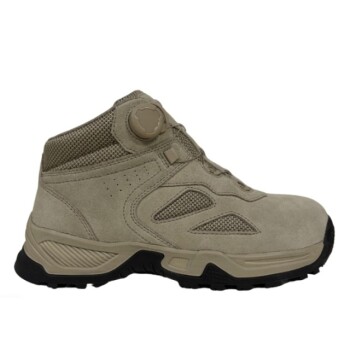
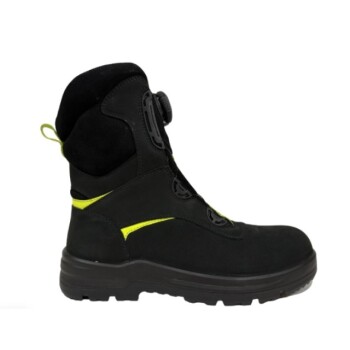
Industrial-grade laser cutting machines are the cornerstone of modern apparel and footwear production, delivering a level of precision and material integrity that manual processes cannot match. These systems use focused thermal energy to execute digital patterns with sub-millimeter accuracy while simultaneously sealing fabric edges to prevent fraying. By integrating advanced nesting algorithms, they maximize raw material utilization and provide the dimensional consistency required for high-volume, enterprise-level assembly.
High-precision laser cutting transforms manufacturing from a manual craft into a scalable, high-efficiency industrial process. It ensures structural integrity, reduces material waste, and provides the foundation for consistent, large-scale delivery required by global brands and distributors.
The Technical Superiority of Laser Manipulation
Edge Sealing and Structural Longevity
A critical advantage of industrial lasers is the application of high-temperature thermal energy to instantly melt and seal the edges of synthetic fabrics. This process prevents fraying, ensuring the structural integrity and visual durability of the finished product surface over long-term use.
This non-contact cutting method is especially vital for specialized materials like Bacterial Cellulose leather. It allows for complex contours without damaging the underlying nanofiber structure, a feat nearly impossible with traditional mechanical blades.
Intricate Pattern Execution
Laser machines follow digitally designed paths to execute complex patterns that would be too labor-intensive or inconsistent if done by hand. This capability allows brand owners to push the boundaries of design aesthetics, including decorative perforations that improve breathability.
The precision of these machines ensures that every component, from uppers to vamps, maintains high dimensional consistency. This accuracy is the prerequisite for subsequent stitching and lasting processes, preventing structural defects in multi-layered products like tactical boots.
Driving Scalability through Automated Efficiency
Material Optimization and Cost Control
Industrial-grade systems utilize advanced nesting algorithms to optimize the layout of patterns on rolls of leather, synthetics, or eco-friendly fabrics. By maximizing the yield from every square meter of material, manufacturers significantly reduce scrap and lower the total cost of goods sold.
For high-volume B2B resellers, this efficiency translates into competitive pricing and sustainable production. Minimizing waste not only improves economic margins but also enhances the environmental performance of the entire manufacturing supply chain.
Standardized Output for Global Supply Chains
Consistent precision ensures that components are standardized semi-finished parts ready for immediate assembly. This eliminates the need for manual trimming or adjustments during the sewing phase, which accelerates the overall production timeline.
Since 1951, the evolution of this state-of-the-art equipment has allowed for massive production scales that meet international certification standards. This heritage of stability ensures that large-volume deliveries remain consistent in quality, batch after batch.
Understanding Technical Trade-offs and Limitations
Thermal Sensitivity of Materials
While the heat of a laser seals synthetic edges, it can cause discoloration or "charring" on certain natural fibers or light-colored leathers. Expert calibration is required to balance the power intensity with the material type to avoid aesthetic defects.
Capital Investment vs. Operational Speed
The initial investment in industrial-grade CNC laser systems is significantly higher than traditional die-cutting molds. However, the trade-off is found in the removal of physical mold storage and the ability to switch between designs instantly via software.
Material Thickness Constraints
Lasers are exceptionally fast on thin-to-medium materials but may lose efficiency or edge quality on extremely thick, multi-layered heavy leathers. In these specific cases, a combination of mechanical die-cutting and laser detailing is often the most effective hybrid approach.
Strategic Integration for Global Manufacturing
To leverage the full power of industrial laser cutting, organizations must align their equipment choice with their specific volume and design requirements.
- If your primary focus is rapid prototyping and high-design complexity: Prioritize laser systems with advanced software integration for immediate digital-to-fabric execution without the need for physical molds.
- If your primary focus is large-scale distribution and cost-per-unit: Focus on high-speed automated systems with optimized nesting algorithms to maximize material yield and ensure supply chain stability.
- If your primary focus is premium OEM/ODM durability: Utilize laser cutting specifically for synthetic components to take advantage of the edge-sealing properties that prevent long-term product fraying.
The integration of high-precision laser technology ensures that modern manufacturing remains a robust, scalable, and highly accurate foundation for the global apparel and footwear industry.
Summary Table:
| Feature | Manufacturing Benefit | Impact on Quality & Cost |
|---|---|---|
| Edge Sealing | Instantly melts/seals synthetic edges | Prevents fraying; enhances structural longevity |
| Digital Nesting | Optimizes pattern layout on raw materials | Minimizes waste; lowers total cost of goods sold |
| Sub-mm Precision | Ensures high dimensional consistency | Standardized parts for seamless large-scale assembly |
| Non-Contact Cutting | Protects delicate nanofiber structures | Preserves material integrity of premium leathers |
| Automated Paths | Rapid execution of complex designs | Accelerates production for high-volume delivery |
Scale Your Global Footwear Supply with 3515 Manufacturing
As a premier large-scale manufacturer serving distributors and brand owners since 1951, 3515 leverages state-of-the-art industrial laser technology to deliver the precision and durability your market demands. From our flagship Safety Shoes series to tactical boots, outdoor shoes, and formal footwear, we provide the enterprise-level strength required for consistent, high-volume delivery.
Why Global Distributors Choose 3515:
- Massive Production Scale: Robust supply chain stability for large-scale B2B orders.
- Premium OEM/ODM Capabilities: Expert execution of complex designs and digital patterns.
- Certified Excellence: Comprehensive international certifications ensuring global compliance.
- Cost Efficiency: Advanced nesting technology to maximize margins for our partners.
Partner with a manufacturer that combines 70+ years of heritage with cutting-edge technology.
Contact 3515 for a Bulk Manufacturing Quote
References
- Ender Yazgan Bulgun, Elif Tekcan. INTEGRATING LIGHT ELEMENTS IN FASHION: PRACTICE-BASED DESIGN APPROACH. DOI: 10.7216/teksmuh.1320589
This article is also based on technical information from 3515 Knowledge Base .
Related Products
- Premium Wholesale Tactical Style Safety Shoes Boots with Quick Lacing
- Premium Wholesale Wheat Nubuck Safety Boot with Rapid Lacing System
- Wholesale Anti-Smash & Puncture-Proof Safety Shoes Custom Manufacturing for Brands
- Wholesale Customizable Safety Boots Durable & Protective Footwear Manufacturing
- Wholesale Durable Safety Boots | Custom Steel Toe & Puncture-Resistant Manufacturing
People Also Ask
- How are gait analysis research findings applied to the functional design of safety shoes and tactical boots?
- How do quality certification standards for safety shoes reduce perceived risk? Buy Online with Technical Certainty
- How can specialized footwear mitigate safety risks? High-Volume OEM/ODM Solutions since 1951
- How does anthropomorphic design influence material selection? Enhance Footwear Performance through Biological Alignment
- Why is the synchronization of craftsmanship and UX development emphasized for bulk customization of safety shoes?