
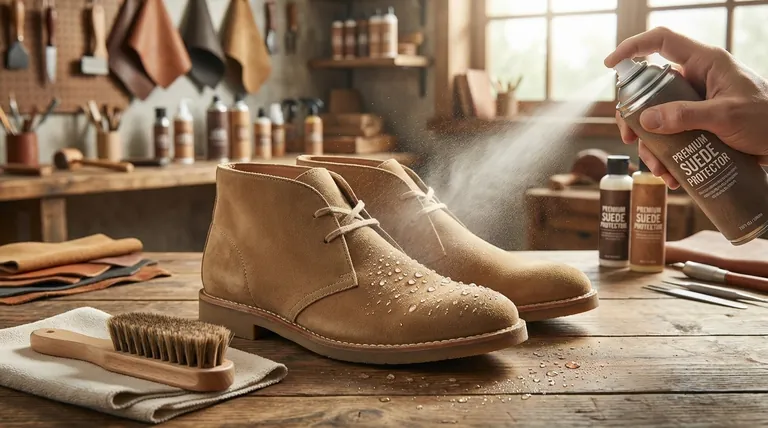
To effectively protect suede footwear, you must treat the material with a specialized suede protector spray. This creates an invisible barrier that repels moisture and helps prevent spills from setting in and causing permanent stains.
The key to protecting suede isn't just the final spray; it's a two-part process of ensuring the material is perfectly clean before applying the protectant to create a durable, effective shield.
The Principle of Suede Protection
Understanding why suede is so delicate is the first step toward caring for it properly. Its unique texture makes it highly susceptible to damage from the elements.
Suede's Natural Vulnerability
Suede is a type of leather made from the underside of the animal skin, which is sanded to create a soft, fibrous surface known as a nap.
Unlike smooth leather, this surface is porous and open. It acts like a sponge, readily absorbing water, oils, and dirt, which leads to staining and discoloration.
How Protector Sprays Work
Suede protectors are not sealants. They are hydrophobic formulas that coat each individual fiber of the suede's nap.
This coating doesn't make the material waterproof, but it makes it highly water-resistant. It causes liquids to bead up and roll off the surface rather than soaking in immediately, giving you crucial time to blot away a spill.
The Critical Pre-Treatment Steps
Applying a protector spray to dirty suede is a common mistake. Doing so will trap existing dirt and stains, making them nearly impossible to remove later.
Start with a Clean Canvas
Before you even think about applying a protectant, the footwear must be completely clean and dry. This ensures the spray can bond directly with the suede fibers.
Use a Dedicated Suede Brush
A suede brush is a non-negotiable tool. Use the bristled side to gently brush the entire shoe in one direction. This lifts away loose dirt and revitalizes the nap.
For tougher scuffs or marks, use the crepe rubber or nubbed side of the brush to gently rub the affected area.
Address Existing Stains First
For minor dry stains or marks, a suede eraser works like a pencil eraser, gently crumbling away the stain without damaging the material. For more significant stains, a dedicated suede cleaner may be required before you can proceed to the protection phase.
Correct Application of Suede Protector
The effectiveness of the protective barrier depends entirely on proper application. Rushing this process will yield poor results.
Choose the Right Product
Always use a spray specifically formulated for suede and nubuck. Generic leather protectors or waterproofers can contain waxes or silicones that will flatten the nap, ruin the texture, and permanently darken the color.
Test in an Inconspicuous Area
Before spraying the entire shoe, always test the product on a small, hidden spot, like the inner heel or under the tongue. Let it dry completely to ensure it doesn't cause any undesirable discoloration.
Apply Evenly and From a Distance
Hold the can approximately 6-8 inches away from the shoe. Spray a light, even mist across the entire surface. Do not saturate any single area; it's better to apply two light coats than one heavy one.
Allow for Proper Curing Time
The protective barrier needs time to set. Let the footwear air dry naturally for at least 24 hours in a well-ventilated area away from direct heat or sunlight. Do not wear them until they are completely dry.
Understanding the Limitations
Protector sprays are highly effective, but they are not a magic shield. It's important to have realistic expectations.
Protection is Not Waterproofing
A protected suede shoe can withstand a light drizzle, but it is not meant for downpours or stepping in deep puddles. The goal is resistance, not immunity.
Reapplication is Necessary
The protective coating wears off over time with friction and exposure. You must reapply the protector periodically—typically after every few wears in harsh conditions or every 1-2 months with regular use.
A Simple Maintenance Routine for Longevity
Proactive care is the most effective strategy for preserving your suede footwear.
- If your primary focus is daily wear: Give your shoes a quick brush after use to remove surface dust and reapply the protector every month.
- If your primary focus is preparing for bad weather: Ensure a fresh, fully cured coat of protector is applied at least 24 hours before you anticipate rain or snow.
- If your primary focus is addressing a spill: Blot the liquid immediately with a clean, dry cloth. Do not rub. Let the area dry fully before treating any remaining spot.
By following a consistent routine of cleaning and protecting, you can confidently wear and preserve your suede footwear for years to come.
Summary Table:
| Step | Key Action | Purpose |
|---|---|---|
| 1 | Clean & Brush | Remove dirt and lift the nap for a clean surface. |
| 2 | Apply Protector Spray | Create a water-resistant barrier on the suede fibers. |
| 3 | Allow to Dry/Cure | Let the protector set for 24 hours for maximum effectiveness. |
| 4 | Regular Maintenance | Reapply spray periodically and brush after each wear. |
Need high-quality suede footwear for your business? As a large-scale manufacturer, 3515 produces a comprehensive range of durable and stylish suede shoes and boots for distributors, brand owners, and bulk clients. Our expertise ensures your products are built to last with proper care. Let us help you source the perfect footwear for your market. Contact us today to discuss your manufacturing needs!
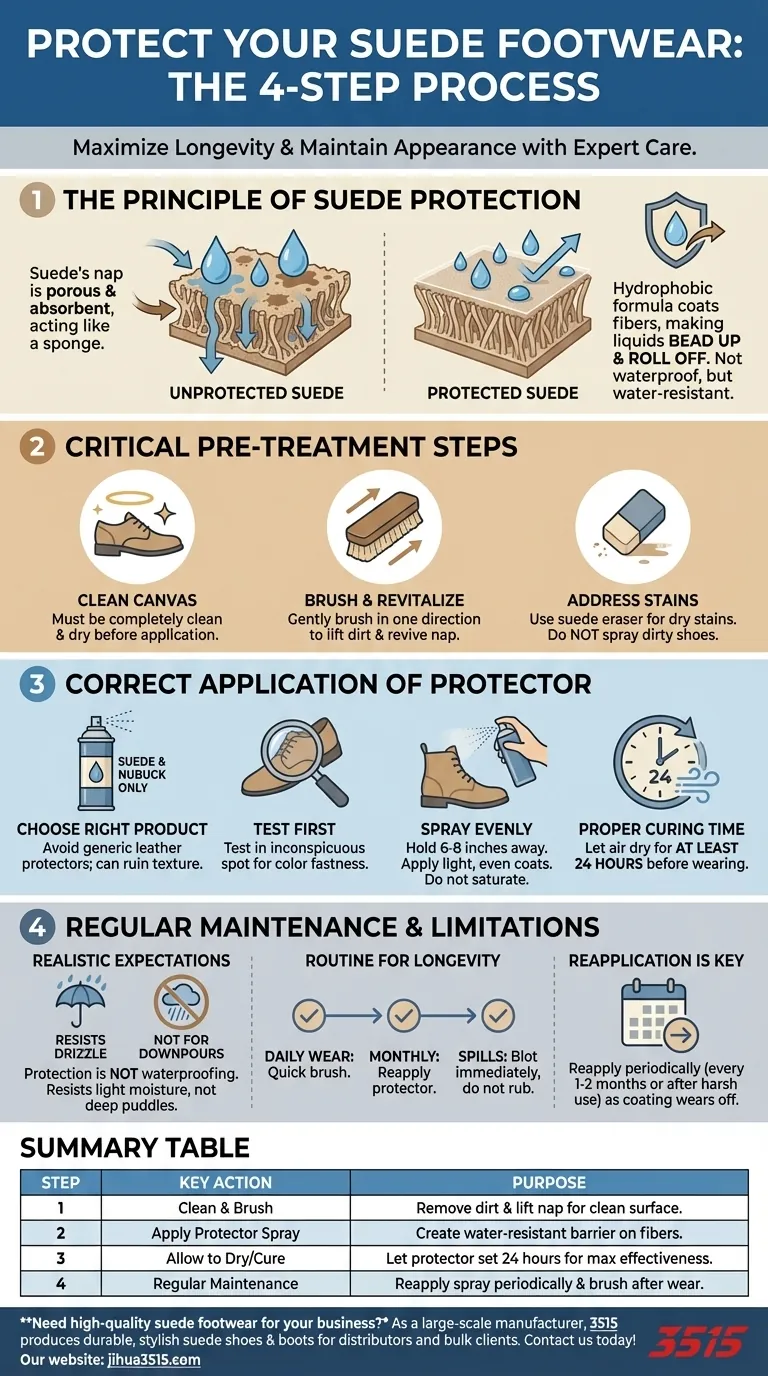
Visual Guide
Related Products
- Durable Rubber Sole Outdoor Shoes Wholesale & Custom Manufacturing
- Wholesale Durable & Breathable Training Shoes for Custom Brands
- Custom Manufactured Air Cushion Leather Business Shoes for Wholesale
- Factory Direct Wholesale Leather Comfort Shoes with Dial Closure
- Dial Closure Leather Business Casual Shoes for Wholesale & Private Label
People Also Ask
- What is the function of the sole in outdoor shoes? Find the Perfect Grip and Support
- What role do outdoor shoes and sneakers play in navigating external terrains? Engineered Stability for Every Surface
- How is AI utilized in the design of outdoor and safety footwear? Harnessing Big Data for Market-Driven Shoe Innovation
- Why is durability important when selecting outdoor shoes? A Guide to Safety & Long-Term Value
- What are the key components of outdoor shoes that affect comfort and sturdiness? A Guide to Durable, High-Performance Footwear



















