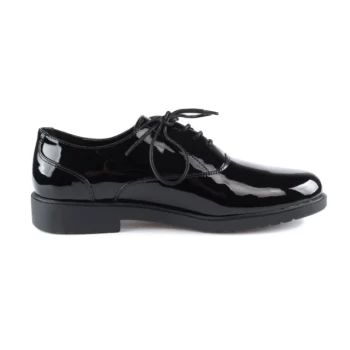
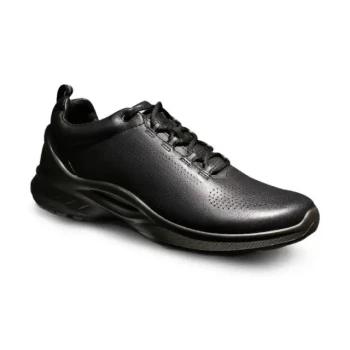
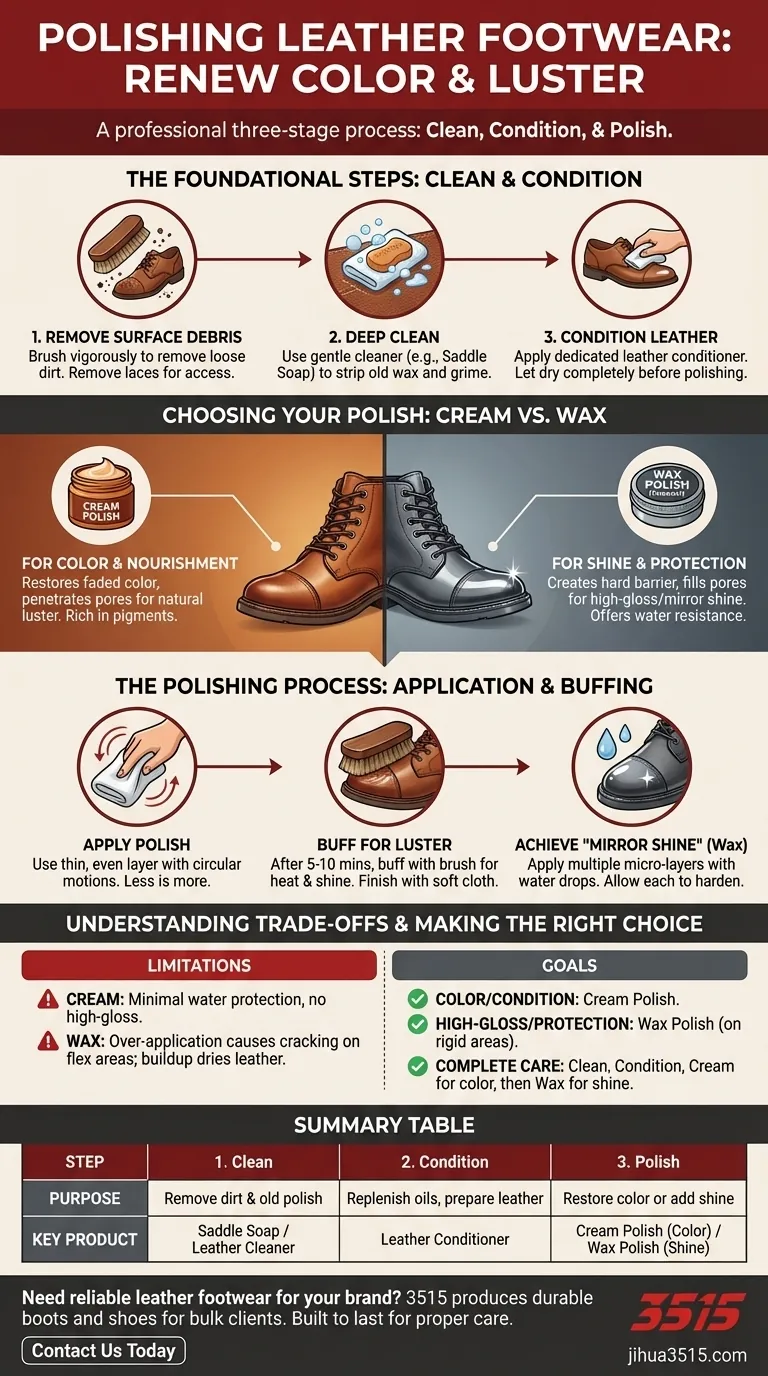
To properly polish leather footwear, you must first clean the surface, apply a nourishing conditioner, and then use the correct polish for your desired finish. Use a cream polish to restore color and provide a subtle luster, or a hard Carnauba wax polish to create a high-gloss, protective shine.
The key to a professional-level polish is understanding it as a three-stage process: stripping away old grime, nourishing the leather itself, and then applying a finish. The choice between cream and wax polish is not about which is better, but about what final look you want to achieve.
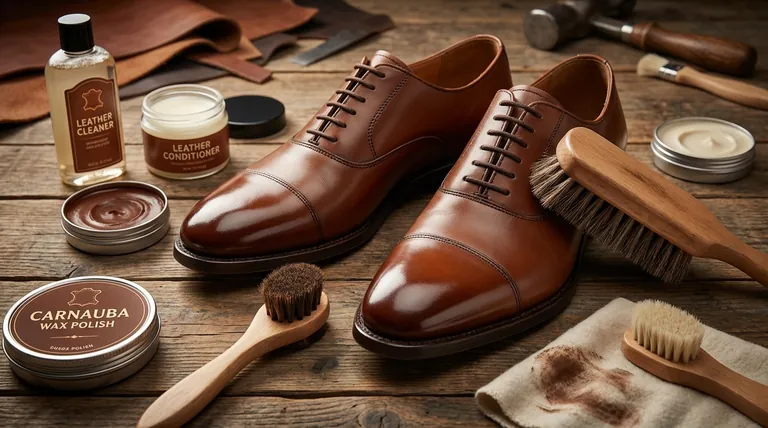
The Foundational Steps: Clean and Condition
A perfect shine is impossible on a dirty or dry surface. Preparing the leather is the most critical part of the process and ensures an even, lasting finish.
Step 1: Remove Surface Debris
Before applying any product, you must remove all loose dirt and dust. Use a horsehair brush to vigorously brush the entire shoe, paying special attention to the welt and seams.
Remove the shoelaces to ensure you can access the tongue and all hidden areas.
Step 2: Deep Clean the Leather
Surface brushing isn't enough to remove old, built-up polish or embedded grime. Use a damp cloth with a small amount of a gentle cleaner, like saddle soap or a dedicated leather cleaner.
Work the cleaner into the leather in small, circular motions. This will strip away old wax and dirt, creating a clean canvas for the new polish.
Step 3: Condition the Leather
After cleaning, the leather's pores are open but stripped of moisture. Allow the shoes to dry completely before this next step.
Apply a dedicated leather conditioner with a clean cloth. This replenishes essential oils, keeping the leather supple, preventing cracks, and preparing it to absorb the polish evenly.
Choosing Your Polish: Cream vs. Wax
The type of polish you choose dictates the final appearance of your footwear. They serve fundamentally different purposes.
Cream Polish: For Color and Nourishment
Cream polish contains a higher concentration of pigments and nourishing agents compared to wax.
Its primary purpose is to restore faded color and provide deep conditioning. It penetrates the leather's pores, resulting in a rich, natural luster rather than a hard, glossy shine.
Wax Polish: For Shine and Protection
Wax polish, especially those containing Carnauba wax, is designed to create a hard, protective barrier on the surface of the leather.
It fills in the leather's microscopic pores to create a smooth, flat surface that reflects light. This is what produces a high-gloss or "mirror" shine. It also offers superior water resistance.
The Polishing Process: Application and Buffing
With the leather prepped and your polish selected, the final stage is about careful application and creating friction to build the shine.
Applying the Polish
Use a horsehair dauber or a soft cloth wrapped around your fingers to apply a thin, even layer of polish. Use small, circular motions to work the product across the entire shoe.
Do not glob the polish on; less is more. A thin coat is more effective and easier to buff than a thick one.
Buffing for a Basic Luster
After letting the polish dry for 5-10 minutes, use a clean horsehair brush to buff the entire shoe with quick, back-and-forth strokes. This removes excess polish and uses friction to generate heat, which brings out the shine.
For a final touch, use a soft, clean cloth (like flannel) to give the shoe a final once-over.
Achieving a "Mirror Shine"
For a glass-like shine on the toe cap and heel, you must use wax polish. Apply a very thin initial layer and buff it.
Then, add subsequent micro-layers of wax, dipping your cloth in a few drops of water before picking up more polish. This "spit-shine" technique fills in every pore, creating a perfectly smooth surface. Allow each layer to harden before applying the next.
Understanding the Trade-offs
Using the wrong product or technique can be counterproductive. Knowing the limitations of each polish is key to proper leather care.
Cream Polish Limitations
While excellent for color restoration, cream polish alone will not produce a high-gloss, reflective shine. It also offers minimal water protection compared to a hard wax.
Wax Polish Pitfalls
Over-applying wax, especially in the flexible areas of the shoe (the vamp), will cause the polish to crack and flake as you walk. A heavy wax buildup can also seal the leather's pores, preventing it from breathing and drying it out over time.
Making the Right Choice for Your Goal
Select your products and process based on the outcome you need for your footwear.
- If your primary focus is restoring faded color and conditioning: Use a cream polish as your main tool after cleaning and conditioning.
- If your primary focus is achieving a high-gloss, protective shine: Use a wax polish, building thin layers on the hard, non-flexing parts of the shoe like the toe cap and heel.
- If your primary focus is complete leather care: Use a comprehensive approach by cleaning, conditioning, applying cream polish to restore color, and then finishing with wax polish on specific areas for shine and protection.
Ultimately, mastering the art of polishing is about treating leather not just as a material, but as a skin that requires a methodical process of care and maintenance.
Summary Table:
| Step | Purpose | Key Product |
|---|---|---|
| 1. Clean | Remove dirt and old polish | Saddle Soap / Leather Cleaner |
| 2. Condition | Replenish oils and prepare leather | Leather Conditioner |
| 3. Polish | Restore color or add shine | Cream Polish (color) / Wax Polish (shine) |
Need a reliable source for high-quality leather footwear?
As a large-scale manufacturer, 3515 produces a comprehensive range of durable boots and shoes for distributors, brand owners, and bulk clients. Our production capabilities ensure you receive products built to last, making them perfect for your customers who value proper leather care.
Contact us today to discuss your footwear needs and explore our catalog!
Visual Guide
Related Products
- Classic Leather Derby Dress Shoes Wholesale & Custom Manufacturing
- Factory Direct Wholesale Leather Comfort Shoes with Dial Closure
- Wholesale Comfort Leather Business Shoes with Dial Lacing System
- Custom Manufactured Air Cushion Leather Business Shoes for Wholesale
- Wholesale Breathable Perforated Leather Derby Shoes with Modern Comfort Sole
People Also Ask
- How often should leather dress shoes be cleaned and polished? A 3-Tier Care Guide for Longevity
- How can you remove salt stains from leather dress shoes? Save Your Shoes with a Simple Vinegar Solution
- What are the basic steps to clean leather dress shoes? A Guide to Preserving Your Investment
- How should you dry wet leather dress shoes? A Step-by-Step Guide to Save Your Investment
- What historical figure is associated with the Derby shoe? The Earl of Derby's Comfort Revolution