
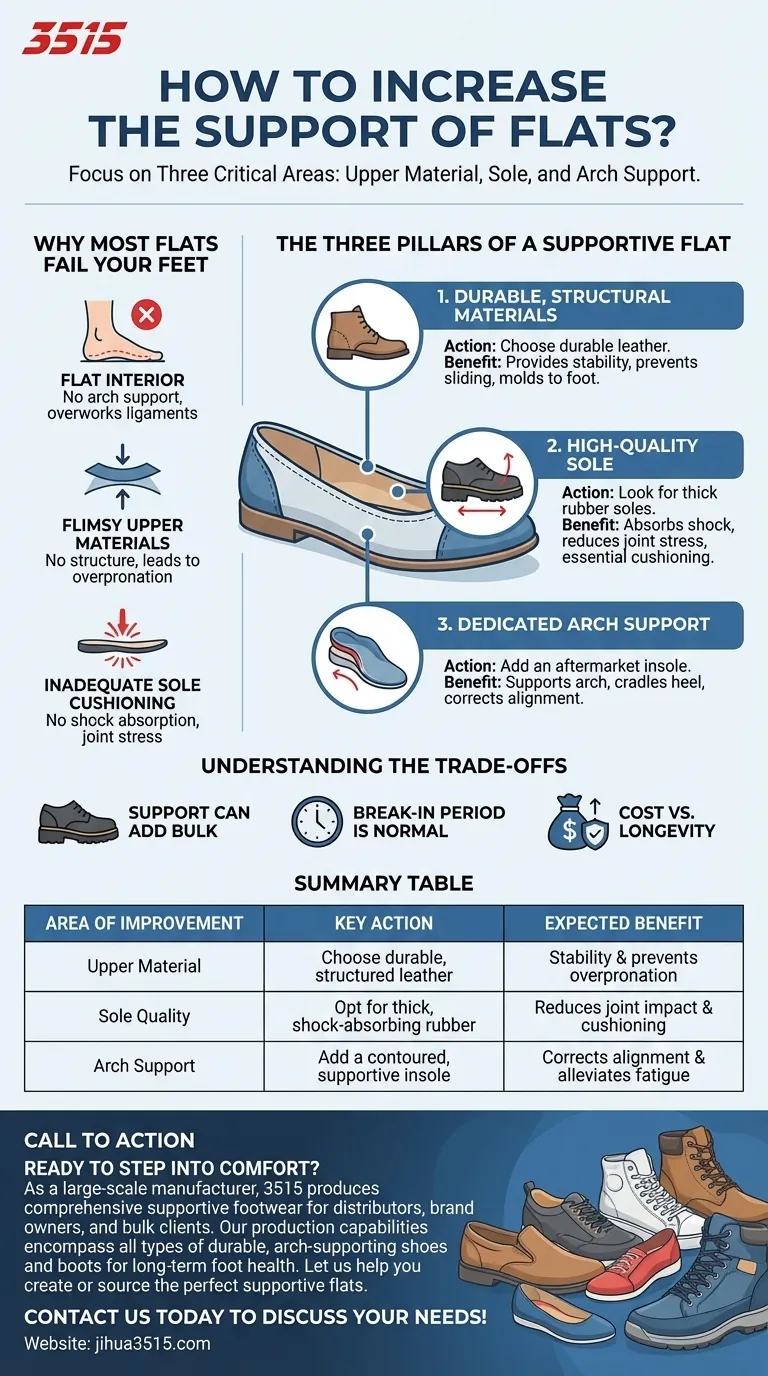
To increase the support of flats, you must focus on three critical areas: the structural integrity of the upper material, the shock-absorbing capability of the sole, and the addition of dedicated arch support. The most effective approach combines choosing flats made of durable leather with thick rubber soles and supplementing them with specialized insoles to correct foot alignment and cushion impact.
The core issue with most flats is their minimalist design, which sacrifices foot health for style. The solution is not to abandon them, but to strategically upgrade their material, sole, and interior support to transform them from flimsy footwear into a stable foundation for your feet.
Why Most Flats Fail Your Feet
Before fixing the problem, it's crucial to understand why so many flats cause discomfort. Their fundamental design often ignores basic principles of foot biomechanics, leading to pain and fatigue.
The Problem of a Flat Interior
A truly flat insole offers no support for your foot's natural arch. This forces the ligaments and muscles in your arch, particularly the plantar fascia, to overwork, which can lead to strain and conditions like plantar fasciitis.
Flimsy Upper Materials
Many stylish flats are made from thin, overly flexible materials that provide no structure. This lack of a supportive "upper" allows your foot to roll inward excessively, a movement known as overpronation, which can misalign your ankles, knees, and hips.
Inadequate Sole Cushioning
Thin, hard soles offer virtually no shock absorption. Every step you take sends a jarring impact up through your feet and into your joints, leading to fatigue and discomfort over the course of a day.
The Three Pillars of a Supportive Flat
You can systematically improve any flat by evaluating and upgrading three key components. This applies whether you are modifying a pair you own or shopping for a new one.
Pillar 1: Choose Durable, Structural Materials
The material of the shoe's upper is your first line of defense. A sturdy material prevents the shoe from deforming and helps hold your foot in a neutral position.
Durable leather is the ideal choice. It's rigid enough to provide stability and prevent your foot from sliding, yet it gradually molds to your foot's shape for a custom fit over time.
Pillar 2: Demand a High-Quality Sole
The sole is the shoe's foundation. A flimsy, thin sole that you can easily bend in half offers no protection or support.
Look for flats with a thick rubber sole. Rubber provides essential cushioning to absorb shock and reduces stress on your joints. A good sole should only bend at the ball of the foot, not in the middle of the arch.
Pillar 3: Add Dedicated Arch Support
This is the single most impactful modification you can make. Adding an insole, also known as an orthotic, introduces the arch support that nearly all flats are missing.
An aftermarket insole provides a contoured footbed that supports your arch, cradles your heel, and helps prevent overpronation. This simple addition can dramatically improve comfort and reduce foot fatigue.
Understanding the Trade-offs
Enhancing support inevitably involves some compromises. Being aware of these helps you set realistic expectations.
Support Can Add Bulk
Adding a quality insole or choosing a shoe with a thicker rubber sole will make the flat feel more substantial. This may slightly alter the shoe's sleek, minimalist aesthetic.
A Break-In Period is Normal
Structured leather and supportive insoles may feel stiff at first. Your feet will likely need a few days to adjust to the new level of support and for the materials to conform to your specific foot shape.
Cost vs. Longevity
Supportive flats made from high-quality materials and separate insoles represent a higher initial investment. However, this cost is offset by greater durability and significant long-term benefits for your foot health.
How to Apply This to Your Goal
Your strategy will depend on whether you're buying new flats or improving a pair you already love.
- If your primary focus is upgrading existing flats: The quickest and most effective solution is to purchase a high-quality pair of over-the-counter insoles designed for arch support.
- If your primary focus is buying a new pair: Prioritize flats made of genuine leather with a visibly thick rubber sole that doesn't bend in the middle.
- If your primary focus is alleviating significant foot pain: Use these tips as a starting point, but strongly consider consulting a podiatrist who can recommend custom orthotics for perfectly tailored support.
By focusing on these foundational elements, you can confidently wear flats without sacrificing your comfort or long-term foot health.
Summary Table:
| Area of Improvement | Key Action | Expected Benefit |
|---|---|---|
| Upper Material | Choose durable, structured leather | Provides stability and prevents overpronation |
| Sole Quality | Opt for thick, shock-absorbing rubber | Reduces joint impact and improves cushioning |
| Arch Support | Add a contoured, supportive insole | Corrects foot alignment and alleviates fatigue |
Ready to step into comfort? As a large-scale manufacturer, 3515 produces a comprehensive range of supportive footwear for distributors, brand owners, and bulk clients. Our production capabilities encompass all types of durable, arch-supporting shoes and boots designed for long-term foot health. Let us help you create or source the perfect supportive flats. Contact us today to discuss your needs!
Visual Guide
Related Products
- Wholesale Durable Camouflage Canvas Shoes with High-Traction Cleated Rubber Sole
- Premium Lightweight Safety Shoes for Wholesale & Bulk Orders
- Wholesale Comfortable Business Casual Shoes Custom Manufacturing
- Lightweight Breathable Training Shoes for Wholesale & Custom OEM Manufacturing
- Durable Rubber Sole Outdoor Shoes Wholesale & Custom Manufacturing
People Also Ask
- Why is the selection of high-strength fabric materials necessary in the production of canvas shoes and training shoes?
- What are the properties of canvas as a shoe material? A Guide to Lightweight Comfort & Style
- Can canvas shoes be worn in rainy conditions? The Truth About Water Resistance
- What are some examples of vulcanized shoes? Discover the Flexibility and Board Feel of Classic Sneakers
- What are the characteristics of canvas as a shoe material? A Guide to Lightweight, Breathable Footwear


















