
For long-distance hiking, the clear trend and modern consensus favor lighter footwear. While tactical boots are a significant improvement over heavy combat boots due to better comfort and mobility, the most popular and often superior choice for long hikes on established trails are trail running shoes.
The core principle for selecting long-distance hiking footwear has shifted from maximum support to minimum weight. Lighter shoes, particularly trail runners, reduce fatigue significantly, allowing you to hike farther and more comfortably.
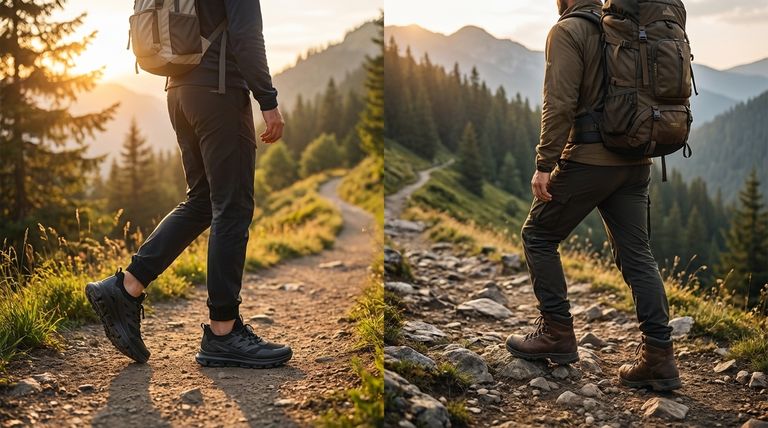
The Evolution of Hiking Footwear
The "best" footwear for hiking has changed dramatically over the years. What was once a field dominated by heavy, rigid boots is now led by lightweight, flexible options that more closely resemble running shoes.
Traditional Hiking and Combat Boots
The classic hiking boot was built for maximum protection and ankle support. Their rigid construction is designed for carrying very heavy loads over treacherous, off-trail terrain.
However, this level of protection comes at the cost of significant weight, which is a major source of fatigue over long distances.
The Rise of Tactical Boots
Tactical boots represent a middle ground. They are lighter and more mobile than their traditional combat counterparts.
They often incorporate features like moisture-wicking linings and better cushioning, making them a viable option for those who need more support than a trail runner can offer without the extreme weight of a classic boot.
The Dominance of Trail Runners
Trail runners are the lightest option and have become the standard for long-distance hikers.
A survey of Appalachian Trail thru-hikers revealed that approximately 75% chose trail runners. Their minimal weight and high breathability are prioritized over the ankle support and ruggedness of boots.
Why Weight is the Critical Factor
The single most important reason for the shift to lighter footwear is the disproportionate energy cost of weight on your feet.
The "Pound on Your Feet" Rule
A long-standing rule of thumb in backpacking is that one pound on your feet is equivalent to carrying five extra pounds on your back.
Saving a pound or two on footwear dramatically reduces the total energy you expend with every single step you take over a multi-mile day.
Impact on Fatigue
This energy savings translates directly into less fatigue. Lighter feet mean you can maintain your pace for longer and feel stronger at the end of the day, which is critical on a multi-day trek.
Agility and Natural Gait
Lighter, more flexible shoes allow your feet to move more naturally. This can improve your agility on the trail and reduce the likelihood of tripping or stumbling compared to clunky, heavy boots.
Understanding the Trade-offs
Choosing lighter footwear is not without compromises. You must understand what you are giving up in exchange for reduced weight.
Support vs. Flexibility
The most obvious trade-off is ankle support. Trail runners offer very little. If you have a history of ankle injuries or will be navigating exceptionally rugged terrain with a very heavy pack, a more supportive boot might be a safer choice.
Durability and Lifespan
Trail runners are not built to last like leather boots. They are made with lighter materials that will wear out much faster. Long-distance hikers often go through multiple pairs of trail runners on a single trek.
Waterproofing vs. Breathability
Waterproof boots can keep your feet dry from external moisture, but they trap sweat, leading to dampness from the inside. Non-waterproof trail runners get wet easily in rain or stream crossings, but they also breathe better and dry incredibly quickly.
Making the Right Choice for Your Hike
Your decision should be based on your personal needs, the terrain you'll be on, and the weight of your pack.
- If your primary focus is covering long distances on established trails: Trail runners are the undisputed best choice for minimizing fatigue and maximizing comfort.
- If your primary focus is navigating rugged, off-trail terrain with a heavy pack: A lightweight tactical or hiking boot provides a necessary blend of support and durability.
- If your primary focus is a balance of ankle protection and low weight: Consider a mid-height, lightweight hiking boot that offers more support than a trail runner without the weight of a traditional boot.
Ultimately, choosing your footwear is about matching the tool to the specific demands of your hike.
Summary Table:
| Feature | Trail Runners | Tactical Boots | Traditional Boots |
|---|---|---|---|
| Weight | Lightest | Moderate | Heaviest |
| Ankle Support | Minimal | Moderate | Maximum |
| Best For | Long distances, light packs | Rugged terrain, heavy packs | Extreme off-trail, heavy loads |
| Durability | Lower (faster wear) | Moderate | Highest |
| Drying Time | Fastest | Moderate | Slowest |
Ready to equip your next adventure with the perfect footwear?
As a large-scale manufacturer, 3515 produces a comprehensive range of hiking boots, tactical footwear, and trail runners for distributors, brand owners, and bulk clients. Whether you need durable support for rugged terrain or lightweight performance for long distances, our production capabilities cover all types of shoes and boots to meet your specific demands.
Contact our expert team today to discuss your footwear needs and discover how we can deliver quality, comfort, and reliability for your customers.
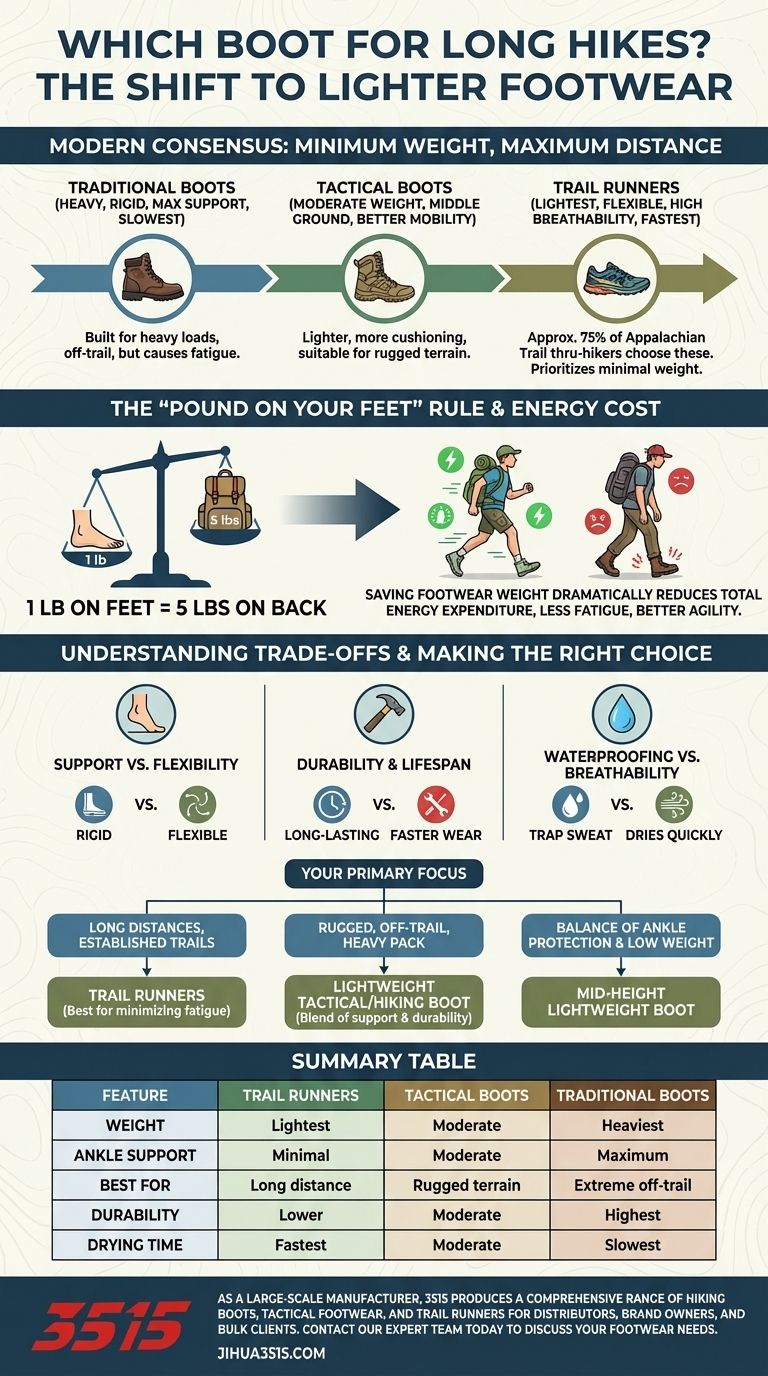
Visual Guide
Related Products
People Also Ask
- Why is the selection of high-strength fabric materials necessary in the production of canvas shoes and training shoes?
- What are the properties of canvas as a shoe material? A Guide to Lightweight Comfort & Style
- Can canvas shoes be worn in rainy conditions? The Truth About Water Resistance
- What are some examples of vulcanized shoes? Discover the Flexibility and Board Feel of Classic Sneakers
- What are the characteristics of canvas as a shoe material? A Guide to Lightweight, Breathable Footwear
