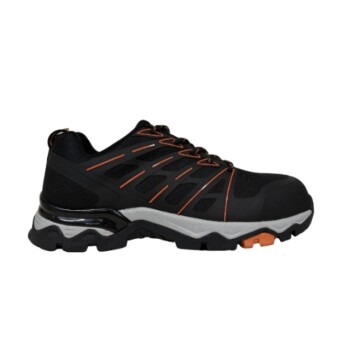
Blockchain technology revolutionizes raw material traceability by creating a decentralized, unchangeable record for critical safety shoe components. It allows stakeholders to verify the journey of specific high-risk materials, such as high-strength steel toes and specialized protective fabrics, from the moment of procurement to the final product delivery.
Core Takeaway: Traditional supply chains suffer from opaque data silos; blockchain solves this by providing a shared, immutable ledger. This technology shifts the industry from "trust-based" claims to "proof-based" verification, ensuring ethical sourcing and material authenticity for safety footwear.
The Mechanics of Trust in Safety Footwear
Establishing Immutable Evidence
In a safety shoe supply chain, the integrity of materials is a matter of physical safety. Blockchain records every transaction and movement on a digital ledger that cannot be altered or deleted.
This creates a permanent history for raw materials. When a brand claims a steel toe cap meets specific standards, the blockchain provides verifiable proof of that component's origin and handling.
Decentralization for Transparency
Unlike traditional databases controlled by a single entity, blockchain is decentralized. This means the data is distributed across the network of suppliers, manufacturers, and retailers.
This structure eliminates the "black box" of supply chain data. It fosters trust among distributors and brand owners because no single party can manipulate the records to hide unethical practices or non-compliance.
Overcoming Legacy System Failures
Breaking Down ERP Silos
Most manufacturing supply chains rely on Enterprise Resource Planning (ERP) systems. The primary reference notes that these systems often create information silos, where data is trapped within one company's internal network.
Blockchain acts as a connective layer that bridges these gaps. It ensures that information flows transparently between the raw material supplier's system and the manufacturer's system without friction.
Mitigating Data Vulnerabilities
Centralized ERP systems present specific points of vulnerability regarding data security and manipulation. By distributing the ledger, blockchain removes these single points of failure.
This resilience is critical for maintaining the integrity of compliance data in the safety shoe industry, where regulatory adherence is mandatory.
Enhancing Efficiency via Smart Contracts
Automating Financial and Logistical Trust
Beyond simple tracking, blockchain utilizes smart contracts—self-executing code that runs when conditions are met.
As highlighted in the supplementary references, these contracts can automate financial settlements and logistics triggers. This significantly reduces the "trust friction" in multi-party collaborations, allowing for faster, more responsive supply chain operations.
Understanding the Trade-offs
The "Garbage In, Garbage Out" Risk
While blockchain secures data, it does not magically verify physical reality. If a supplier enters false information regarding the quality of a steel toe at the source, the blockchain will immutably record that falsehood.
Integration Complexity
Transitioning from traditional ERP silos to a decentralized blockchain network requires significant technical investment. It forces organizations to overhaul how they share data, which can be a barrier for smaller suppliers in the chain.
Making the Right Choice for Your Goal
To leverage blockchain effectively in your safety shoe supply chain, assess your immediate priorities:
- If your primary focus is Ethical Compliance: Prioritize the immutable ledger features to prove the origin of high-risk materials like steel and specialty fabrics.
- If your primary focus is Operational Speed: Focus on implementing smart contracts to automate settlements and reduce administrative friction between suppliers.
Blockchain technology ultimately transforms compliance from a passive paperwork exercise into an active, verifiable digital asset.
Summary Table:
| Feature | Traditional ERP Systems | Blockchain Technology |
|---|---|---|
| Data Structure | Centralized Silos | Decentralized Ledger |
| Verification | Trust-based Claims | Proof-based Authentication |
| Data Integrity | Vulnerable to Alteration | Immutable & Unchangeable |
| Process Flow | Manual/Friction-heavy | Automated via Smart Contracts |
| Transparency | Limited/Opaque | High/End-to-End Visibility |
Secure Your Supply Chain with 3515
As a large-scale manufacturer serving global distributors and brand owners, 3515 leverages advanced production capabilities to deliver footwear that meets the highest standards of safety and sustainability. Our flagship Safety Shoes series is built on a foundation of material integrity and manufacturing excellence.
Beyond safety boots, our extensive portfolio includes work and tactical boots, outdoor shoes, training shoes, and sneakers, as well as Dress & Formal shoes designed for bulk requirements. Partner with us to gain access to a transparent, reliable, and high-capacity manufacturing partner dedicated to your brand's growth.
Contact 3515 Today to Discuss Your Bulk Requirements
References
- Imadeddine Oubrahim, Naoufal Sefiani. Exploring the drivers and barriers to digital transformation adoption for sustainable supply chains: a comprehensive overview. DOI: 10.22306/al.v10i2.396
This article is also based on technical information from 3515 Knowledge Base .
Related Products
- Premium Suede Sport Safety Shoes for Wholesale & Bulk Orders
- Premium Lightweight Safety Shoes for Wholesale & Bulk Orders
- Wholesale Anti-Smash & Puncture-Proof Safety Shoes Custom Manufacturing for Brands
- Premium KPU Injection Athletic Style Safety Shoes
- Premium Safety Shoes with Rotating Buckle Safety Sneakers
People Also Ask
- What industries have specific OSHA footwear requirements? Ensure Compliance & Protect Your Workforce
- What are the primary functions of professional safety shoes? Maximize Safety in Water Supply Confined Spaces
- What role do specialized safety shoes play in preventing falls? Engineering Stability in Industrial Environments
- How Specialized Footwear Impacts Side-Cutting Performance and Injury Risk Assessment
- What happens during the cutting stage of safety shoes manufacturing? Precision, Process & Quality