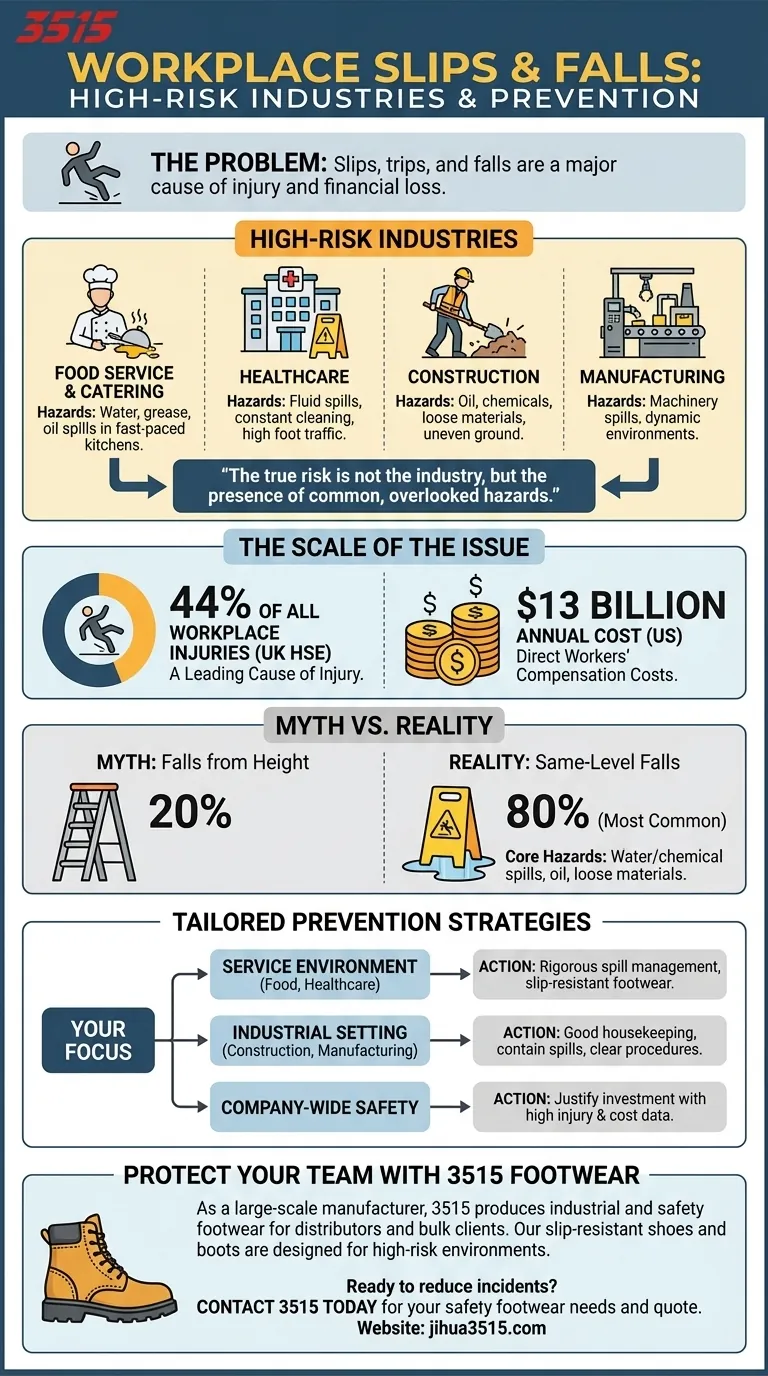
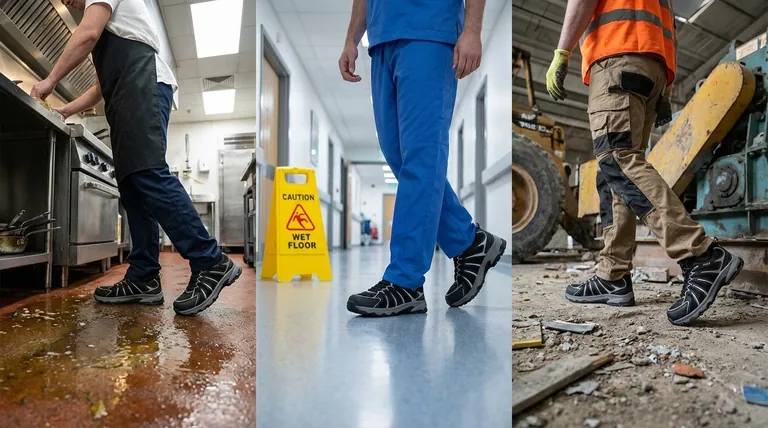
The industries most at risk for workplace slips and falls are food service, catering, healthcare, construction, and manufacturing. These environments are uniquely susceptible due to the frequent presence of liquid contaminants like water, oil, and chemicals, as well as loose materials and debris on walking surfaces.
While certain industries are flagged as high-risk, the true risk factor is not the industry itself, but the presence of common, often overlooked hazards. Understanding these underlying causes is the first step toward effective prevention.
The Surprising Scale of the Problem
Slips, trips, and falls are a far more significant issue than many leaders realize, impacting both employee well-being and the company's bottom line.
A Leading Cause of Injury
According to the UK's Health and Safety Executive (HSE), slips, trips, and falls account for a staggering 44% of all workplace injuries.
In the United States, they are the third-leading cause of non-fatal, work-related injuries across all sectors.
A Major Financial Drain
The financial impact is substantial. These incidents cost U.S. businesses approximately $13 billion annually in direct workers' compensation-related costs alone.
Why These Industries Are So Vulnerable
The highest-risk industries share common environmental factors that dramatically increase the likelihood of a slip or fall incident.
Food Service and Catering
In these settings, the primary culprits are frequent spills of water, grease, and oil. The fast-paced nature of kitchens and service areas makes immediate cleanup a constant challenge.
Healthcare
Hospitals and care facilities contend with fluid spills, constant floor cleaning and polishing, and high levels of foot traffic from staff, patients, and visitors, creating a persistently hazardous environment.
Construction and Manufacturing
These sites are inherently dynamic. Hazards include oil and chemical spills from machinery, loose materials, construction debris, and uneven ground, all of which create unpredictable walking surfaces.
Common Misconceptions and Key Hazards
Focusing on the wrong type of fall can lead to ineffective safety policies. The data points to a clear, and often ignored, reality.
The Myth of Falls from Height
Most people associate serious falls with heights, such as from ladders or scaffolding. However, nearly 80% of these injurious falls occur on the same level.
This means the most common risks are right underfoot—spills, slick surfaces, and unseen obstacles.
The Core Hazards
The risk in any industry boils down to a few key factors. The most prevalent causes are water or chemical spills, oil spills, and other loose materials that contaminate an otherwise safe walking surface.
Making the Right Choice for Your Goal
Your prevention strategy should be tailored to the specific hazards present in your work environment.
- If your primary focus is a service environment (food, healthcare): Your most critical action is implementing rigorous spill management protocols and mandating slip-resistant footwear.
- If your primary focus is an industrial setting (construction, manufacturing): Prioritize good housekeeping to control debris and establish clear procedures for containing and cleaning up oil and chemical spills.
- If your primary focus is company-wide safety policy: Use the high injury rate (44%) and massive financial cost ($13 billion) to justify investment in comprehensive floor safety and employee training programs.
Ultimately, creating a safer workplace begins with recognizing that the most dangerous risks are often the most common ones.
Summary Table:
| High-Risk Industry | Primary Hazards |
|---|---|
| Food Service & Catering | Water, grease, and oil spills from fast-paced operations. |
| Healthcare | Fluid spills, wet floors from cleaning, and high foot traffic. |
| Construction & Manufacturing | Oil/chemical spills, loose debris, and uneven surfaces. |
| Key Statistic | Impact |
| 44% of workplace injuries (UK HSE) are from slips, trips, and falls. | Leading cause of employee harm. |
| $13 billion annual cost (U.S. businesses) in workers' compensation. | Major financial drain on companies. |
Protect Your Team and Your Business with the Right Footwear
As a large-scale manufacturer, 3515 produces a comprehensive range of industrial and safety footwear for distributors, brand owners, and bulk clients. Our production capabilities encompass all types of slip-resistant shoes and boots designed specifically for the hazards in food service, healthcare, construction, and manufacturing environments.
Investing in high-quality safety footwear is a critical step in preventing the most common workplace injuries. We can help you equip your workforce with durable, comfortable, and effective footwear tailored to your industry's unique risks.
Ready to reduce slip-and-fall incidents and associated costs?
Contact 3515 today to discuss your safety footwear needs and request a quote for your organization.
Visual Guide