
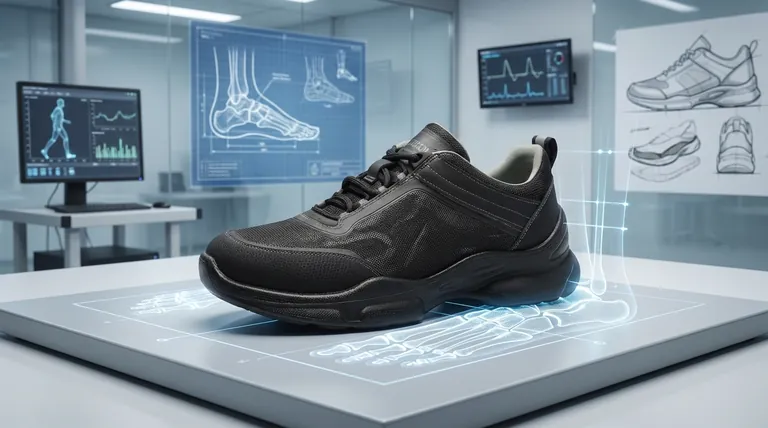
At their core, motion control shoes are highly specialized footwear designed to limit excessive foot motion for runners who severely overpronate. These shoes feature maximum support, primarily in the arch and heel, and are characterized by their rigid construction and minimal flexibility, acting as a corrective tool for your stride.
The central purpose of a motion control shoe is not comfort or speed, but correction. It sacrifices flexibility and a lightweight feel in order to provide a firm, stable platform that prevents the foot from rolling too far inward during a run.
What Problem Do Motion Control Shoes Solve?
To understand the features of a motion control shoe, you first need to understand the specific biomechanical issue they are built to address.
Understanding Severe Overpronation
Pronation is the natural inward roll of the foot as it transitions from landing to push-off. Overpronation occurs when this roll is excessive.
Severe overpronation means the foot and ankle continue to roll too far inward, failing to provide a stable base. This can misalign the entire kinetic chain, potentially leading to stress and injury in the shins, knees, hips, and back.
The Goal: Limiting Unwanted Motion
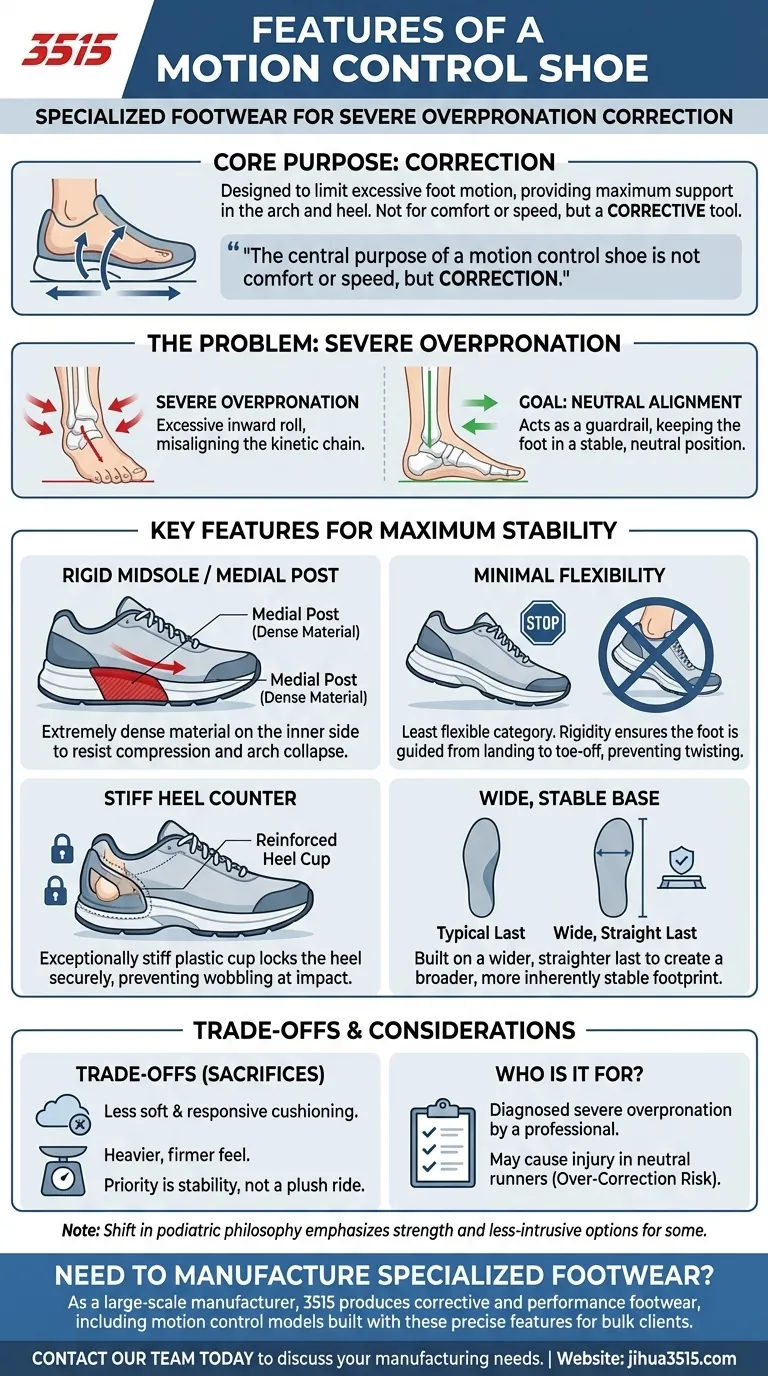
The primary job of a motion control shoe is to act as a guardrail for your foot. It is engineered to stop the excessive inward roll, keeping your foot in a more neutral alignment throughout your gait cycle.
Key Features of a Motion Control Shoe
Every feature of these shoes is designed to maximize stability and resist the forces of overpronation.
A Rigid, Supportive Midsole
The defining feature is an extremely dense and supportive midsole, especially on the inner side (medial side) of the foot. This is often called a medial post.
This firm material resists compression, effectively creating a wall that stops the arch from collapsing inward upon landing.
Minimal Flexibility
Motion control shoes are the least flexible category of running shoes. This rigidity is intentional.
A flexible shoe would bend and twist with the foot's natural (but excessive) motion, defeating the shoe's corrective purpose. The stiffness ensures the foot is guided from landing to toe-off.
A Stiff Heel Counter
The plastic cup built into the back of the shoe that cradles your heel is known as the heel counter. In a motion control shoe, this is exceptionally stiff and reinforced.
This locks your heel securely in place, preventing it from wobbling or shifting, which provides stability at the initial point of impact.
A Wide, Stable Base
These shoes are often built on a wider, straighter last (the mold a shoe is built around). This creates a broader footprint on the ground.
A wider base is inherently more stable and makes it much more difficult for the foot to roll inward.
Understanding the Trade-offs
Choosing a motion control shoe involves accepting a specific set of compromises. It is a tool for a specific job, not a one-size-fits-all solution.
Sacrificing Cushioning and Feel
The dense foams required for motion control are not as soft or responsive as those found in neutral or even stability shoes.
As a result, these shoes often feel heavier, firmer, and less "bouncy." The priority is stability, not a plush or energetic ride.
The Risk of Over-Correction
For a runner who does not severely overpronate, a motion control shoe can be counterproductive and even cause injury.
By forcing the foot into an unnatural position, it can disrupt a healthy gait cycle and create new stress points.
A Shift in Podiatric Philosophy
It's important to note that the running industry and podiatry have seen a shift away from automatically prescribing motion control.
Many experts now emphasize foot-strengthening exercises and suggest that less-intrusive stability shoes—or even neutral shoes—may be suitable for a wider range of runners than previously thought.
How to Know if a Control Shoe is Right for You
Making the right choice depends entirely on a proper diagnosis of your biomechanics, ideally from a professional.
- If you have been diagnosed with severe overpronation by a podiatrist or physical therapist: A motion control shoe is likely the correct tool to help manage stress on your joints while you run.
- If you have very flexible flat feet and experience recurring pain in your shins or knees: Get a professional gait analysis before choosing a motion control shoe, as it may be a necessary intervention.
- If you are a neutral runner or only pronate slightly: You should avoid motion control shoes, as they will likely over-correct your stride and could lead to injury.
Ultimately, understanding your foot's unique mechanics is the first step toward choosing a shoe that supports your goals rather than hinders them.
Summary Table:
| Feature | Purpose | Key Benefit |
|---|---|---|
| Rigid Midsole/Medial Post | Resists excessive inward foot roll | Provides maximum arch and heel support |
| Minimal Flexibility | Prevents twisting with the foot's motion | Ensures a stable, corrective gait cycle |
| Stiff Heel Counter | Locks the heel securely in place | Enhances stability at the point of impact |
| Wide, Stable Base | Creates a broader footprint | Makes it difficult for the foot to roll inward |
Need to manufacture specialized motion control footwear?
As a large-scale manufacturer, 3515 produces a comprehensive range of corrective and performance footwear for distributors, brand owners, and bulk clients. Our production capabilities encompass all types of specialized shoes and boots, including motion control models built with the precise features outlined above.
We can help you bring stable, supportive footwear to market. Contact our team today to discuss your manufacturing needs.
Visual Guide
Related Products
- Wholesale Modern Business Shoes with Dial Closure System for Bulk Orders
- Advanced KPU Athletic Safety Shoe with Steel Toe Cap Anti-Slip Rotary Lacing System
- Wholesale Training Shoes with Dial Lacing System Custom OEM Manufacturing
- Wholesale Modern Comfort Shoes with Dial Closure for Private Label & Bulk Orders
- Wholesale Comfort Dress Shoes with Dial Closure for Custom Manufacturing
People Also Ask
- What kind of shoes do businessmen wear? Master the Dress Code for Professional Success
- What are the essential business shoes every man should own? Build a Professional Wardrobe Foundation
- What are the key considerations when choosing professional business shoes? Elevate Your Professional Image
- How does wearing the right shoes benefit overall health? Protect Your Joints, Posture, and Mobility
- Why do quality shoes boost confidence? Unleash Your Potential with the Right Footwear



















