
I need to act as a trusted advisor, so I'm focusing on providing practical, insightful information. The user clearly wants to understand the specifics of pumps – what makes them pumps – and how to make smart choices. I'm going to structure my response to address both their immediate need and the deeper understanding they seek.
First, I'm thinking I'll start with a concise definition: At their core, pumps are defined by their simplicity. They're slip-on, high-heeled shoes with a low-cut front and no straps, buckles, or zippers. This minimalist design is key. To emphasize this, my "Core Takeaway" will be: > The defining trait of a pump is not just its heel, but its unadorned, slip-on structure. This intentional simplicity is what gives the pump its classic silhouette and makes it a foundational piece for both professional and formal wardrobes.
I'll then break down the defining characteristics (anatomy) with clear headings: "The Slip-On Design," "The Low-Cut Front," "The Closed Toe," and "The Heel," drawing from the information I've been given. Following the anatomy, I'll explain why this design matters – its function and versatility. I'll cover how this simplicity creates a timeless look, adapts to different occasions, and forms the basis of a professional wardrobe.
However, I can't just present the positives. I'll need to address the trade-offs: the importance of a perfect fit with no fastenings, the variations in heel and toe shapes, and the comfort vs. aesthetic considerations. This balanced approach is crucial for building trust.
Finally, I'll conclude with practical advice, offering targeted recommendations based on the user's specific goals (professional wear, formal events, casual elegance). I'll end with a strong and empowering statement, emphasizing that understanding these traits will help them choose the right pump as a strategic tool.
This structure seems logical: Definition, Anatomy, Function, Trade-offs, and Actionable Advice. I'll keep it concise and use clear headings and bullet points for easy scanning. My goal is to deliver a helpful, authoritative response that provides not just information, but also confidence in decision-making. At their core, pumps are defined by their elegant simplicity. They are a style of slip-on, high-heeled shoe characterized by a low-cut front that reveals the top of the foot. The classic pump is intentionally unadorned, lacking any buckles, straps, or zippers, which contributes to its clean, timeless silhouette.
The defining trait of a pump is not just its heel, but its unadorned, slip-on structure. This intentional simplicity is what gives the pump its classic silhouette and makes it a foundational piece for professional, formal, and even casual wardrobes.
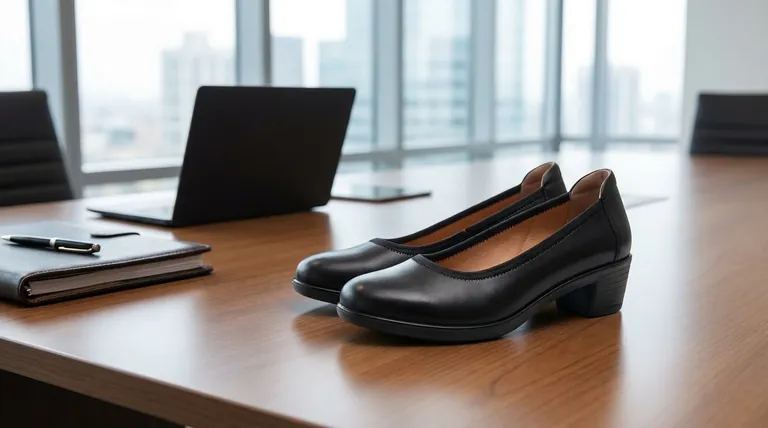
The Anatomy of a Classic Pump
To truly understand what makes a pump a "pump," we must look at its specific structural characteristics. These elements work together to create its iconic and versatile profile.
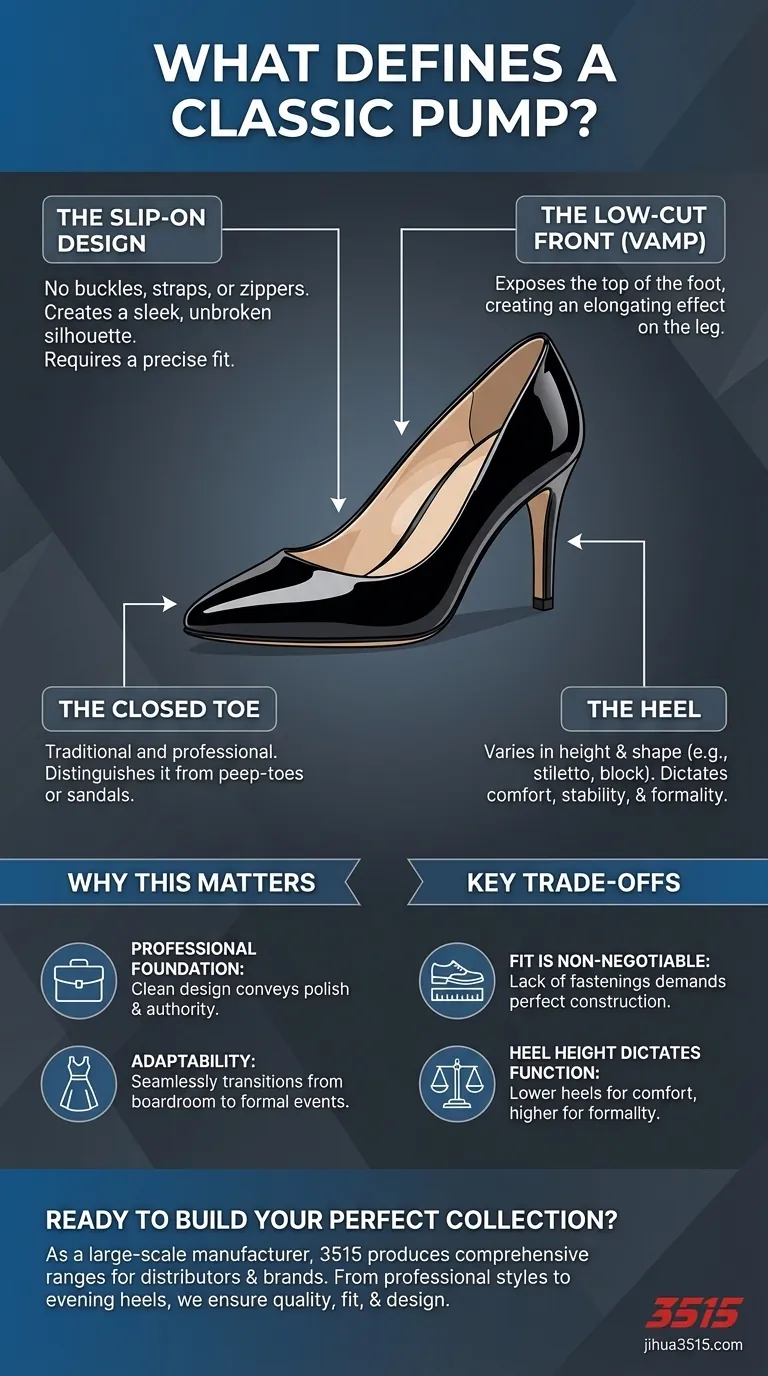
The Slip-On Design
The most fundamental characteristic of a pump is its lack of fastenings. There are no zippers, laces, or ankle straps. This requires the shoe to be perfectly constructed to stay on the foot, contributing to its sleek, unbroken lines.
The Low-Cut Front
Pumps feature a low-cut front, often referred to as the "vamp." This design element exposes the top of the foot, creating an elongating effect on the leg.
The Closed Toe
While variations exist, the traditional and most professional version of the pump features a closed toe. This distinguishes it from peep-toe heels or heeled sandals and makes it appropriate for more conservative and corporate environments.
Why This Design Matters: Function and Versatility
The simple anatomy of the pump is not an accident; it is the key to its enduring popularity and adaptability. The minimalist design allows it to complement an outfit rather than compete with it.
A Foundation for Professional Wear
In a professional context, pumps are a standard for a reason. Their clean design conveys a sense of polish and authority without being distracting. As a best practice, a mid-height heel in a neutral tone like black, grey, or beige offers the most versatility and comfort for an office setting.
Adaptability Across Occasions
The same shoe that works with a pantsuit in the boardroom can be paired with a cocktail dress for a formal event. This seamless transition is possible because the pump's simple silhouette acts as a blank canvas, adaptable to nearly any ensemble.
Understanding the Trade-offs
The simplicity that defines the pump also introduces specific considerations that every wearer should understand.
Fit is Non-Negotiable
Because there are no straps or buckles to hold the shoe in place, a precise fit is absolutely critical. A pump that is even slightly too large will slip off the heel, while one that is too small will be unbearable.
Heel Height Dictates Function
The term "pump" does not specify a single heel height. A pump with a lower, thicker "block" heel will offer significantly more stability and comfort for all-day wear compared to a towering stiletto pump, which is better suited for shorter, formal occasions.
Material and Color Carry Meaning
With such a simple structure, details like material and color become much more significant. A classic black leather pump reads as professional and authoritative, while a satin or embellished pump is clearly intended for evening wear.
Making the Right Choice for Your Goal
Selecting the right pump depends entirely on the context in which you plan to wear it.
- If your primary focus is professional wear: Opt for a closed-toe pump with a comfortable, mid-height heel in a neutral color like black or beige for maximum versatility.
- If your primary focus is formal events: You can explore higher stiletto heels and more expressive materials like satin or patent leather to complement your outfit.
- If your primary focus is casual elegance: Consider a pump with a stable block heel, which provides the polish of a heel with greater comfort for daily activities.
Ultimately, understanding these defining traits allows you to select a pump that serves not just as a shoe, but as a strategic tool for completing your intended look.
Summary Table:
| Defining Trait | Key Characteristic | Why It Matters |
|---|---|---|
| Slip-On Design | No straps, buckles, or zippers | Creates a sleek, unbroken silhouette; requires a perfect fit |
| Low-Cut Front (Vamp) | Exposes the top of the foot | Elongates the leg for a classic, elegant look |
| Closed Toe | Traditional and professional style | Suitable for conservative and corporate environments |
| Heel | Varies in height and shape (stiletto, block, etc.) | Dictates comfort, stability, and formality of the shoe |
Ready to build your perfect collection of classic pumps?
As a large-scale manufacturer, 3515 produces a comprehensive range of footwear for distributors, brand owners, and bulk clients. Our production capabilities encompass all types of pumps, from professional closed-toe styles to elegant evening heels, ensuring you get the precise quality, fit, and design your customers demand.
Contact our expert team today to discuss your specific needs and discover how we can be your reliable manufacturing partner.
Visual Guide
Related Products
People Also Ask
- What is the benefit of wearing pump heels for shorter women? Boost Your Professional Presence and Stature
- Why are high heel pumps a must-have for women? Unlock Timeless Style & Confidence
- What role does the internal heel counter structure play in footwear stability? Enhance Support and Prevent Injuries
- What are the advantages of using liquid silicone for shoe sole heel prototypes? Maximize Detail and Mold Durability
- Why are kitten heels a good alternative to classic pumps? Discover Unbeatable Comfort & Style
