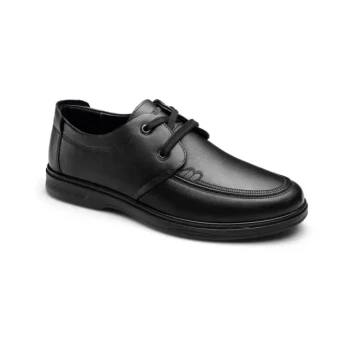
Implementing industrial big data systems in footwear manufacturing fundamentally transforms operations by providing real-time monitoring and comprehensive data collection across the entire production line. This integration supports lean manufacturing decisions, optimizes supply chains, and enhances overall safety, effectively bridging the gap between traditional craftsmanship and modern intelligent manufacturing.
The core value lies in the transition from manual, reactive processes to proactive, intelligent manufacturing. By leveraging business intelligence and real-time data, manufacturers can respond instantly to market shifts while maintaining high production continuity.
Driving Operational Efficiency
The most immediate impact of big data integration is the shift toward lean manufacturing. By digitizing the production floor, manufacturers gain visibility that was previously impossible in manual environments.
Real-Time Process Monitoring
Big data systems collect data continuously across the footwear production process. This allows management to monitor performance in real-time, identifying bottlenecks instantly rather than waiting for post-production reports.
Enhancing Accuracy through Automation
Integrating AI-driven industrial robots alongside data systems automates complex production tasks. This automation significantly improves processing accuracy while reducing the manual labor hours required for standard operations.
Ensuring Consistency at Scale
Data-driven systems ensure that large-scale manufacturing tasks maintain a consistent level of quality. This effectively standardizes the output, reducing the variability inherent in purely manual craftsmanship.
Strategic Agility and Safety
Beyond the factory floor, these systems empower leadership to make smarter, faster decisions regarding the broader business ecosystem.
Optimizing Supply Chain Management
Industrial big data provides the visibility needed to optimize the supply chain. By analyzing data trends, manufacturers can streamline material flow and reduce waste, a critical component of lean methodology.
Business Intelligence for Market Response
The use of Business Intelligence (BI) tools allows manufacturers to analyze market data alongside production capabilities. This enables a rapid response to changing market shifts, ensuring production aligns with actual consumer demand.
Improving Production Safety
Data collection extends to environmental and operational conditions. By monitoring these factors in real-time, the system enhances overall production safety, protecting both the workforce and the equipment.
Understanding the Trade-offs
While the move toward intelligent manufacturing offers significant advantages, it requires navigating specific challenges.
The Shift from Craft to Code
Transitioning from traditional craftsmanship to intelligent manufacturing is a significant cultural and operational overhaul. It risks devaluing the artisanal knowledge that often defines high-quality footwear if not integrated carefully.
Dependence on Algorithm Accuracy
Predictive systems are only as good as their algorithms. While predictive algorithms can anticipate mechanical failures, over-reliance on them without human oversight can lead to missed anomalies that fall outside the algorithm's training data.
Making the Right Choice for Your Goal
The implementation of these systems should be guided by your specific operational targets.
- If your primary focus is Efficiency and Speed: Prioritize AI-driven robotics to automate processes and reduce manual labor hours for immediate throughput gains.
- If your primary focus is Market Agility: Focus on Business Intelligence integration to align your supply chain and production schedules with real-time market shifts.
- If your primary focus is Operational Stability: Leverage predictive algorithms to anticipate mechanical failures and eliminate production line downtime.
Successful implementation requires viewing big data not just as a tool for monitoring, but as the foundation for a responsive, intelligent manufacturing ecosystem.
Summary Table:
| Key Advantage | Impact on Footwear Manufacturing | Primary Benefit |
|---|---|---|
| Real-Time Monitoring | Immediate visibility of production lines | Identifies and resolves bottlenecks instantly |
| AI-Driven Automation | Integration of industrial robots | Increases processing accuracy and reduces labor hours |
| Supply Chain BI | Data-backed market response | Streamlines material flow and reduces waste |
| Predictive Algorithms | Early detection of mechanical failures | Enhances safety and eliminates unplanned downtime |
Revolutionize Your Footwear Production with 3515
As a premier large-scale manufacturer serving global distributors and brand owners, 3515 leverages cutting-edge industrial big data and intelligent manufacturing to deliver unmatched scale and precision. Whether you are sourcing our flagship Safety Shoes series or need high-volume production for tactical boots, outdoor shoes, training sneakers, or formal dress footwear, we bridge the gap between traditional quality and modern efficiency.
Partner with a manufacturer that turns data into your competitive edge. Contact 3515 today to discuss your bulk requirements and experience the future of footwear manufacturing.
References
- Haya Hoja, Pei Yu. RETRACTED: Developing and Enhancing the Competitiveness of the Palestinian National Product: The Leather and Footwear Sector—Analysis and Evaluation of Government Interventions. DOI: 10.3390/su14137745
This article is also based on technical information from 3515 Knowledge Base .
Related Products
- Wholesale Training Shoes with Dial Lacing System Custom OEM Manufacturing
- Wholesale Smart Casual Sneakers with Dial Closure | Factory Direct Manufacturing
- Lightweight Breathable Training Shoes for Wholesale & Custom OEM Manufacturing
- Wholesale Comfortable Business Casual Shoes Custom Manufacturing
- Durable Rubber Sole Outdoor Shoes Wholesale & Custom Manufacturing
People Also Ask
- Why is the use of flat-soled or professional training shoes essential for WBV? Maximize Vibration Energy Transfer
- Why is it necessary for participants to wear professional training shoes? Ensuring Data Accuracy & Patient Safety
- Why is the integration of advanced cushioning in training shoes necessary for athletes? Boost Recovery and Performance
- Why is structural stability in footwear required during dual-task walking tests? Ensure Sensor Precision & Data Integrity
- Why are the slip-resistance and stability performance of training shoes critical in gait analysis? Ensure Data Accuracy