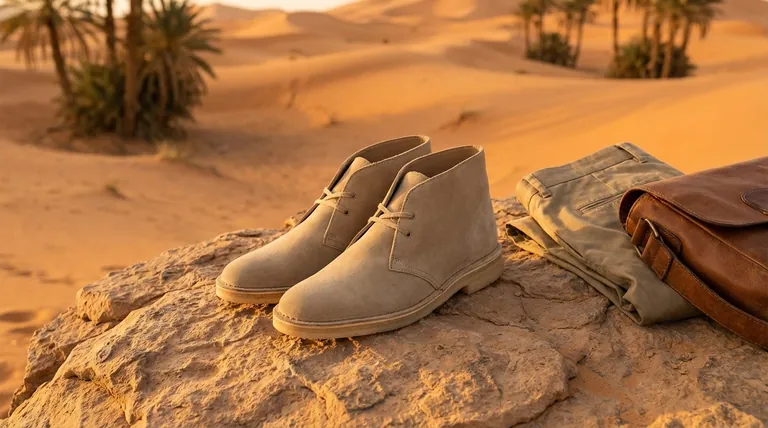
In short, a desert boot is a specific type of ankle-high chukka boot defined by two key features: a suede or leather upper and a soft, flexible crepe rubber sole. Originally designed for comfort and practicality in sandy terrain, they are now a timeless staple of smart-casual style, prized for their versatility across seasons like spring and winter.
The desert boot’s design isn't accidental; its military origins created a shoe that is uniquely lightweight, comfortable, and stylish. This heritage makes it the ideal choice for bridging the gap between casual sneakers and more formal dress shoes.
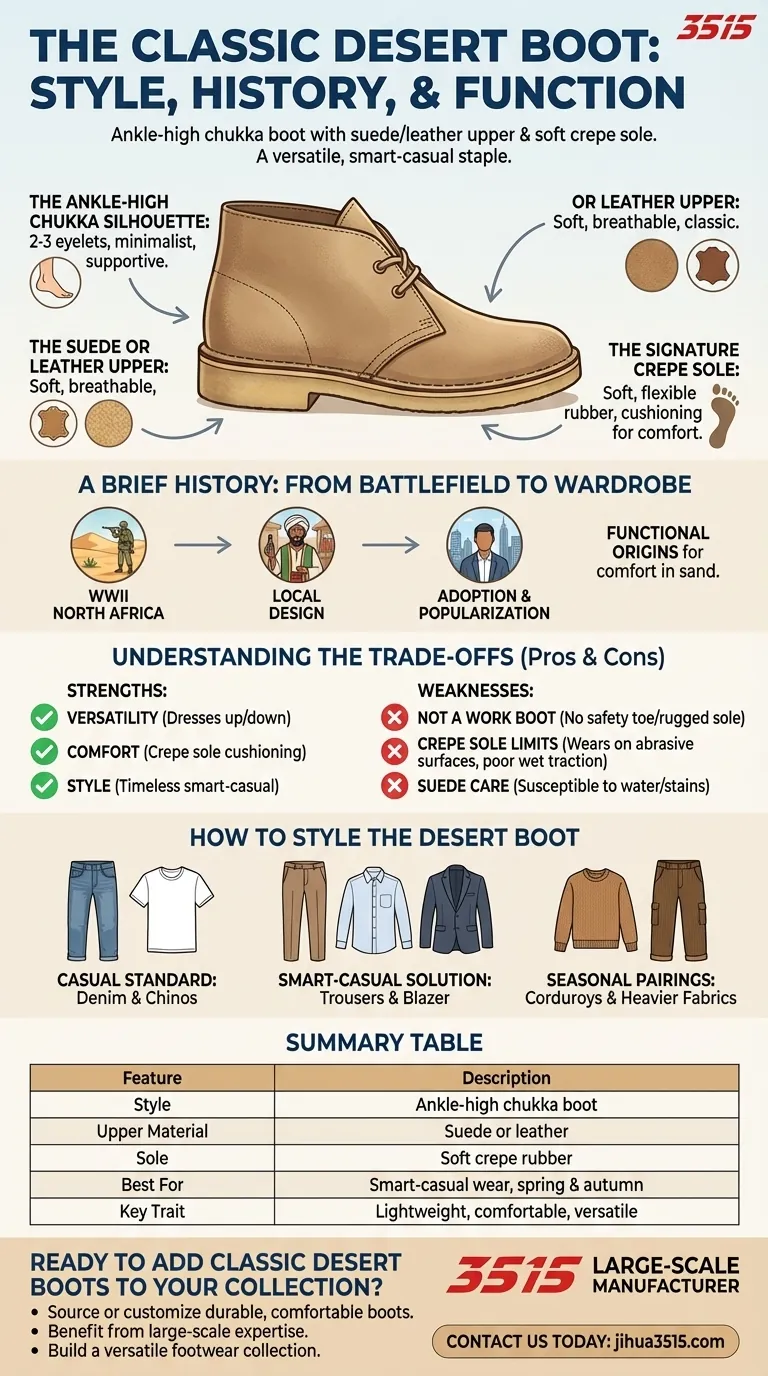
The Anatomy of a Classic
A desert boot is a simple design, but its specific components are what give it a distinct identity and purpose. Understanding these parts clarifies why it feels and wears the way it does.
The Ankle-High Chukka Silhouette
The desert boot follows the chukka boot pattern: a lace-up boot that ends at the ankle, typically with two or three eyelets. This minimalist construction provides support without being restrictive.
The Signature Crepe Sole
The most defining feature is its crepe rubber sole. This material is soft, flexible, and lightweight, originally chosen for comfort and traction on sand. Today, it provides excellent cushioning for walking on pavement.
The Suede or Leather Upper
Traditionally, desert boots are made from a light suede, which is soft and breathable. Modern variations also use smooth leather, but the classic suede construction remains the most recognizable.
A Brief History: From Battlefield to Wardrobe
The desert boot's name is not a marketing gimmick; it comes directly from its functional origins during World War II.
Origins in North Africa
During the war, British soldiers found their standard-issue military boots to be heavy and ill-suited for the heat and sand of the North African desert.
A Lesson in Local Design
They observed local traders and South African soldiers wearing lightweight, suede boots with crepe soles. These boots, sometimes called "Voortrekkers," were far better suited to the environment.
Adoption and Popularization
British officers had local cobblers in Cairo create versions for their own use. After the war, this practical and comfortable design was brought back to the UK and quickly became a popular civilian style.
Understanding the Trade-offs
While exceptionally versatile, the desert boot is not the right tool for every job. Its strengths in one context become its weaknesses in another.
Not a True Work Boot
A desert boot lacks the features of a dedicated work boot. It does not have a safety toe, a rugged lug sole for uneven terrain, or the heavy-duty construction needed for demanding physical labor.
The Limits of the Crepe Sole
The soft crepe sole that provides so much comfort is also its main durability weakness. It can wear down relatively quickly on abrasive surfaces and offers poor traction in wet or icy conditions.
Suede Requires Care
The classic suede upper is porous and susceptible to water stains and dirt. It requires more care and is less practical in heavy rain or snow compared to boots made from treated leather.
How to Style the Desert Boot
The desert boot's greatest strength is its ability to be dressed up or down with ease, making it one of the most versatile shoes a person can own.
The Casual Standard
For an effortless, everyday look, desert boots pair perfectly with denim or chinos. This is their natural habitat, creating a relaxed yet put-together appearance.
The Smart-Casual Solution
To elevate the look, pair darker suede or leather desert boots with slim-fit dark denim or trousers and a blazer. This combination bridges the gap between casual and formal attire.
Seasonal Pairings
In the autumn and winter, desert boots work exceptionally well with heavier fabrics like corduroys. A pair in dark brown or slate gray complements the rugged elegance of seasonal colors.
Making the Right Choice for Your Goal
- If your primary focus is everyday comfort and versatility: The desert boot is an excellent choice for bridging the gap between casual sneakers and formal shoes.
- If your primary focus is a rugged shoe for work or hiking: You need a true work boot with features like a safety toe, enhanced ankle support, and a durable lug sole.
- If your primary focus is a dressier ankle boot: Consider a traditional chukka boot with a hard rubber or leather sole, which presents a more formal silhouette than the casual crepe.
Ultimately, the desert boot earns its place as a wardrobe staple by offering an unmatched blend of historical character and effortless modern style.
Summary Table:
| Feature | Description |
|---|---|
| Style | Ankle-high chukka boot |
| Upper Material | Suede or leather |
| Sole | Soft crepe rubber |
| Best For | Smart-casual wear, spring & autumn seasons |
| Key Trait | Lightweight, comfortable, and versatile |
Ready to Add Classic Desert Boots to Your Collection?
As a large-scale manufacturer, 3515 produces a comprehensive range of high-quality footwear for distributors, brand owners, and bulk clients. Our production capabilities encompass all types of shoes and boots, including timeless styles like the desert boot.
We can help you:
- Source or customize durable, comfortable desert boots in suede or leather.
- Benefit from our large-scale manufacturing expertise for consistent quality and competitive pricing.
- Build a versatile footwear collection that meets the demands of today's smart-casual market.
Contact us today to discuss your desert boot needs and discover how 3515 can be your trusted manufacturing partner.
Visual Guide
Related Products
- Wholesale Lightweight Tactical Boots Custom Manufacturer for Desert & Combat Use
- Durable Spiked Camouflage Boots Wholesale & Factory Production
- Durable Military Combat Boots with Water Drainage for Wholesale & OEM
- Wholesale High-Traction Camo Boots - Custom Manufacturer for Brands
- Durable Waterproof Rain Boots | Custom Manufacturer for Wholesale & Brands
People Also Ask
- What are the common types of combat boots? Find the Right Boot for Your Mission
- What specialized protections do tactical boots offer? Maximize Endurance with High-Performance Footwear
- What is the role of high-frequency acquisition hardware in technical skill analysis for outdoor and tactical boots?
- How does additive manufacturing equipment reduce environmental risks? Sustainable Tactics for Modern Footwear Production
- How is the compatibility of polymer materials demonstrated in smart footwear? Enhancing Tactical & Training Performance