
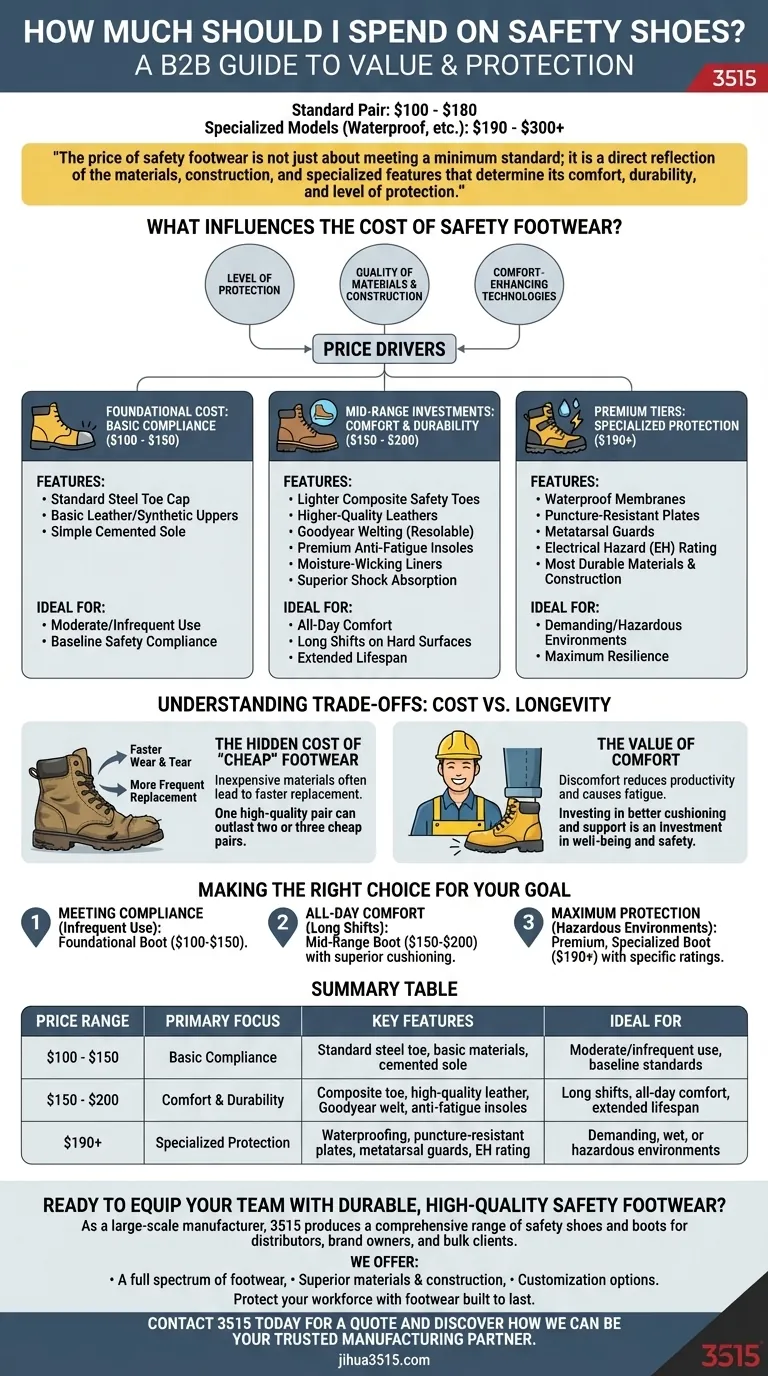
As a general guide, you can expect to spend between $100 and $180 for a standard pair of safety shoes or boots. For specialized models with features like advanced waterproofing, the price often ranges from $190 to over $300.
The price of safety footwear is not just about meeting a minimum standard; it is a direct reflection of the materials, construction, and specialized features that determine its comfort, durability, and level of protection for your specific work environment.
What Influences the Cost of Safety Footwear?
Understanding what you are paying for is the key to making a sound investment. The price of safety footwear is driven by three core factors: the level of protection, the quality of materials and construction, and the inclusion of comfort-enhancing technologies.
The Foundational Cost: Basic Compliance ($100 - $150)
In this price range, you are paying for the essentials required to meet core safety standards.
Footwear here typically features a standard steel toe cap, basic leather or synthetic uppers, and a simple cemented sole construction.
These options are perfectly functional for moderate or infrequent use where the primary goal is to meet baseline safety compliance without needing advanced features.
Mid-Range Investments: Comfort and Durability ($150 - $200)
As the price increases, the focus shifts from mere compliance to all-day comfort and a longer lifespan.
Here you will find lighter composite safety toes, higher-quality leathers, and more robust sole constructions like Goodyear welting, which allows for resoling.
This tier also introduces significant comfort upgrades, such as premium anti-fatigue insoles, moisture-wicking liners, and superior shock absorption for long shifts on hard surfaces.
Premium Tiers: Specialized Protection ($190+)
The highest price points are reserved for footwear engineered for specific, demanding, and often hazardous environments.
These boots integrate specialized protective features like waterproof membranes, puncture-resistant plates for underfoot protection, and metatarsal guards.
They often carry specific certifications, such as an Electrical Hazard (EH) rating, and are built with the most durable materials and construction methods available for maximum resilience.
Understanding the Trade-offs: Cost vs. Longevity
Choosing safety footwear is a balance. While budget is always a factor, a low initial price can sometimes lead to greater costs over time.
The Hidden Cost of "Cheap" Footwear
Opting for the lowest-priced option can be a false economy.
Inexpensive materials and basic construction methods often lead to faster wear and tear, meaning you will need to replace the footwear more frequently. A single pair of high-quality boots can easily outlast two or three cheaper pairs.
The Value of Comfort
Discomfort is more than a minor annoyance; it directly impacts focus, causes fatigue, and can reduce your productivity throughout the workday.
Investing more in features like better cushioning and proper arch support is an investment in your own well-being and your ability to perform your job safely and effectively.
Making the Right Choice for Your Goal
Select your footwear by evaluating your daily tasks, your work environment, and your personal comfort needs.
- If your primary focus is meeting compliance for infrequent use: A foundational boot in the $100-$150 range will provide the necessary protection.
- If your primary focus is all-day comfort for long shifts on hard surfaces: Investing in a mid-range boot ($150-$200) with superior cushioning and support is essential.
- If your primary focus is maximum protection in wet or hazardous environments: Prioritize a premium, specialized boot ($190+) with waterproofing and the specific safety ratings your job requires.
Ultimately, choosing the right safety footwear is about protecting your most valuable professional asset—your ability to work safely and without distraction.
Summary Table:
| Price Range | Primary Focus | Key Features | Ideal For |
|---|---|---|---|
| $100 - $150 | Basic Compliance | Standard steel toe, basic materials, cemented sole | Moderate or infrequent use, meeting baseline standards |
| $150 - $200 | Comfort & Durability | Composite toe, high-quality leather, Goodyear welt, anti-fatigue insoles | Long shifts, all-day comfort, extended lifespan |
| $190+ | Specialized Protection | Waterproofing, puncture-resistant plates, metatarsal guards, EH rating | Demanding, wet, or hazardous environments |
Ready to Equip Your Team with Durable, High-Quality Safety Footwear?
As a large-scale manufacturer, 3515 produces a comprehensive range of safety shoes and boots for distributors, brand owners, and bulk clients. We understand that the right footwear is an investment in safety, comfort, and productivity.
We offer:
- A full spectrum of footwear from basic compliance models to premium, specialized boots.
- Superior materials and construction for enhanced durability and long-term value.
- Customization options to meet your specific brand and safety requirements.
Protect your workforce with footwear built to last. Contact 3515 today for a quote and discover how we can be your trusted manufacturing partner.
Visual Guide
Related Products
- Premium Suede Sport Safety Shoes for Wholesale & Bulk Orders
- Premium Lightweight Safety Shoes for Wholesale & Bulk Orders
- Wholesale Anti-Smash & Puncture-Proof Safety Shoes Custom Manufacturing for Brands
- Premium KPU Injection Athletic Style Safety Shoes
- Premium Safety Shoes with Rotating Buckle Safety Sneakers
People Also Ask
- What industries have specific OSHA footwear requirements? Ensure Compliance & Protect Your Workforce
- What are the primary functions of professional safety shoes? Maximize Safety in Water Supply Confined Spaces
- What role do specialized safety shoes play in preventing falls? Engineering Stability in Industrial Environments
- What happens during the cutting stage of safety shoes manufacturing? Precision, Process & Quality
- What are the main safety features of S1-S5 shoes? The 3 Essential Protections Explained



















