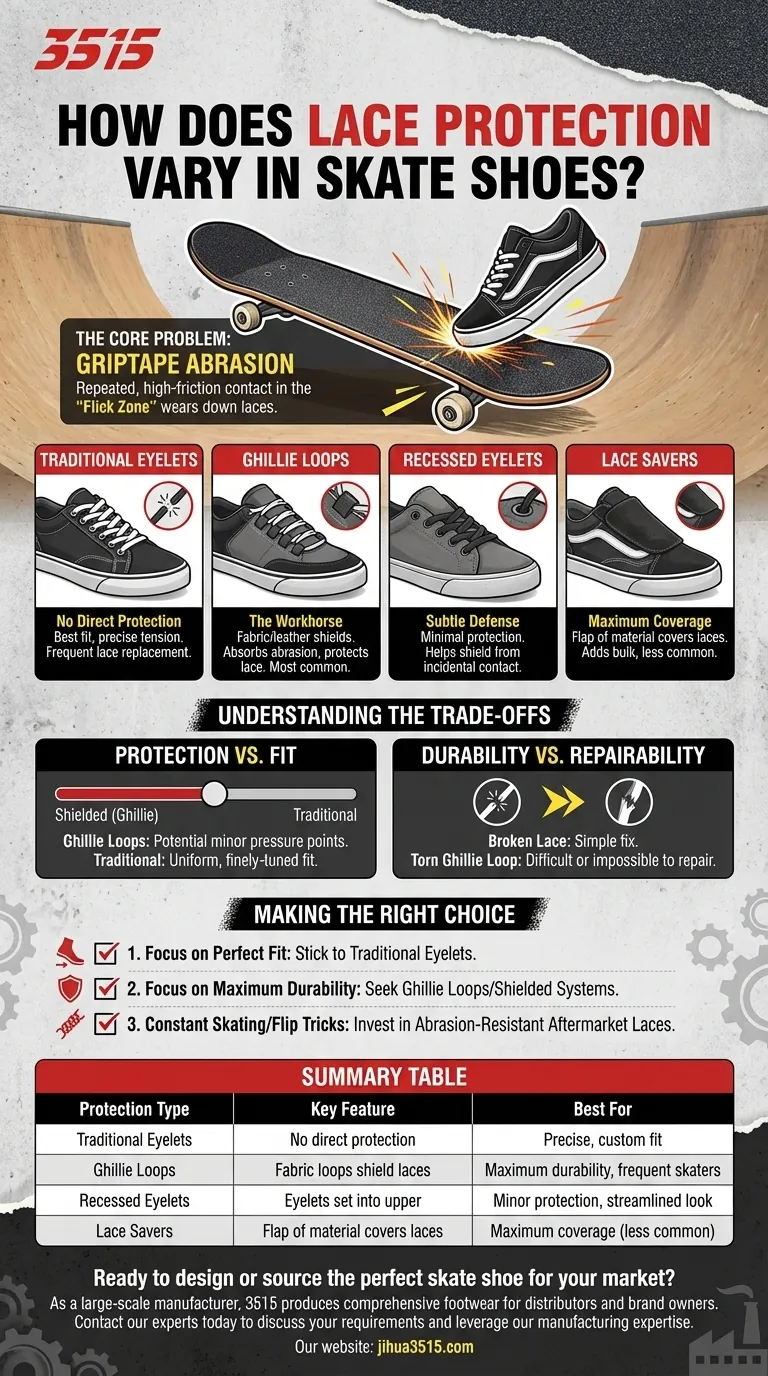
At its core, skate shoe lace protection varies from fully exposed traditional eyelets to shielded systems designed to combat griptape abrasion. The most common protective feature is the use of "Ghillie loops," which shield the laces in the highest-wear areas near the toe box.
The central conflict in skate shoe design is griptape versus materials. Lace protection isn't about a single "best" feature, but a deliberate design choice that trades the direct feel of traditional eyelets for the enhanced durability of shielded systems.
The Core Problem: Griptape Abrasion
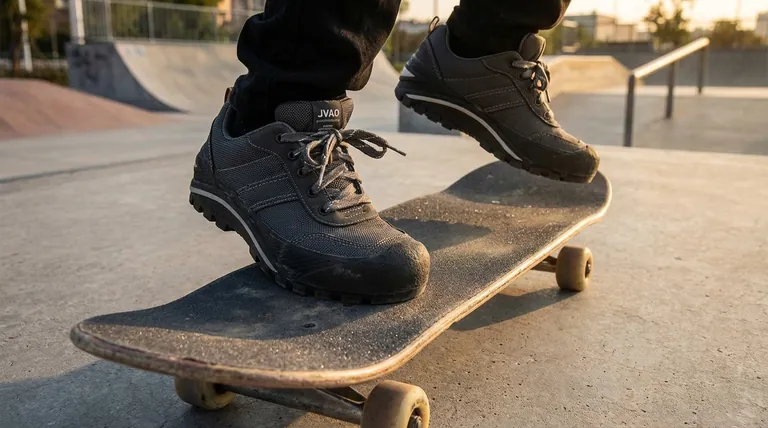
The fundamental reason laces break is repeated, high-friction contact with your board's griptape. This isn't random wear; it's concentrated in a specific area.
The "Flick Zone"
During tricks like ollies and kickflips, the side of your shoe slides aggressively up the griptape. Any exposed lace in this "ollie patch" or "flick zone" is essentially being sanded down with every trick.
Inevitable Wear
Even with protective features, intense skating will eventually cause wear. The goal of these systems is not to make laces invincible, but to significantly extend their lifespan.
A Spectrum of Protection: Key Design Approaches
Skate shoe brands tackle lace protection in several distinct ways, ranging from no protection to fully shielded designs.
The Baseline: Traditional Eyelets
This is the most common design. Standard eyelets offer no direct lace protection but provide the most precise and even tension for a customized fit. Skaters who prefer this style often accept that they will have to replace laces more frequently.
The Workhorse: Ghillie Loops
Ghillie loops are fabric or leather loops that the lace passes through instead of a traditional eyelet. These loops act as a sacrificial shield, taking the brunt of the griptape abrasion and protecting the lace underneath. This is the most prevalent and effective form of built-in lace protection on the market.
A Subtle Defense: Recessed Eyelets
Some designs recess the eyelets slightly into the shoe's upper. While this offers minimal protection, it can help shield the lace from some incidental contact by keeping it from sitting fully exposed on the shoe's surface.
Maximum Coverage: Lace Savers
Though less common in modern, slimmer shoe designs, "lace savers" are flaps of material (typically suede) that cover the lower set of laces. They offer a high degree of protection but can add bulk to the shoe.
Understanding the Trade-offs
Choosing a shoe with more lace protection involves compromises. Understanding these trade-offs is key to finding the right shoe for your needs.
Protection vs. Fit
Shielded systems, particularly Ghillie loops, can sometimes create minor pressure points or a less direct feel when tightening the shoe. Traditional eyelets almost always allow for a more uniform and finely-tuned fit across the top of the foot.
Durability vs. Repairability
A broken shoelace is a simple, cheap fix. However, if a fabric Ghillie loop tears, it is extremely difficult or impossible to repair, potentially compromising the shoe's entire lacing structure in that area.
Making the Right Choice for Your Skating
Your ideal shoe depends entirely on your skating style, frequency, and personal preferences.
- If your primary focus is a perfect, customized fit: Stick with shoes that use traditional eyelets and plan on replacing your laces as needed.
- If your primary focus is maximum lace durability: Seek out models that incorporate Ghillie loops or other shielded systems in the high-wear flick zone.
- If you skate constantly and do many flip tricks: Consider investing in high-quality, abrasion-resistant aftermarket laces, as they will outlast standard laces in any shoe.
Ultimately, understanding these design philosophies empowers you to choose a shoe that truly supports your style of skating.
Summary Table:
| Protection Type | Key Feature | Best For |
|---|---|---|
| Traditional Eyelets | No direct protection, best fit | Skaters prioritizing a precise, custom fit |
| Ghillie Loops | Fabric loops shield laces | Maximum lace durability and frequent skaters |
| Recessed Eyelets | Eyelets set into the upper | Minor protection with a streamlined look |
| Lace Savers | Flap of material covers laces | Maximum coverage (less common in modern shoes) |
Ready to design or source the perfect skate shoe for your market?
As a large-scale manufacturer, 3515 produces a comprehensive range of footwear for distributors, brand owners, and bulk clients. Our production capabilities encompass all types of shoes and boots, including advanced skate shoes with durable lace protection systems tailored to your customers' needs.
Contact our experts today to discuss your specific requirements and leverage our manufacturing expertise.
Visual Guide
Related Products
- Advanced KPU Athletic Safety Shoe with Steel Toe Cap Anti-Slip Rotary Lacing System
- Premium Wholesale Tactical Style Safety Shoes Boots with Quick Lacing
- Wholesale Training Shoes with Dial Lacing System Custom OEM Manufacturing
- Wholesale Smart Casual Sneakers with Dial Closure | Factory Direct Manufacturing
- Customizable Slip-On Safety Shoes Direct from the Factory for Wholesale
People Also Ask
- What are the key differences between steel toe and composite toe caps? Choose the Right Safety for Your Job
- What impact do steel toe caps have on toe skin health? Prevent Friction and Pressure in Your Safety Shoes
- What are the primary protective functions of safety shoes with steel toes in the automotive repair industry?
- What type of safety shoe is recommended for workers exposed to heavy machinery? Steel Toe Boots for Ultimate Protection
- How does defining specific friction interface models in FEA assist in predicting safety shoe toe cap failure modes?